Edema on Houseplant Leaves: Those Corky Bumps and Blisters
What causes the corky bumps, blisters, and water-soaked spots of edema on houseplant leaves, and how to stop it without mistaking it for pests or disease.
Some links in this guide go to Amazon. As an Amazon Associate we earn from qualifying purchases, at no extra cost to you. How this works.
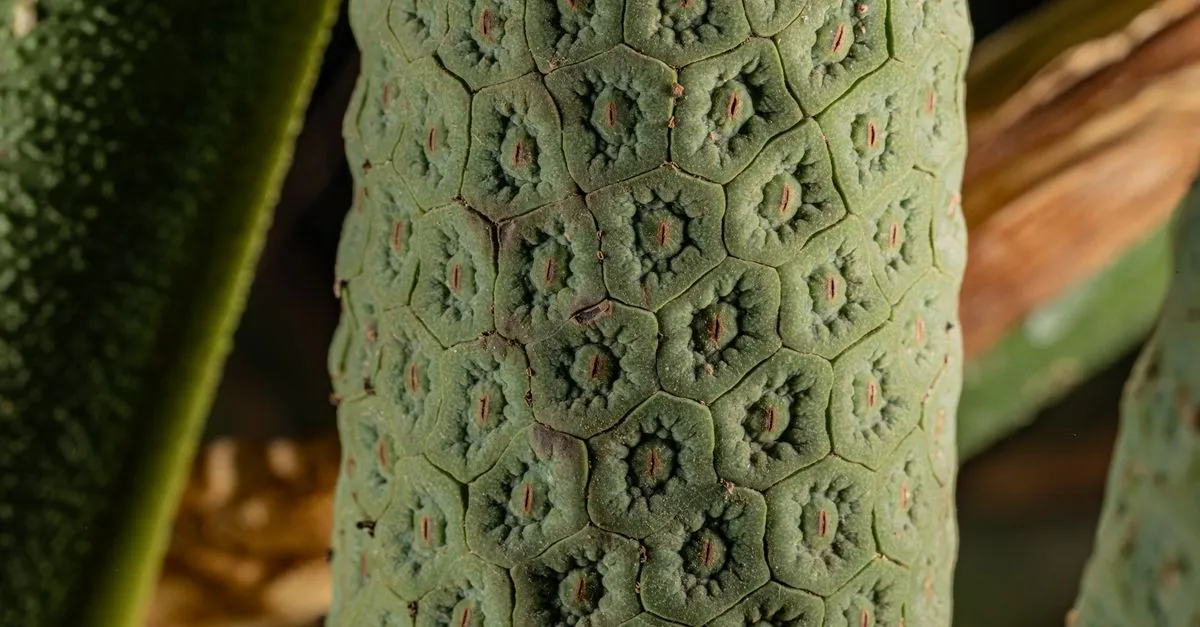
When roots pull up water faster than the leaves can let it go, the leaf cells swell until some of them burst. That is edema on houseplant leaves: small water-soaked spots that dry into corky, raised brown bumps or blisters, almost always on the undersides. It looks alarming and a lot like a pest or a disease, but it is neither. It is a watering and environment problem you can fix.
Quick answer
Edema is a watering and environment problem, not a pest or disease: leaf cells take in water faster than the leaf can release it, swell, and burst, leaving water-soaked spots that dry into corky brown bumps, usually on the undersides. Spraying does nothing because there is no organism to kill. Let the top inch or two (3 to 5 cm) of soil dry before watering, improve light and airflow, and judge recovery by the fresh leaves, because existing bumps are permanent scar tissue while new growth comes in clean.
What edema actually is
Think of a leaf as a system with an inflow and an outflow. Roots push water in. Leaves release it through tiny pores as vapor, a process called transpiration. When the inflow is high and the outflow is low, the pressure inside individual cells climbs until their walls rupture. The damaged patch first looks like a clear or pale water-soaked blister. Over a few days it hardens, browns, and turns into a rough corky bump. On some plants you also see matching indents or yellow flecking on the upper surface above each bump.
This is purely mechanical. Nothing is eating the leaf and nothing is infecting it. The bumps are scar tissue from cells that already burst.
The conditions that cause it
Edema shows up when water goes in easily but struggles to leave. A few factors stack together to create that imbalance, listed from the most common offender down.
Overwatering. Wet soil keeps the roots pushing water in constantly. This is the single biggest driver, so it is the first thing to change.
Low light. A plant in dim light transpires slowly because its pores stay relatively closed. Less water leaves the leaves, so internal pressure builds. Short, dark winter days are prime edema season.
Cool, damp, still air. Cold air and high humidity both slow evaporation from the leaf surface. Stagnant air with no movement makes it worse, because a thin layer of moist air sits against the leaf and traps water in.
Plant type. Thick, fleshy leaves hold more water and burst more visibly. That is why edema turns up most on succulents, peperomia, and other plump-leaved plants. Geraniums, jade, and some begonias are also frequent sufferers.
How to fix edema on houseplant leaves
You are correcting the balance between water in and water out. Work through these in order.
Water less, and check before you pour. Let the top inch or two (3 to 5 cm) of soil dry out before watering again, and tip away anything that collects in the saucer. Most edema clears once the soil stops staying soggy.
Improve the light. Move the plant somewhere brighter, or add a grow light through the dark months. Better light raises transpiration and lets the leaves shed water at the rate the roots supply it.
Get the air moving. A little airflow from an open door or a gentle fan speeds evaporation off the leaf surface and breaks up that trapped humid layer.
Do not water on dark, cold days. When light and warmth are both low, the plant can barely transpire, so water you add just sits in the leaves. Wait for a brighter, milder day.
Edema is your plant telling you the watering can is winning against the window.
Why spraying it never works
This is where people waste money. Because the bumps look like scale insects, thrips damage, or a fungal spot, the instinct is to reach for a pesticide or a fungicide. Neither does anything, because there is no organism to kill. You can spray every week and the bumps will stay exactly where they are.
The honest reality has two parts. First, the existing bumps will not heal. Corked tissue is permanent, the same way a scar is, so those leaves stay marked for life. Second, that does not matter much, because once you fix the conditions the new growth comes in clean. Judge your progress by the fresh leaves, not the old ones.
If you are genuinely unsure whether you are looking at edema or something living, check the related symptom guides for drooping leaves and curling leaves, which often appear alongside the same watering and light problems. Real pests move, multiply, or leave sticky residue. Edema just sits there in a tidy pattern on the undersides.
Watch the next flush of leaves
The cleanest signal that you have fixed edema is a new leaf that opens smooth and unmarked, so keep an eye on fresh growth rather than fretting over the corked older leaves that will stay scarred. The mistake that traps most people is reaching for a spray when the real lever is the watering can, so before you treat anything as a pest, look at how wet the soil has been and how much light the plant is getting. Heading into the short, dim days of late autumn and winter, ease off watering and lift the light, because that is exactly when the inflow starts to outpace the outflow again.
Where to go next
What Does Root Rot Look Like? Signs at Every Stage
Root rot is diagnosed at the roots, not the leaves. Here is what healthy and rotting roots look like, and which above-ground signs point to it.
Overwatering vs Underwatering Houseplants: How to Tell
How to tell whether a drooping, yellowing, or crispy houseplant is overwatered or underwatered, the key differences to look for, and what to do next.
Why Is My Succulent Soft and Mushy?
How to diagnose a soft, mushy, or translucent succulent, tell overwatering from rot, and decide whether the plant can still be saved.
Not sure what plant you have? Identify it from a photo and we will point you at its care guide.