Overwatering vs Underwatering Houseplants: How to Tell
How to tell whether a drooping, yellowing, or crispy houseplant is overwatered or underwatered, the key differences to look for, and what to do next.
Some links in this guide go to Amazon. As an Amazon Associate we earn from qualifying purchases, at no extra cost to you. How this works.
Overwatering vs underwatering is one of the most confusing problems in houseplant care, because the two often look almost identical: drooping, yellowing, generally unhappy leaves. The honest answer is that you usually cannot tell them apart by looking at the plant alone. You tell them apart by checking the soil and the roots, and getting that right is the first step to fixing the problem instead of making it worse.
Quick answer
Both problems look the same on the plant, so check the soil and roots, not the leaves. Push a finger or skewer in to about 2 inches (5 cm), root depth: wet, heavy, sour-smelling soil means overwatering, while bone-dry, light soil pulling away from the pot sides means underwatering. Soft, mushy leaves point to too much water; crispy, brittle ones to too little. When you genuinely cannot tell, wait rather than water, because overwatering kills far more houseplants and rotten roots do not regrow quickly. Use the soil reading below to decide before you change anything.
Why overwatering and underwatering look the same
Both problems interrupt the same thing: the plant’s ability to draw water up through its roots. An underwatered plant has no water to draw. An overwatered plant has roots that are rotting and can no longer do the job. The result in both cases is a thirsty-looking plant with drooping, yellowing leaves, which is why so many people water an already waterlogged pot and turn a struggling plant into a dying one.
When a plant droops, check the soil before you reach for the watering can.
Start with the soil, not the plant
The soil is the most reliable test you have, so check it first. Push a finger straight down to about 2 inches (5 cm), two inches, because the top layer dries first and tells you almost nothing. For a deep pot where your finger will not reach, push a wooden skewer or chopstick to the bottom, leave it ten seconds, and pull it out. A dark, damp tip means there is still water down where the roots live. Or lift the pot and feel its weight. If you would rather not rely on feel, a soil moisture meter reads the moisture at root depth for you, though it is a convenience rather than a necessity.
- Overwatered soil is wet, heavy, or soggy, and it may smell sour or stale. The surface can stay damp for days.
- Underwatered soil is bone dry, light to lift, and often pulling away from the sides of the pot, leaving a visible gap at the edge. Water poured on top may run straight down that gap and out the bottom.
Weight is worth calibrating once. Water a plant fully, let it drain, then lift it and remember that heft as the full-pot baseline. A pot that still feels that heavy several days later is holding water it should have used by now. Lucy Liu, who handles hundreds of pots a day at her London nursery, leans on weight over the finger test, which is too slow at that volume. It took her about a season to calibrate her hands, but a bone-dry pot now reads as almost weightless, like papier mache, while a waterlogged one has a distinct heavy drag.
When the soil test lies
The finger test is reliable most of the time, but it has three failure modes, and each one points you the wrong way.
The version Lucy sees most often is a customer bringing in a fully wilted peace lily, sure it needs water because it will not stand up. Lift that pot and it feels like a heavy block of wet cement: the roots have drowned and rotted, so every extra watering is the final blow rather than the rescue.
- Dry on top, swamped below. In a tall or deep pot the top 2 inches (5 cm) can read perfectly dry while the root zone stays waterlogged. This is where pot weight or the deep skewer earns its place, reaching the water the finger misses.
- Water-repellent soil after a drought. Mix that has dried out completely turns hydrophobic. Water beads off it and runs down the gap at the pot wall, so the plant reads as “thirsty, still drooping” even after you water. The roots may already be damaged from the dry spell. Bottom watering rewets this mix where top watering cannot.
- Firm but dry in a fast-draining mix. A plant in gritty, fast-draining mix can be genuinely dry yet still droop because it has quietly lost roots. Dry soil here does not always mean simple thirst, so a soak that fails to revive it within a day points to root loss.
How the rules change by plant
The soft-means-overwatered, crispy-means-thirsty rule holds for most leafy plants, but two groups reverse it. Use this before you act on the general signs.
| Plant group | What overwatering looks like | What thirst looks like |
|---|---|---|
| Succulents and snake plants | Soft, translucent, wrinkled leaves. This is the common case, not thirst. | Crispy, shriveled leaves. Genuinely rare; they store water and rarely run dry indoors. |
| Ferns, calatheas, marantas | Yellowing plus mush plus sour-smelling soil. | Crispy edges and curling. Usually thirst or low humidity, and they bounce back fast from a thorough soak. |
The trap with succulents is that a soft, wrinkled leaf looks exactly like a thirsty one, so the instinct is to water. Nine times out of ten it is overwatered, and more water finishes it. Lucy learned this by getting it wrong on a Lithops, or living stone. It looked wrinkled, so she watered it, but it was mid-split: a Lithops grows by reabsorbing its old outer leaves to push out new ones, and during that stretch it wants no water at all. The extra drink left it waterlogged and it rotted to mush. So a wrinkled Lithops that is splitting is doing exactly what it should: leave it dry until the old leaves have fully dried off.
Reading the leaves
For everything outside those two groups, the leaves give a second opinion, and texture matters more than color.
- Overwatering produces soft, limp, mushy leaves. Yellowing usually starts on the lower, older leaves, and the whole leaf can feel waterlogged and translucent.
- Underwatering produces dry, crispy leaves with brown, brittle edges. Wilting leaves feel firm and papery rather than soft, and they often curl as they lose moisture.
Check the stem and roots
If the soil and leaves still leave you unsure, go to the base of the plant.
- The stem. An overwatered stem may feel soft, squishy, or blackened right at soil level, which is the first sign of rot creeping up from the roots. An underwatered stem stays firm.
- The roots. Slide the plant gently out of its pot. Healthy and underwatered roots are pale, firm, and dry, sometimes papery. Overwatered, rotting roots are brown or black, mushy, and give off a musty, swampy smell. That smell is the clearest sign of root rot.
If more than about half the root ball is brown and mushy, the honest move is to take a healthy cutting and start again rather than nurse the parent. The full salvage method is in root rot treatment.
What to do next
Once you know which problem you have, the fix is straightforward.
- If it is thirst, give the plant a slow, thorough soak until water runs from the drainage holes, then let the top of the mix dry before the next water. Bottom watering helps if the soil has gone water-repellent. Review your schedule so it does not happen again.
- If it is overwatering, take the plant out of the wet soil, trim away any mushy roots, and let it dry before returning it to a lighter, less frequent routine. The full process is in how to save an overwatered plant.
That different recovery speed is itself a diagnostic. A thirsty plant still has intact plumbing, so a drink perks it up within a couple of hours. An overwatered plant has lost its roots, so even when treated correctly it looks like death for a week or two while it grows new ones. So if you watered a drooping plant yesterday and nothing has changed, that points to too much water, not too little.
One physical variable tilts the odds. Terracotta breathes and wicks moisture out through its walls, so plants in it dry faster and lean towards underwatering. Glazed ceramic or plastic with no drainage hole holds water, so the same habit leans towards overwatering. The pot, not just the schedule, decides which mistake you are likely to make.
The longer-term fix for both is a watering method that responds to the soil rather than the calendar, the core idea in how to water houseplants.
The honest reality: overwatering kills more plants
Overwatering kills far more houseplants than underwatering, and it is the harder of the two to come back from. Once rot takes hold in waterlogged roots, recovery is slow and not guaranteed. So when you cannot check the roots and genuinely cannot tell, waiting is the safer bet.
Build the check into your routine, not the rescue
The fix that outlasts every diagnosis is making the soil check automatic: weigh or probe the pot before you ever tip the watering can, so you are never reacting to a droop you have already misread. Get into that habit now, before the next plant starts to sag, and the overwatering-versus-thirst question mostly stops coming up. When you genuinely cannot tell and cannot get to the roots, leave it dry for a few more days and let the plant ask twice.
Where to go next
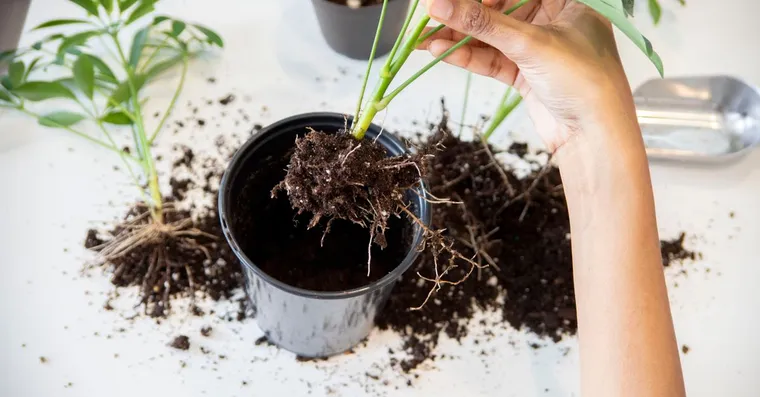
What Does Root Rot Look Like? Signs at Every Stage
Root rot is diagnosed at the roots, not the leaves. Here is what healthy and rotting roots look like, and which above-ground signs point to it.
Why Is My Monstera Turning Yellow? Causes and Fixes
Yellow leaves on a monstera usually mean a watering problem, but light, feeding, and age all matter; here is how to tell them apart.
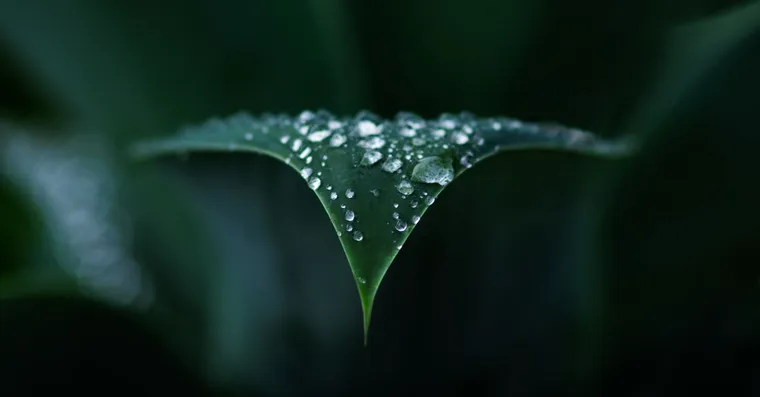
Guttation: Why Your Houseplant Drips Water at Night
Those water drops on leaf tips in the morning are guttation, not sweat or dew. What causes it, when it is harmless, and when it hints at overwatering.
Not sure what plant you have? Identify it from a photo and we will point you at its care guide.
Frequently asked questions
How do I tell if my plant is overwatered or underwatered?
Check the soil, not just the plant, because both problems cause drooping and yellowing. Push a finger or skewer in to root depth: wet, heavy, sour-smelling soil means overwatering, while bone-dry, light soil pulling from the pot sides means underwatering. Soft mushy leaves point to too much water and crispy brittle leaves to too little.
Why is my plant drooping even though the soil is wet?
Wet soil plus a drooping plant usually means overwatering, not thirst. The roots are waterlogged and starting to rot, so they can no longer draw water up, which makes the plant look thirsty. Stop watering, check the roots, and let the soil dry out before doing anything else.
Is my pothos overwatered or underwatered?
A pothos with soft, yellowing lower leaves and soggy soil is overwatered; one with limp leaves and bone-dry soil that perks up within hours of a drink was underwatered. Pothos is forgiving, so when the soil is wet and the leaves droop, hold off watering rather than adding more.
Does overwatering or underwatering kill more houseplants?
Overwatering kills far more houseplants and is harder to recover from, because waterlogged roots rot and rotten roots do not regrow quickly. When you genuinely cannot tell which is happening, waiting is the safer choice.