How to Water Houseplants: How Much, How Often, and How
A practical guide to watering houseplants without a fixed schedule, covering how to check soil moisture, drainage, and top versus bottom watering.
Some links in this guide go to Amazon. As an Amazon Associate we earn from qualifying purchases, at no extra cost to you. How this works.
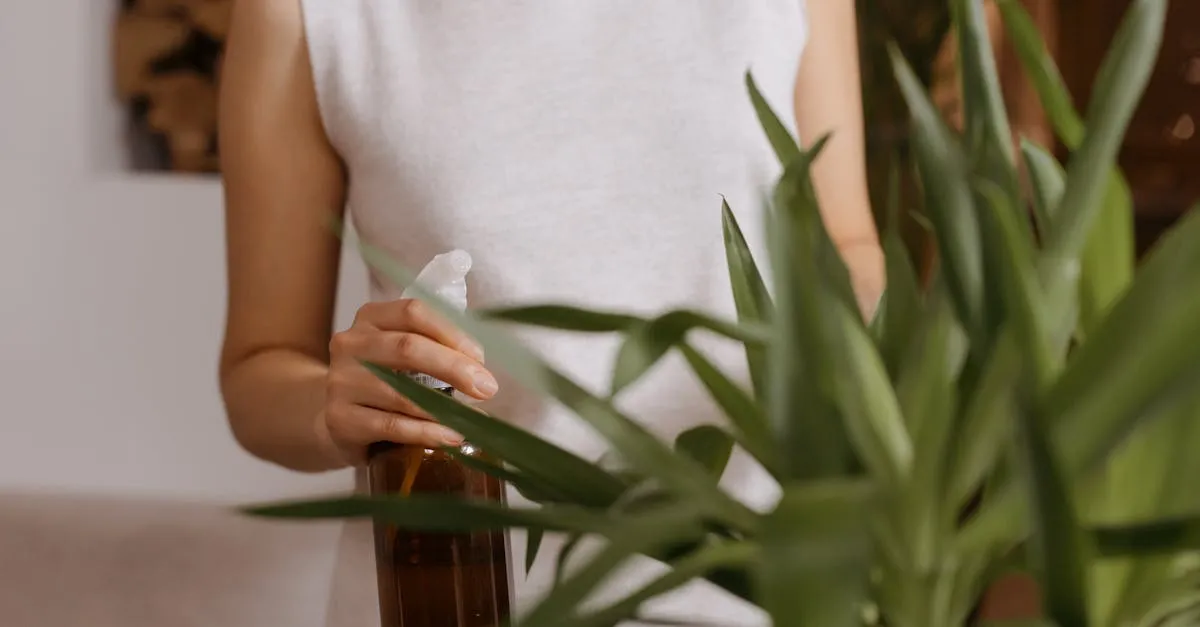
Watering is the single most common way to kill a houseplant, and almost always the problem is too much, not too little. If you take one idea from this guide on how to water houseplants, make it this: water the plant when its soil tells you to, not when the calendar does. A fixed weekly schedule ignores the things that actually decide how fast a pot dries out, and that mismatch is what drowns roots.
Why the weekly watering schedule fails
A plant drinks at a rate set by its conditions, and those conditions change constantly. The same pothos that needs water every five days in a bright July window might go three weeks between drinks in a dim December room. Light, temperature, pot size, soil type, and the season all shift the drying speed, so a number you picked once stops being right within weeks.
The advice to “water once a week” is comforting because it removes the guesswork, but that is exactly the problem. It tells you to add water whether or not the plant needs it, and roots sitting in constantly damp soil cannot breathe. That is how root rot starts, and it is far harder to reverse than a missed watering.
Season is the biggest single lever. In low-light winter most plants roughly halve their water use, so the same finger test that called for water every week in summer may call for it every two to three weeks. The test does not change; the answer it gives does.
Check the soil instead
The reliable signal is the soil itself, not the day of the week.
- Push a finger in. Feel the top 3/4 to 2 inches (2 to 5 cm). For most leafy plants, water when that depth is dry. For succulents and cacti, wait until the whole pot is dry.
- Lift the pot. A watered pot is heavy; a dry one is surprisingly light. This becomes automatic with practice. Lucy Liu, the nursery worker who checks our care guides, says judging pot weight by feel took her about six months of daily bench rounds to become second nature, and it is now far faster than any meter. Once it clicks, you can walk a row of fifty hanging baskets, give each a quick upward tap, and know at a glance which few need water.
- Watch the plant, but late. Drooping and dull leaves are real signals, though they arrive after stress has begun. Use them as a backstop, not your main cue.
How dry is dry enough depends on the plant. Use this as the check-depth at a glance:
| Plant type | Water when |
|---|---|
| Succulents and cacti | The whole pot is bone dry |
| Snake plant, ZZ plant | Dry about three-quarters of the way down |
| Most aroids and leafy plants | The top 3/4 to 2 inches (2 to 5 cm) is dry |
| Ferns, calatheas, peace lily | Only the very surface is dry, never bone dry |
How to water thoroughly
When it is time, water properly. Half-measures cause their own problems.
- Water until it runs out the bottom. Pour slowly and evenly across the surface until water drains from the holes. This wets the entire root ball, not just the top layer.
- Aim for some real runoff. You want roughly 10 to 25% of the pot’s volume to drain out the bottom, which for a 6 inch (15 cm) pot is about 300 to 500ml of waste water. That tells you the whole root ball is wetted, and it flushes out the mineral salts that otherwise build up and brown the leaf tips.
- Tip out the saucer. A pot left standing in drained water re-soaks the roots and undoes the point of draining. Empty it after a few minutes.
- Avoid little sips. Frequent splashes wet only the surface, leaving lower roots dry while encouraging shallow growth and fungus gnats up top.
Use tepid, room-temperature water. Cold tap water can shock or stress sensitive tropical roots and leave pale marks on delicate leaves like African violet and calathea, so room-temperature water is gentler. The easy fix is to fill the can and let it stand for an hour or two before you use it. For delicate propagation plants and tropical imports, Lucy fills the cans the night before so the water reaches room temperature by morning rather than going on icy.
Water deeply and less often, rather than lightly and frequently.
Drainage matters more than technique
No watering method survives a pot with nowhere for water to go. A drainage hole is not optional; it is the difference between excess water leaving and excess water pooling around the roots.
If you love a pot with no hole, use it as a cover and keep the plant in a plastic nursery pot inside it, lifting that out to water. The soil matters too: a dense, water-logged mix stays wet for days, so most plants do better in a free-draining potting mix than in cheap compost straight from the bag.
When bottom watering helps
Bottom watering means standing the pot in a tray of water and letting the soil draw moisture up through the drainage hole. Leave it for 10 to 30 minutes, until the surface feels damp, then remove it and let the excess drain.
It is genuinely useful in two cases. The first is when the potting mix has gone bone dry. A mix in that state shrinks away from the inside walls of the pot and leaves a gap, so water poured on top runs straight down that channel and out the drainage holes. The pot drips from the bottom and looks watered while the root ball stays dry. Bottom watering fixes this, because the soil draws moisture up and swells back out to the walls; keep the pot standing until that happens. The second case is plants like African violets that dislike water on their leaves. It is not magic, though. You still need to let the pot drain fully afterwards, and you should top-water occasionally to flush built-up mineral salts out of the soil.
Too much or too little?
If the leaves yellow and turn soft and the soil is still wet, that is too much water, not too little: see overwatering vs underwatering. If they go crisp and the pot feels light, that is too little, and saving an overwatered plant is the wrong fix.
Build the soil-check habit
Starting tonight, push a finger into the top inch or two (3 to 5 cm) before you reach for the can, and only water when that depth comes up dry. Keep that up for a month and judging a pot by its weight will start to feel automatic, so when the winter light fades and your plants quietly halve their drinking, you will already be reading them rather than the calendar.
Where to go next
Why Is My Monstera Turning Yellow? Causes and Fixes
Yellow leaves on a monstera usually mean a watering problem, but light, feeding, and age all matter; here is how to tell them apart.
Guttation: Why Your Houseplant Drips Water at Night
Those water drops on leaf tips in the morning are guttation, not sweat or dew. What causes it, when it is harmless, and when it hints at overwatering.
Hydrophobic Potting Soil: Why Water Runs Straight Through the Pot
When water races out the drainage holes in seconds and the plant still droops, the soil has gone hydrophobic. How to rewet it properly and stop it recurring.
Not sure what plant you have? Identify it from a photo and we will point you at its care guide.