Guttation: Why Your Houseplant Drips Water at Night
Those water drops on leaf tips in the morning are guttation, not sweat or dew. What causes it, when it is harmless, and when it hints at overwatering.
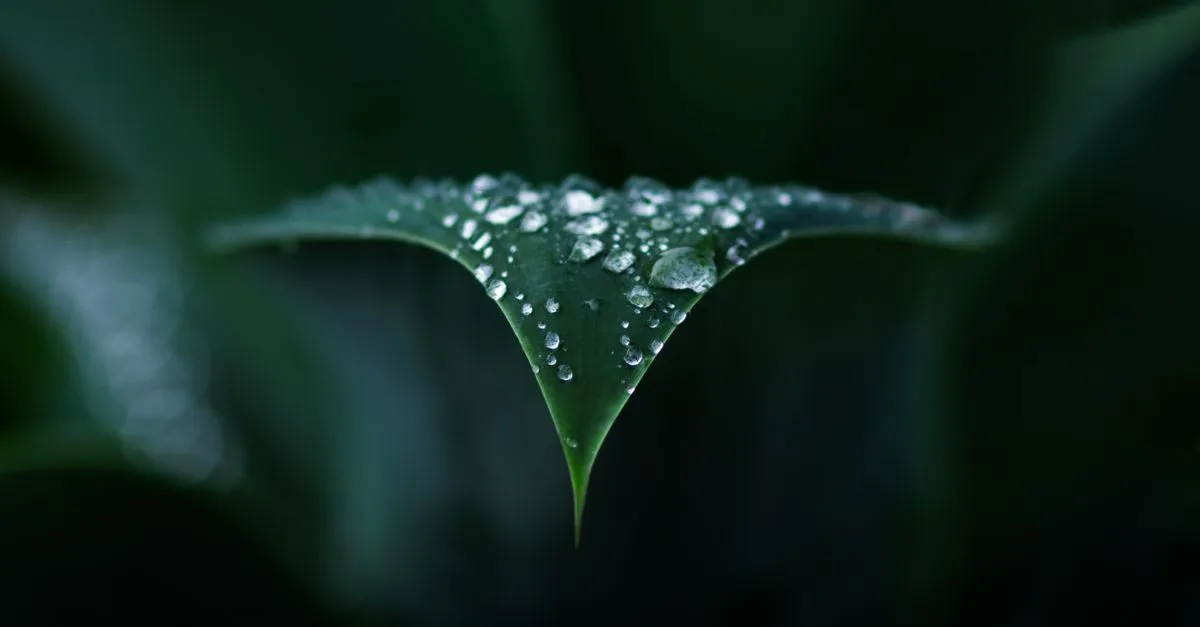
If you have found small beads of water on your plant’s leaf tips first thing in the morning, that is almost always guttation, a normal process, not a leak or a disease. The honest answer to why is my plant dripping water is that the roots are pushing up more water than the leaves can release overnight, so the plant vents the surplus. It looks dramatic, but on a healthy plant it means the opposite of a problem.
Quick answer
Water drops on leaf tips in the morning are almost always guttation, a normal process, not a leak or a disease. Overnight the leaf pores close but the roots keep pushing water up, so the plant vents the surplus through openings at the leaf tips and edges called hydathodes. Monstera, pothos, and alocasia do it routinely and it needs no action. The one signal worth acting on is heavy dripping night after night, which usually means the soil is staying too wet: let the top inch or two (3 to 5 cm) dry before watering again, and water in the morning.
Why is my plant dripping water at night?
During the day, water leaves the plant through tiny pores called stomata, which open so the leaf can breathe. At night those pores close, but the roots keep drawing up water and pushing it upward under what is called root pressure. That pressure needs somewhere to go, so the plant releases the excess through special openings at the leaf tips and edges called hydathodes. By morning you see neat droplets lined along the margins or hanging from the very tip. Guttation shows up overnight precisely because that is when the pores are shut and root pressure builds.
The liquid is not pure water. It is dilute sap, carrying sugars, salts and minerals from inside the plant, which is why it can leave a mark once it dries.
How to tell guttation from condensation and pests
Three things can leave moisture or residue on a leaf, and they are easy to mix up.
Guttation. Droplets sit precisely at the leaf tips and along the edges, where the hydathodes are, usually in the early morning. They are clear and watery when fresh.
Condensation. This settles evenly across the whole leaf surface, and on nearby surfaces too, not just at the tips. It follows a cold night or a humid room and forms wherever warm air meets something cooler, so the window will fog up as well.
Pest honeydew. Sap-sucking insects like scale, mealybugs and aphids excrete a sticky, sugary film that coats leaves unevenly and often drips onto leaves below. If the residue is tacky rather than watery and you can spot tiny insects, that is honeydew, not guttation. The guide to sticky residue on houseplant leaves walks through confirming it.
Guttation is the plant showing you it has water to spare, not that something has gone wrong.
When it is normal and when it is a nudge to check the soil
Some plants guttate so readily that it is part of their character. Monstera, pothos and alocasia are famous for it, as are many other aroids, and waking up to droplets on a monstera is completely routine and needs no action.
What is worth reading is the frequency. Occasional guttation, or a burst the morning after you water, is nothing. Heavy guttation night after night tells you the roots have constant access to more water than the plant is using, which usually means the soil is staying too wet, especially if you water in the evening. If that describes your routine, let the top inch or two (3 to 5 cm) dry before you water again, and water in the morning so the plant works through the moisture during the day. Persistently soggy soil is the road to root rot, so treat frequent heavy dripping as an early prompt to check whether you are overwatering.
The white crusty spots the drops leave behind
Because guttation fluid carries dissolved minerals, each droplet leaves a small pale or white crusty ring once the water evaporates. It is harmless and purely cosmetic, the same mineral residue you see building up on soil and pots. Wipe it off with a soft, damp cloth. If it has hardened, a cloth dampened with a little diluted vinegar lifts it, then go over the leaf with plain water. Doing this now and then also keeps the leaf pores clear.
Guttation, pets, and your furniture
Two small practical points are worth knowing.
Pets. The droplets from a plant that is toxic to cats and dogs carry the same irritating compounds as its sap. A pet that licks water pooled under overhanging leaves can get a sore mouth, so do not park a water bowl or a pet bed directly beneath a big guttating plant like an alocasia. If pets share the room, lean towards pet-safe houseplants for low shelves and floor-level spots.
Furniture. Those mineral-rich drops can spot-stain wood and mark polished surfaces over time. If your plant sits on a wooden sideboard or windowsill, stand it on a saucer or mat rather than letting nightly drops fall on the timber.
What the morning drops are really telling you
Guttation is one of the few plant signals that is usually good news: a healthy, well-hydrated plant tidying up its overnight water balance. Enjoy it on your monstera and pothos, wipe the mineral spots when they appear, and keep pets and wood out of the drip line. The only time to act is when the dripping is heavy every single night, and even then the fix is simply to let the soil dry a little more between waterings.
Where to go next
Why Is My Monstera Turning Yellow? Causes and Fixes
Yellow leaves on a monstera usually mean a watering problem, but light, feeding, and age all matter; here is how to tell them apart.
Hydrophobic Potting Soil: Why Water Runs Straight Through the Pot
When water races out the drainage holes in seconds and the plant still droops, the soil has gone hydrophobic. How to rewet it properly and stop it recurring.
Overwatering vs Underwatering Houseplants: How to Tell
How to tell whether a drooping, yellowing, or crispy houseplant is overwatered or underwatered, the key differences to look for, and what to do next.
Not sure what plant you have? Identify it from a photo and we will point you at its care guide.