Peace Lily Care: Watering, Light, and Why It Droops
A peace lily droops when thirsty and recovers within a few hours of watering. Here is how to read that signal, light it well, and keep the flowers coming.
Some links in this guide go to Amazon. As an Amazon Associate we earn from qualifying purchases, at no extra cost to you. How this works.
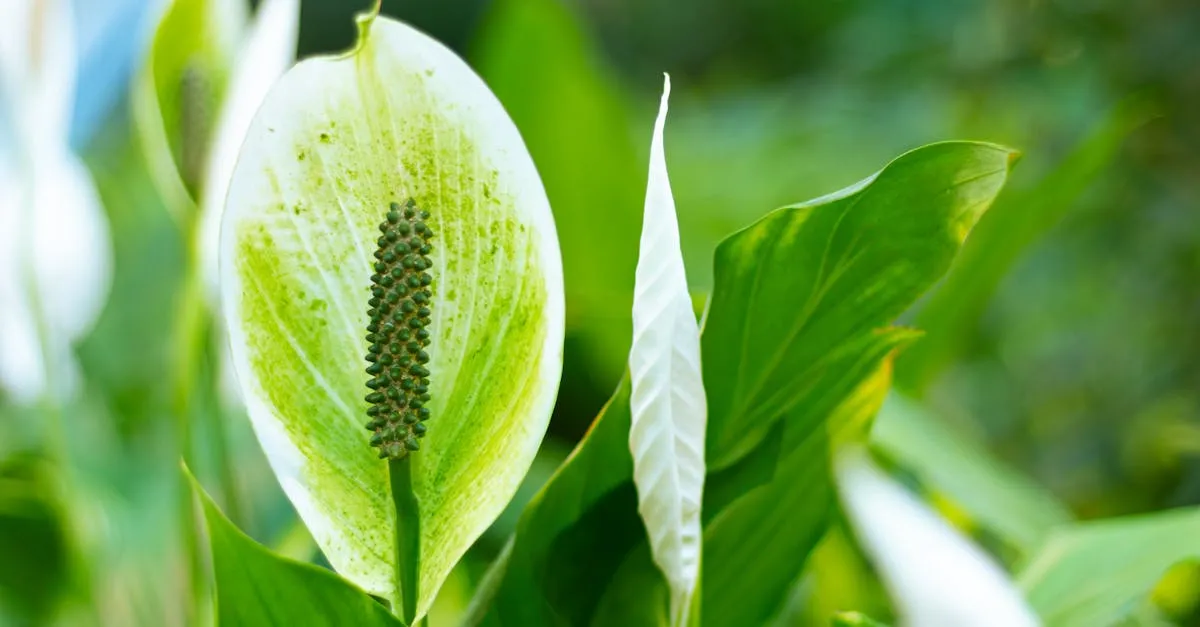
The peace lily is famous for one thing: it wilts dramatically when thirsty, then recovers within hours of a drink. That droop looks alarming, but it is the most useful watering signal any houseplant gives you. Once you understand it, the peace lily becomes one of the easiest plants to keep alive. There are several peace lily varieties on the market, from compact forms to the large-leaved Sensation, but their care needs are essentially the same.
The droop is a feature, not an emergency
When a peace lily runs low on water, its leaves and stems collapse over the side of the pot in a sad, limp heap, as if the plant has fainted. Water it thoroughly and it usually perks back up within two to twelve hours, sometimes up to a full day. The turnaround can be quicker than people expect: Lucy Liu, at her London nursery, often sees a collapsed plant standing tall again about two hours after a good soak. A plant that has been left to collapse repeatedly over months recovers more slowly and less completely each time, so the droop is a backstop, not a watering schedule.
The risk is the opposite habit. If you wait for the droop every single time, you are letting the plant reach mild stress on a schedule, and repeated severe wilting weakens it. Check the soil with your finger first: water when the top 3/4 to 1 inch (2 to 3 cm) feel dry, and you will rarely see a full collapse.
Overwatering is the real danger, because a constantly soggy peace lily droops too, this time from rotting roots rather than thirst. If the soil is wet and the plant still wilts, suspect root rot and check the roots for brown, mushy tissue. One more case to rule out: if you water thoroughly and the plant droops again within 24 to 48 hours, suspect a rootbound plant or root rot before thirst.
Watering without drowning it
Water until liquid runs from the drainage holes, then empty the saucer. Never leave the pot standing in water.
- Frequency. In a warm room, expect to water roughly once a week. In winter, or in lower light, this stretches to every ten to fourteen days. Let the soil guide you, not the calendar.
- Pot and soil. Use a pot with drainage holes and a standard peat-free houseplant mix. A peace lily in a pot without drainage is the most common way these plants die.
- Recovery. If yours has fully collapsed, water it and move it out of direct sun. If it has not recovered after a day, the soil may have dried so hard that water ran straight past the roots. Soak the whole pot in a basin for fifteen minutes.
Yellow leaves, in order of likelihood
Yellowing has three common causes, and the rest of the plant tells you which one:
- A single old leaf, low down. One lower leaf going yellow and soft while the rest looks fine is just age. Cut it off and ignore it.
- Several leaves yellowing, soil wet. Multiple leaves yellowing at once with soggy soil points to overwatering and the start of root rot. Let the soil dry further and check the roots before watering again.
- Pale, washed-out new growth. New leaves coming in pale or yellowish, rather than deep green, usually mean too much light (move it back from the window) or that the plant is hungry after months without feed.
Rootbound droop: when a healthy plant keeps wilting
If a well-watered plant droops again within a day or two, water runs straight through the pot, and the leaves stay limp despite a thorough soak, the plant has likely outgrown its pot. A dense mat of roots holds little soil, so it cannot store enough water between drinks.
Confirm it by sliding the plant out: roots circling the bottom in a tight spiral, with little visible soil, mean it is rootbound. Repot in spring into a pot one size up, no more. A jump that is too big leaves wet soil the roots cannot reach, which invites rot. Peace lilies actually flower better when kept slightly snug, so resist the urge to over-pot. Water it in, then let it settle for a week or two before expecting normal behavior.
How to make more of them: division, not cuttings
A common disappointment: a peace lily cannot be grown from a leaf or a stem cutting. Pop a leaf in water and it simply rots, because there is no growth point on it. Someone arriving with a single leaf snipped off a friend’s plant, hoping to root it in a glass of water, is the mistake Lucy Liu sees most often at her nursery. A peace lily does not work the way a pothos does. The plant grows as a clump of separate crowns instead, and you propagate it by splitting that clump. A crown is a piece of the plant’s underground base with roots already attached, and that is what you need for a new plant to take.
To divide, slide the whole plant out and look for natural sections, each with its own roots and a fan of leaves. Tease or cut these apart so every piece keeps a healthy share of roots, then pot each one separately. Spring is the time to do it, ideally while you are repotting anyway. Expect each division to sulk for a couple of weeks while it recovers, then resume normal growth.
Medium to low light, never harsh sun
The peace lily evolved on tropical forest floors, so it handles shade well and is a genuine low-light survivor. A spot 10 feet (3 m) from a window, or beside a north-facing one, suits it fine.
Direct sun is the mistake to avoid. Hot afternoon light scorches the leaves, leaving pale or brown patches. If your plant survives but never flowers, low light is almost always the cause.
What actually makes it bloom
The white “flower” is a leaf-like bract called a spathe, and getting more of them comes down to a few things, in order of impact:
- More light. A peace lily in deep shade stays alive but rarely blooms. Move it to a brighter spot, still out of direct sun, and flowering improves noticeably.
- Maturity. Young or recently divided plants put their energy into leaves first. Give it time.
- Feeding. A balanced houseplant fertilizer at half strength every four to six weeks in spring and summer supports blooming. See how to fertilize houseplants for amounts. Stop feeding entirely in late autumn and winter, and if you feed regularly, flush the pot with plenty of water every couple of months to wash out salts.
Shop-bought peace lilies are often dosed with a hormone to force blooms, so a new plant may not flower again for a year. That is normal.
Brown tips usually mean your tap water
Crispy brown leaf tips on a peace lily are most often a reaction to fluoride and chlorine in tap water, or to a build-up of fertilizer salts in the soil.
Peace lilies are sensitive to what is in your water in a way most houseplants are not.
Leaving tap water out overnight off-gasses the chlorine, but it does not remove fluoride or dissolved salts, so for persistent tips the real fix is filtered water or rainwater. Flush the pot occasionally by running plenty of water through it to wash out salts. Low humidity and overfeeding contribute too, so trim the brown tips off with scissors and address the cause. The brown leaf tips guide covers the full diagnosis.
Humidity, warmth, and the bathroom question
Peace lilies are content in normal home conditions, but a few numbers help:
- Humidity. Keep ambient humidity above roughly 40 percent to avoid tip browning. Very dry winter air from radiators is the usual trigger for sudden crisping.
- Temperature. They are comfortable between about 65 and 85°F (18 and 30°C). Growth slows below 60°F (15°C), and cold damage starts below roughly 55°F (12°C), so keep them off cold windowsills in winter.
- Drafts. Keep the plant clear of both cold drafts and the hot, drying air directly above a radiator.
A bathroom suits a peace lily well, but only if it has a window for light. A windowless bathroom is too dark, however humid it is.
Toxic to cats and dogs
Peace lilies contain insoluble calcium oxalate crystals. If a pet chews the leaves, expect mouth irritation, drooling, and vomiting. It is rarely fatal, but it is genuinely unpleasant, so keep the plant out of reach. If you want greenery you do not have to police, see pet-safe houseplants.
Aim to never see a full collapse
The mark of a peace lily in good hands is that it almost never faints, because you are reading the soil at the top 3/4 to 1 inch (2 to 3 cm) rather than waiting for the leaves to flop. Treat the dramatic droop as the safety net it is, not the cue you act on, and switch to filtered water or rainwater before the brown tips start rather than after. Come spring, that same steady plant is the one worth dividing and stepping up a single pot size, which is when its next flush of white spathes tends to follow.
Where to go next
Why Is My Monstera Turning Yellow? Causes and Fixes
Yellow leaves on a monstera usually mean a watering problem, but light, feeding, and age all matter; here is how to tell them apart.
Guttation: Why Your Houseplant Drips Water at Night
Those water drops on leaf tips in the morning are guttation, not sweat or dew. What causes it, when it is harmless, and when it hints at overwatering.
Hydrophobic Potting Soil: Why Water Runs Straight Through the Pot
When water races out the drainage holes in seconds and the plant still droops, the soil has gone hydrophobic. How to rewet it properly and stop it recurring.
Not sure what plant you have? Identify it from a photo and we will point you at its care guide.
Frequently asked questions
Should I mist my peace lily?
Misting does little for a peace lily. Any humidity lift lasts minutes, and the brown tips people mist to fix are usually about water quality, not air moisture. Steady ambient humidity above about 40 percent and switching to filtered or rainwater are the real fixes.
Can I grow a peace lily in water or LECA?
Yes. Peace lilies grow well in plain water or in LECA (semi-hydroponics), and for anyone who tends to overwater, that setup removes the soggy-soil risk entirely. Keep the water level below the crown, change it every couple of weeks, and use a dilute hydroponic feed.
Why are the white flowers turning green?
That is normal aging, not a problem. A fresh spathe opens white, then greens and dulls as it matures over a few weeks. Once it has gone fully green and tatty, cut the whole flower stalk back to the base.
Do I cut the brown flower off?
Yes. A spent flower will not recover, so trace its stalk down to the base of the plant and cut it off there rather than snipping just the brown head. This tidies the plant and redirects energy into new growth.