Calathea, Maranta, Ctenanthe or Stromanthe? Telling Prayer Plants Apart
All four prayer plant genera get sold under the same label. How to tell calathea, maranta, ctenanthe and stromanthe apart, and why their care differs slightly.
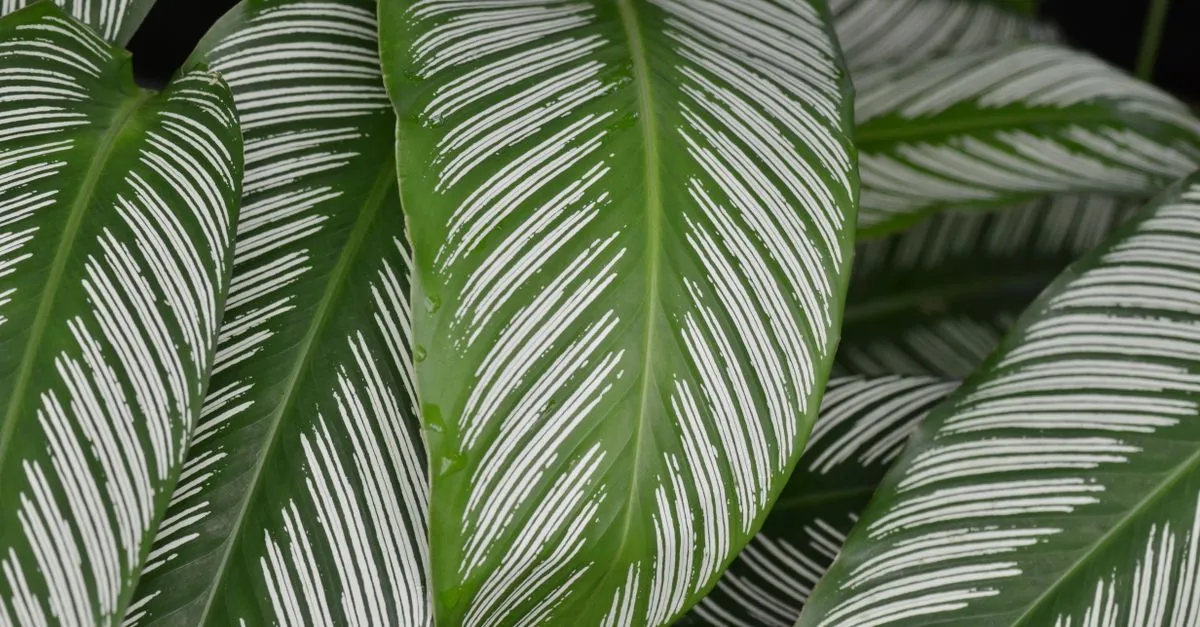
Four plants, one look, and endless mix-ups at the garden center. If you want the short version of the calathea vs maranta difference: maranta trails and folds its leaves up hard at night, calathea (now reclassified as Goeppertia) sits in a tidy clump of rounder patterned leaves, ctenanthe grows tall and upright, and stromanthe waves long pointed leaves splashed with pink and cream. All four belong to the prayer plant family, Marantaceae, and they share more than they differ.
Quick answer
Growth habit separates them faster than leaf pattern does. Maranta trails, sending low spreading stems over the pot rim, with soft oval leaves marked in red veins or dark chocolate blotches. Calathea, now reclassified as Goeppertia, clumps upward in a dense rosette and never trails, carrying the roundest and boldest patterns and often a purple underside. Ctenanthe stands taller on visible stems with lance-shaped leaves and fishbone banding. Stromanthe has the longest, most pointed leaves, streaked green, cream and pink over a deep magenta underside. All four are Marantaceae: they fold their leaves at night, want humidity above roughly 50 percent, and dislike tap water. Easiest to hardest, buy in this order: maranta, ctenanthe, calathea, stromanthe.
What makes them all prayer plants
The family name you want is Marantaceae, and four traits run through every member of it.
They pray. At dusk the leaves fold upward from the stem, then relax flat again by morning. This nightly movement, called nyctinasty, is the trait that names the whole group. If your plant stops doing it, you are usually underwatering or the room is too cold.
They want humidity. These are rainforest floor plants. Below about 50 percent humidity the leaf edges go crispy and brown, so a humidifier earns its place faster here than with most houseplants.
They dislike tap water. Fluoride, chlorine and dissolved salts show up as brown tips and edges quicker on this family than almost any other. Use rainwater, filtered water, or tap water left to stand overnight.
They are pet safe. The whole prayer plant family is regarded as non-toxic to cats and dogs, and maranta and calathea both appear by name on the ASPCA’s list of non-toxic plants. Ctenanthe and stromanthe are not listed individually by the ASPCA, but as close relatives in the same family they are treated as pet safe too. That is a genuine, checkable selling point rather than marketing, and it is rare among the showy foliage plants people actually want on a shelf.
If the leaves stop moving at night, the plant is telling you something is wrong before the edges even brown.
The calathea vs maranta difference, and the other two
Growth habit separates them faster than leaf pattern does. Look at how the plant sits in its pot before you study the markings.
Maranta trails. Maranta leuconeura sends out low, spreading stems that flop over the pot rim, which makes it the one you can grow in a hanging pot. The leaves are oval and soft, often marked with red veins or dark chocolate blotches. This is the classic prayer plant and the easiest of the group. Our prayer plant care guide covers it in full.
Calathea clumps. Goeppertia, the genus still sold everywhere as calathea, grows upward in a dense rosette from the center and never trails. Its leaves are the roundest and most boldly patterned of the four, with stripes, feathering or a paler middle, and often a purple underside. It is also the fussiest, as the calathea care guide explains.
Ctenanthe grows upright. Ctenanthe stands taller than the rest on visible stems, holding lance-shaped, longish leaves out sideways. Look for the fishbone banding on varieties like Ctenanthe burle-marxii. It copes with an average room far better than calathea does.
Stromanthe points and blushes. Stromanthe sanguinea, sold as Triostar or Magic Star, has the longest and most pointed leaves, streaked green, cream and pink, with a deep magenta underside that flashes when the leaves fold up. The color is the giveaway. No other genus in the family does pink like this.
Ranked from easiest to hardest
If you are new to the family, buy in this order:
- Maranta. The most forgiving. It tolerates lower light and bounces back from a missed watering.
- Ctenanthe. Nearly as tough, and it handles normal household humidity better than the last two.
- Calathea (Goeppertia). Beautiful and demanding. It punishes hard water and dry air with brown edges within days.
- Stromanthe Triostar. The diva. It wants bright indirect light to keep its variegation, high humidity, and pure water, all at the same time. The Stromanthe Triostar care guide is worth reading before you commit.
Which one to bring home first
Match the plant to your room, not to the photo on the label. If a shop tag just says “prayer plant” and you want certainty before buying, a photo run through our free plant identifier will usually pin down the genus in seconds. If your air is dry and your water is hard, start with a maranta or a ctenanthe and get a feel for the family before you spend on a Triostar. Once one plant thrives, you will start reading the nightly leaf movement as a daily health check, and the harder genera stop feeling like a mystery.
Where to go next
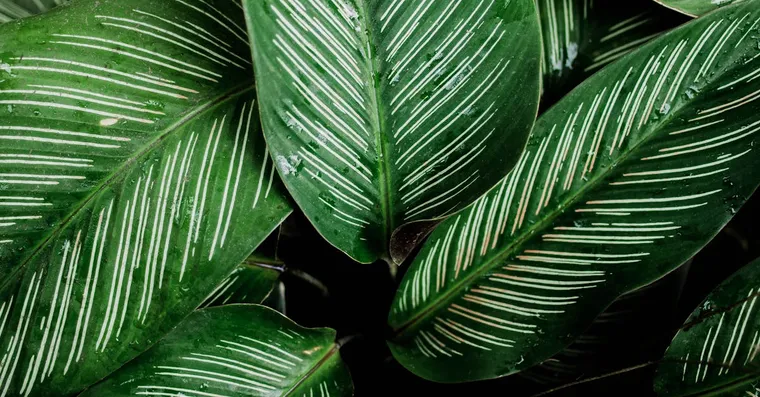
Calathea Care: Why This Prayer Plant Is Worth the Fuss
A practical care guide for calathea, covering its real demands for humidity, distilled water, and indirect light, and whether the plant suits your home.
Monstera vs Split-Leaf Philodendron: Not the Same Plant
Monstera deliciosa and the split-leaf philodendron are two different plants that shops routinely mislabel. Here is how to tell which one you actually own.
Pothos vs Heartleaf Philodendron: How to Tell Them Apart
The reliable ways to tell a pothos from a heartleaf philodendron: cataphylls, petioles, leaf texture and new growth, plus why shops so often mislabel them.
Not sure what plant you have? Identify it from a photo and we will point you at its care guide.
Frequently asked questions
What is the difference between calathea and maranta?
Growth habit separates them faster than leaf pattern does. Maranta trails, sending low spreading stems over the pot rim, with soft oval leaves marked in red veins or chocolate blotches, while calathea (now reclassified as Goeppertia) clumps upward in a dense rosette, never trails, and carries the roundest, most boldly patterned leaves, often with a purple underside.
How do I tell stromanthe apart from the other prayer plants?
By its color. Stromanthe has the longest, most pointed leaves, streaked green, cream, and pink over a deep magenta underside that shows when the leaves fold at night. No other genus in the family does pink like this.
Are prayer plants safe for cats and dogs?
The prayer plant family is regarded as non-toxic to cats and dogs. Maranta and calathea both appear by name on the ASPCA's list of non-toxic plants, while ctenanthe and stromanthe are not listed individually but are treated as pet safe as close relatives in the same family.
Which prayer plant is easiest to care for?
Maranta is the most forgiving: it tolerates lower light and bounces back from a missed watering. Ctenanthe is nearly as tough and handles normal household humidity better than calathea or stromanthe, which are the demanding ones.
Sources
- ASPCA Animal Poison Control lists Prayer Plant (Maranta, family Marantaceae) as Non-Toxic to Dogs, Non-Toxic to Cats, Non-Toxic to Horses.
- ASPCA Animal Poison Control lists Calathea (Calathea spp., family Marantaceae) as Non-Toxic to Dogs, Non-Toxic to Cats, Non-Toxic to Horses. Ctenanthe and stromanthe are in the same family but are not listed individually by the ASPCA.