Prayer Plant Care: Growing Maranta Without Crispy Edges
How to care for a maranta prayer plant, with the humidity, water quality, and light that keep its leaves from going crispy at the edges.
Some links in this guide go to Amazon. As an Amazon Associate we earn from qualifying purchases, at no extra cost to you. How this works.
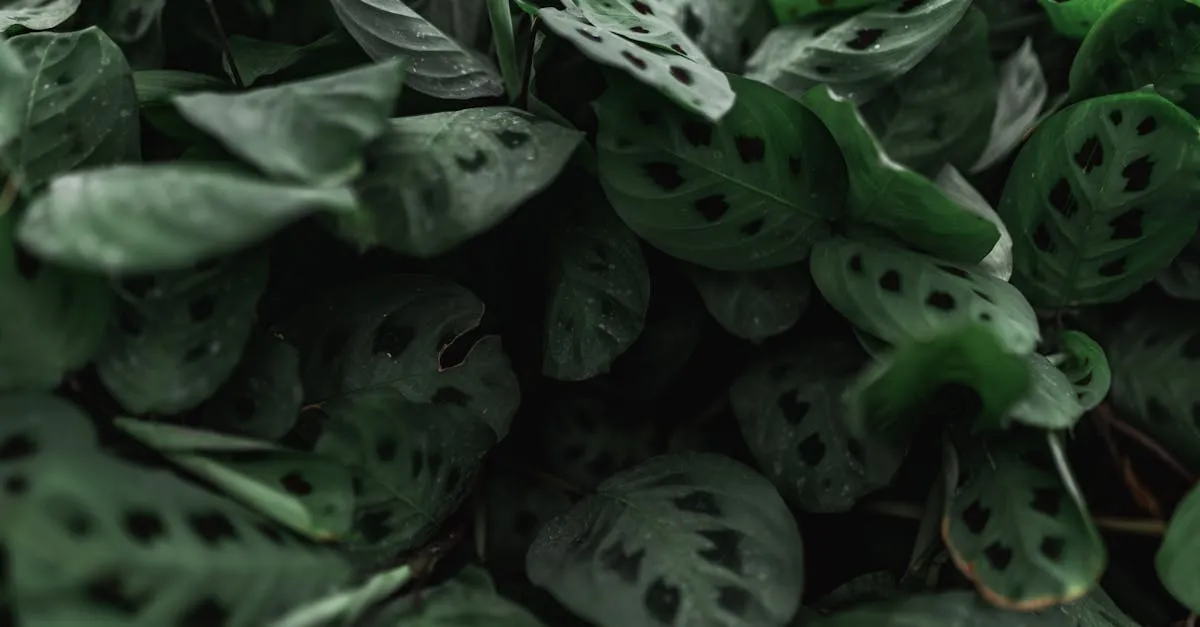
Prayer plants (Maranta leuconeura) earn their name from a quiet evening habit: the leaves fold upward at night, like hands pressed together, then relax open again by morning. Good prayer plant care comes down to three things this rainforest-floor native genuinely needs: medium indirect light, soil that stays lightly moist, and humidity higher than most homes offer. Get those right and the foliage stays patterned and lush. Get them wrong and you get the complaint almost every owner shares: crispy brown edges.
Easier than calathea
If you have killed a calathea, try Maranta next. It tolerates 40 to 50 percent ambient humidity where most calatheas want 60 percent or more, shrugs off a missed watering better, and is less sensitive to fluoride at the concentrations found in lightly filtered tap water. The underlying care philosophy is the same across the Marantaceae family, so the calathea care guide covers the shared humidity methods and water-quality detail in depth; ctenanthe is another relative with a similar reputation for resilience. What makes Maranta its own article is what you will find below: the nightly folding movement that gives it its name, stem-cutting propagation that calathea cannot match, and the trailing habit that occasionally needs pruning.
The praying movement
The folding is called nyctinasty. Motor cells inside the pulvinus, a small swollen joint at the base of each leaf stalk, change their internal pressure in response to falling light. As darkness arrives, cells on one side deflate while those on the other inflate, pulling the leaf upward. By mid-morning the process reverses and the leaf lies flat again. This is entirely normal and the reason the plant bears its common name.
Two deviations are useful decision points. Leaves still folded past mid-morning signal too little light: move the plant closer to a bright window and reassess the following day. Leaves that never fold at all also indicate inadequate light, or stress from root problems or cold temperatures. Reliable evening folding is the clearest sign that light, water, and temperature are about right.
Varieties
Three forms account for most plants in cultivation, and all share identical care.
erythroneura (herringbone plant) has dark green leaves with vivid red veins and a pale stripe along the midrib. It shows the most color in bright indirect light and bleaches fastest if moved into direct sun.
kerchoveana (rabbit’s foot plant) has softer, pale green leaves marked with brown blotches arranged along each side of the midrib. It is the most understated of the three.
massangeana carries near-black leaves with silver feathering along the veins, which gives it the most dramatic look at lower light levels.
Why crispy edges are the number one complaint
Brown, papery leaf margins are the signature prayer plant problem, and they almost always trace to one of three causes, in this order of likelihood.
Dry air. This is the most common culprit. Maranta evolved under humid forest canopy and resents the dry air of centrally heated or air-conditioned rooms. Below about 50 percent humidity, the leaf edges desiccate faster than the plant can supply moisture to them.
Tap water sensitivity. Maranta is sensitive to fluoride and chlorine, and to the salts in softened water. These accumulate at the leaf margins over time and scorch them. If edges brown despite decent humidity and watering, your water is the likely suspect. See Is Tap Water Safe for Houseplants? for the full picture. The brown leaf tips guide covers the wider range of causes across species.
Inconsistent watering. Letting the pot dry out hard, then soaking it, stresses the leaf tips. Maranta wants steady, even moisture rather than a drought-and-flood cycle.
Once an edge has gone brown it will not turn green again. Fix the cause, and judge success by the new leaves.
Light that keeps the pattern
Maranta wants bright, indirect light. An east-facing windowsill, or a spot 3 feet (1 m) back from a brighter window, is close to ideal.
Direct midday sun fades the markings and scorches the leaves, so keep it off the glass in a hot window. Too little light is the opposite problem: growth slows, new leaves come in smaller, and the nightly folding becomes sluggish. If your room is genuinely dim, a modest grow light closes the gap.
Watering and the humidity it cannot live without
Keep the soil lightly and consistently moist, never waterlogged and never bone dry. Water when the top half inch (1 cm) feels dry, and empty the saucer afterwards so the roots never sit in standing water.
Use room-temperature water, and where you can, use rainwater, distilled, or filtered water rather than straight from the tap. Letting tap water stand overnight lets chlorine off-gas, but it does nothing for fluoride or salts, so filtering or rainwater is the more reliable fix.
If your prayer plant browns at the edges no matter what you do, change the water before you change anything else.
Humidity is non-negotiable. Aim for 50 to 60 percent or higher. A humidifier is the only method that reliably works; misting raises humidity for minutes, not hours, and grouping plants helps only a little. A pebble tray is marginal. For the full range of options, see the houseplant humidity guide.
Soil, feeding, and potting
Soil. Use a mix that holds moisture but still drains: peat-free general potting mix loosened with a little perlite works well. Maranta has shallow roots and is happy in a wide, shallow pot.
Feeding. Feed with a balanced liquid fertilizer diluted to half strength every two to four weeks through spring and summer. Stop in autumn and winter when growth slows. Overfeeding adds to the salt load that scorches leaf tips, so err on the light side.
Repotting. Repot every year or two in spring, going up just one pot size. Refreshing the mix also flushes out accumulated mineral salts.
Pruning leggy growth
Maranta trails as it matures and stretches between nodes in lower light, producing a sparse, leggy habit. Cut any stem back to a node just above soil level and the plant will branch from that point, filling out into a bushier shape. Cutting one or two of the longest stems back each spring keeps the plant compact without stressing it all at once.
Habit is also a light indicator. A plant that stays compact with leaves held close together is getting enough light. One that stretches rapidly with long bare sections between leaves needs a brighter spot. Every pruned stem is potential cutting material, so nothing goes to waste.
Propagating from stem cuttings
Unlike calatheas, which can only be increased by division at repotting time, Maranta roots readily from stem cuttings. This is one of the most practical reasons to own one.
Take cuttings in spring or early summer, when growth is active and rooting is fastest. Choose a stem with at least two or three nodes. Cut just below a node to give you a cutting 4 to 6 inches (10 to 15 cm) long, then strip the leaves from the bottom two nodes and leave one or two leaves at the tip. Place the cutting in a jar of room-temperature water or in a small pot of damp perlite, in bright indirect light and out of direct sun. Lucy Liu, at her London nursery, finds the first fuzzy white root nubs appear at the nodes within 7 to 10 days in water. The cutting tends to hold on to its lower leaves throughout this period, drawing on their stored energy to fuel rooting, and these leaves usually drop only once the plant has taken hold in soil.
Water-rooted cuttings show roots within two to four weeks. Pot them on once roots reach 1 to 1 1/2 inches (3 to 4 cm): longer roots are brittle and more likely to snap during potting. Perlite-rooted cuttings can go straight into a peat-free potting mix at the same stage. The houseplant propagation guide covers rooting medium comparisons and timing in more detail. A stem cut back during pruning gives you free material and no waste.
What is normal and what is not
Some behavior looks alarming but is not. Leaves folding up in the evening and lying flatter by day is the prayer plant doing exactly what it should. Slight curling in strong light that relaxes by evening is also fine; for curling that persists or worsens, why houseplant leaves curl gives a full diagnostic.
Pale, mottled stippling and fine webbing on the undersides of leaves point to spider mites, which thrive in the dry air Maranta already dislikes. Check the undersides regularly, especially through winter when indoor air is driest.
Pet safety
Maranta leuconeura is widely listed as non-toxic to cats and dogs, making it a popular choice in pet-owning households. For a broader list of houseplants safe around pets, see pet-safe houseplants.
Judge progress by the newest leaf
The edges that have already browned will stay brown, so do not measure recovery by old foliage; watch instead for the next leaf to unfurl clean and fully patterned. If you change only one thing, switch to rainwater or filtered water before you reach for anything else, since water quality is the cause owners overlook most often. Keep checking the leaf undersides through winter, when the dry indoor air that scorches the margins also invites the spider mites Maranta is prone to.
Where to go next
Calathea Care: Why This Prayer Plant Is Worth the Fuss
A practical care guide for calathea, covering its real demands for humidity, distilled water, and indirect light, and whether the plant suits your home.
Calathea, Maranta, Ctenanthe or Stromanthe? Telling Prayer Plants Apart
All four prayer plant genera get sold under the same label. How to tell calathea, maranta, ctenanthe and stromanthe apart, and why their care differs slightly.
Stromanthe Triostar Care: What This Diva Actually Needs
Stromanthe Triostar is one of the hardest common shop plants to keep happy. What actually causes the browning, and the water, light and humidity it needs.
Not sure what plant you have? Identify it from a photo and we will point you at its care guide.
Frequently asked questions
Why are my prayer plant leaves still folded during the day?
Leaves that remain folded past mid-morning are almost always a sign of too little light. Move the plant closer to a bright window and check again the next day. Persistent stress from root problems or cold temperatures can also interrupt the normal folding cycle.
Can I propagate a prayer plant in water?
Yes. Take a 4 to 6 inches (10 to 15 cm) cutting just below a node in spring or early summer, strip the leaves from the bottom two nodes, and stand the cutting in a jar of room-temperature water in bright indirect light. Roots appear within two to four weeks; pot the cutting on once roots reach 1 to 1 1/2 inches (3 to 4 cm).
Is a prayer plant easier to care for than a calathea?
Generally yes. Maranta tolerates 40 to 50 percent humidity where most calatheas want 60 percent or more, and it recovers better from a missed watering. It is a good first buy if you have struggled to keep calatheas alive.
Is a prayer plant safe for cats and dogs?
Maranta leuconeura is widely listed as non-toxic to cats and dogs, making it a popular choice in pet-owning households. See the pet-safe houseplants guide for a broader list of safe options.
Sources
- ASPCA, Toxic and Non-Toxic Plants: Prayer Plant (Maranta leuconeura).
- Royal Horticultural Society (RHS), Houseplant growing guides: Maranta leuconeura.