Why Is My Succulent Stretching? Etiolation Explained
What etiolation is, why succulents stretch and lose their shape, and how to fix a leggy plant and prevent it happening again.
Some links in this guide go to Amazon. As an Amazon Associate we earn from qualifying purchases, at no extra cost to you. How this works.
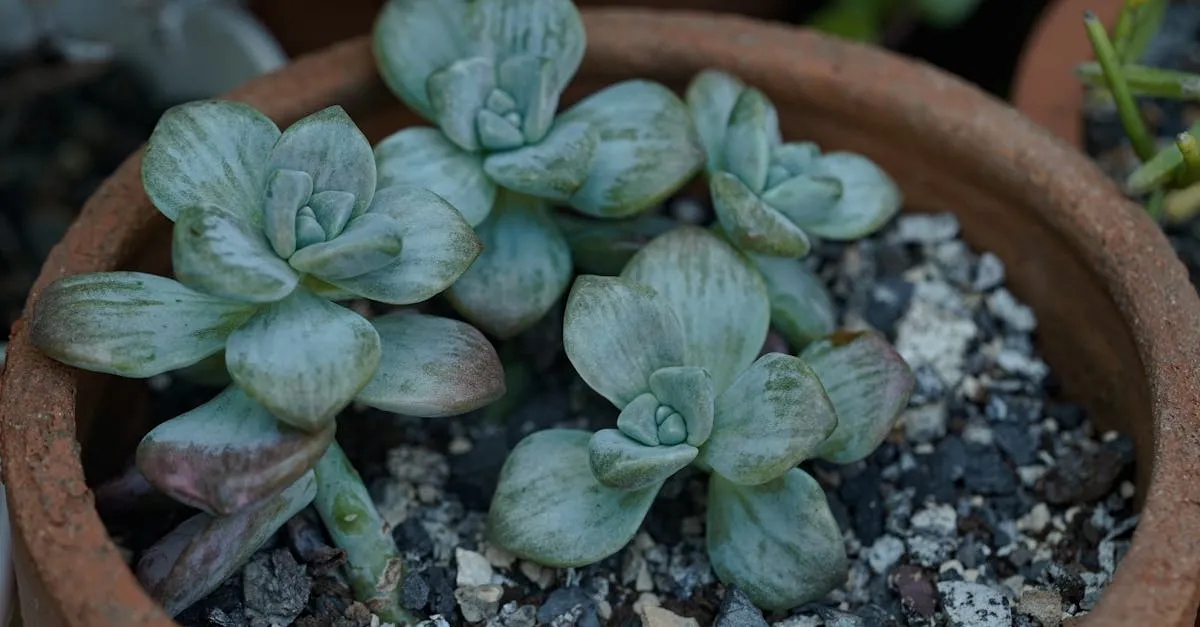
If your succulent has gone from a tight, compact shape to a tall, pale stalk with widely spaced leaves, it has stretched. An etiolated succulent is one that has grown leggy in a search for light, and the honest answer is that the stretched part will not snap back. You cannot reverse it. You can only correct the cause and grow the plant fresh.
What an etiolated succulent looks like
Etiolation is the plant elongating its stem because it is not getting enough light. The signs are consistent and easy to read once you know them.
- The gap between leaves widens. A healthy succulent holds its leaves close together in a rosette or a dense column. A stretched one shows bare stem between each leaf.
- The stem leans or bends toward the brightest part of the room, often a window.
- The color fades. Reds, purples, and blues drain away and the plant turns a flat, pale green as it produces more chlorophyll to catch what light there is.
- Leaves point downward or splay outward instead of cupping up, and they may look thinner.
None of this means the plant is dying. A stretched succulent can be perfectly healthy. It is simply telling you, clearly, that its spot is too dark.
Why stretching happens
There is only one real cause: not enough light. Everything else is a version of that.
Too little light. Most succulents come from open, sunny habitats and want several hours of direct sun a day. A spot that feels bright to you is often dim to a succulent. North-facing windows, interior shelves, and corners more than 3 feet (1 m) from glass are common culprits.
Short winter days. Even a good south-facing window delivers weaker, briefer light in winter. Plants that held their shape all summer can stretch from autumn onward. Our guide to succulent winter care covers how to manage this.
The wrong expectations from the shop. Succulents are often sold as easy, low-light desk plants. That is a marketing convenience, not the truth. Almost no succulent thrives in low light, and the leggy growth you see is the gap between the claim and the plant’s actual needs.
Note that stretching is a light problem, not a watering problem. If your plant is soft, translucent, or collapsing rather than tall and pale, that is a different issue: see why is my succulent soft and mushy.
Why you cannot reverse it
This is the part people most want to be untrue. Once a stem section has elongated, it stays elongated. Plant cells do not contract, and the wide gaps between leaves are permanent. Moving the plant to bright light will stop further stretching, and new growth will come in compact, but the stretched stem itself will always look stretched.
Better light prevents the next stretch; it never undoes the last one.
So you have two honest choices. Accept the leggy look, which is fine if the plant is healthy and you do not mind it. Or behead the plant and start the good growth over.
How to fix an etiolated succulent
Beheading sounds drastic but it is routine and the plant tolerates it well.
- Cut the top off with clean, sharp scissors or a knife, just below a healthy section of the rosette. Leave an inch or two (3 to 5 cm) of stem on the cutting.
- Let the cutting dry for two to four days in a shaded spot until the cut end forms a callus. Planting it wet invites rot.
- Set the callused cutting on dry succulent mix. Roots will form within a few weeks. Water lightly only once roots appear.
- Keep the original base. The bare stump usually pushes out one or more new offsets from along its length, often giving you several compact plants.
The stretched middle section can also be cut into pieces and propagated. Our full guide to propagating succulents from leaves and cuttings walks through it.
Preventing it from happening again
The fix and the prevention are the same thing: more light.
- Give the plant the brightest window you have, ideally south or west facing, and aim for four to six hours of direct sun a day.
- Rotate the pot a quarter turn every week or two so it grows evenly instead of leaning.
- Use a grow light if your home simply does not get enough sun, especially in winter. A grow light run for ten to twelve hours a day keeps succulents compact through the darkest months.
- Watch new growth. If fresh leaves start spacing out, act before the whole plant stretches.
Catch the next stretch before it starts
The mistake that costs you a plant’s shape is waiting to see whether it really needs more light. By the time the leaf gaps are obvious the stretch is already permanent, so move borderline plants to your brightest window now rather than at the first sign of bare stem. Once a succulent is holding tight, compact growth through a full winter, you know its spot is finally bright enough.
Where to go next
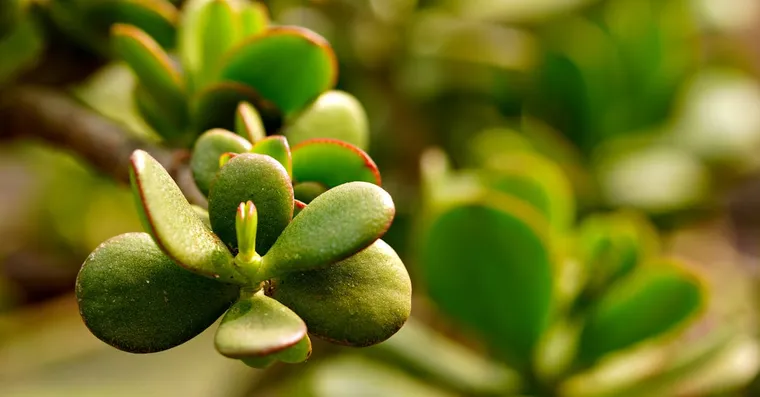
Why Is My Jade Plant Dropping Leaves?
The common causes of a jade plant dropping leaves, from watering mistakes and cold drafts to stress, and how to pin down yours.
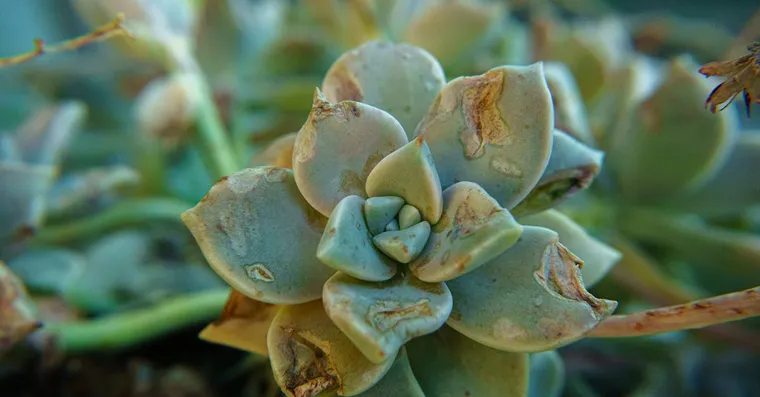
Why Is My Succulent Soft and Mushy?
How to diagnose a soft, mushy, or translucent succulent, tell overwatering from rot, and decide whether the plant can still be saved.
Fungus Gnat Larvae: What They Look Like and How to Kill Them
Fungus gnat larvae live in the top few centimetres of soil and eat roots. Here is how to confirm you have them and the treatments that actually clear them.
Not sure what plant you have? Identify it from a photo and we will point you at its care guide.