Succulent Winter Care: Watering, Light, and Dormancy
How to keep succulents healthy through winter indoors and out, including reduced watering, cold tolerance, and which types stay dormant.
Some links in this guide go to Amazon. As an Amazon Associate we earn from qualifying purchases, at no extra cost to you. How this works.
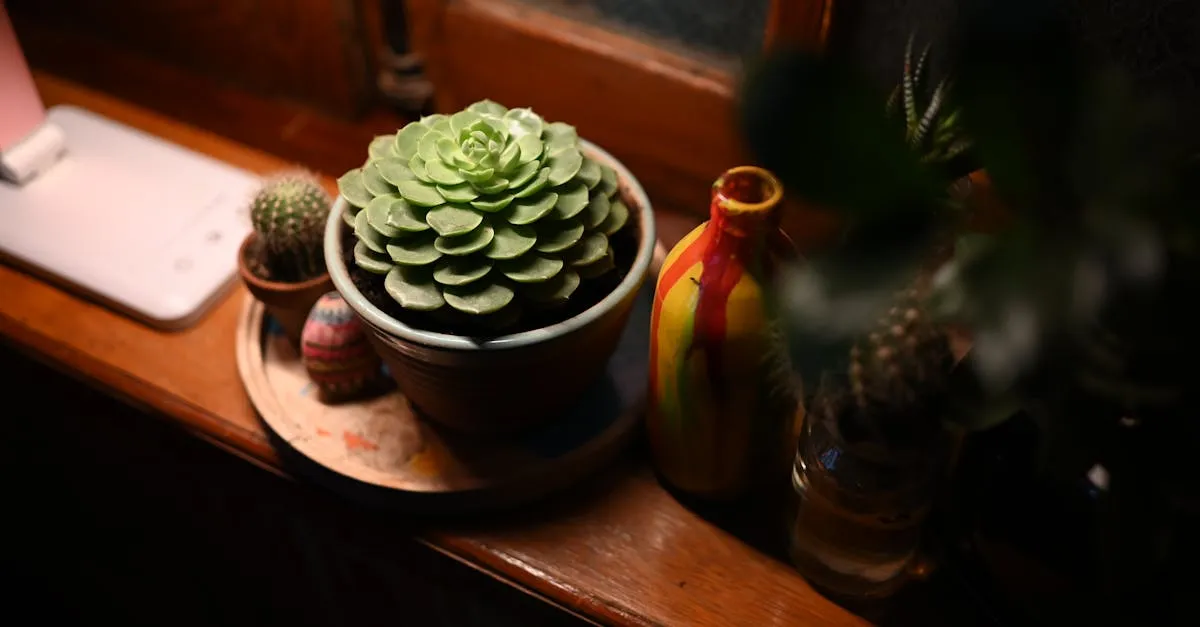
Succulent care in winter is mostly about doing less, not more. Most succulents slow right down or go fully dormant in the colder, darker months, which means they need far less water and as much light as you can give them. The honest part: frost kills most popular succulents outright, so any tender type living outdoors has to come inside before the first cold snap.
Why succulents change in winter
Light and warmth drive succulent growth. As days shorten and indoor temperatures drop, most common succulents, including echeveria, jade, haworthia and aeonium, ease into a resting phase. They stop putting out new leaves, draw less water from the soil, and effectively idle until spring.
A few succulents flip this pattern. Aeoniums in particular are winter growers: they often look their best in cool months and rest through hot summers. If you grow aeoniums, expect them to stay a little more active than the rest of your collection. For everything else, treat winter as downtime.
This dormancy is normal and healthy. You are not trying to push growth through winter. You are trying to keep the plant alive and unstressed until conditions improve.
How to handle watering in winter
This is where most winter losses happen. A dormant succulent uses very little water, so the soil stays wet far longer than it does in summer. Wet soil plus cold plus low light is the exact recipe for root rot.
Cut watering back hard:
- Water far less often. Many succulents need water only every three to five weeks in winter, some even less. Let the soil dry out completely, then wait a few more days before watering.
- Check the soil, not the calendar. Push a finger in, or lift the pot. If it still feels damp or heavy, do not water. When you do water, give enough to wet the whole root ball, then drain fully.
- Water in the morning. This lets excess moisture evaporate during the warmer part of the day rather than sitting cold overnight.
If a plant looks slightly shriveled or its lower leaves go a touch soft, that is usually fine in winter and easily fixed with one watering. A succulent that turns translucent, swollen and mushy has been overwatered, and that is much harder to reverse. For the year-round method, see how often to water succulents.
Giving succulents enough light
Winter light is weak and short, and succulents feel it. The classic winter symptom is etiolation: the plant stretches, pales, and the rosette opens up as it reaches for a light source that is not strong enough.
- Use your brightest window. A south-facing sill, or as close to it as you have, is ideal in winter. Light that would scorch a plant in summer is rarely a problem in the low winter sun.
- Turn the pot weekly. This stops the plant leaning permanently towards the glass.
- Add a grow light if needed. If your home is genuinely dark, a grow light keeps color and form intact through winter. A practical buying guide covers what actually works.
Stretching in winter is the plant telling you it wants more light, not more water.
Temperature, frost, and bringing plants indoors
Here is the reality the labels often skip. Most popular succulents are not frost-hardy. Echeveria, jade, most aloes and haworthia are damaged or killed by frost, and a single hard freeze can turn leaves to mush. “Cold tolerant” on a tag usually means it dislikes heat, not that it survives ice.
If your succulents spend summer outdoors, bring tender types inside well before the first frost, ideally once nights drop below about 40°F (5°C). Indoors, keep them away from cold drafts and off windowsills that get icy at night, and away from radiators that dry and overheat the air. A bright, stable spot between roughly 50 and 65°F (10 and 18°C) suits most of them.
A genuinely hardy minority, such as many sempervivums and some sedums, can stay outside through frost. Check the specific plant rather than assuming.
Feeding and leaving plants alone
Do not fertilize dormant succulents. There is no growth to support, and feeding a resting plant just adds salts to soil it cannot use. Resume feeding in spring when you see new growth.
Hold off on repotting and propagating too. Both work far better in the active season, when roots and cuttings recover quickly. If you want to plan ahead, read up on propagating succulents and start once spring arrives. Winter is for observing, not intervening.
Easing back into spring
The single fault that kills more winter succulents than cold is the habit of watering on a summer schedule, so let the soil tell you when, not the date. Treat the first sign of fresh growth in early spring as your cue to slowly increase watering and resume feeding, rather than flooding a plant that is still half asleep. Step up the routine gradually over a few weeks, and the plant that idled quietly through winter will be the one that fills out fastest once the light returns.
Where to go next
Winter Houseplant Care: Watering, Light, and Heating
How to look after houseplants in winter, from cutting back on water and skipping fertilizer to coping with short days and dry air from heating.
How Often Should You Water Succulents?
How to water succulents by season, soil, and pot rather than a fixed schedule, plus how to read the leaves for signs of thirst.
Why Is My Monstera Turning Yellow? Causes and Fixes
Yellow leaves on a monstera usually mean a watering problem, but light, feeding, and age all matter; here is how to tell them apart.
Not sure what plant you have? Identify it from a photo and we will point you at its care guide.