Aeonium Care: Growing Black Rose and Other Varieties
How to care for aeonium succulents including the dark Zwartkop, with advice on their summer dormancy, watering, and light needs.
Some links in this guide go to Amazon. As an Amazon Associate we earn from qualifying purchases, at no extra cost to you. How this works.
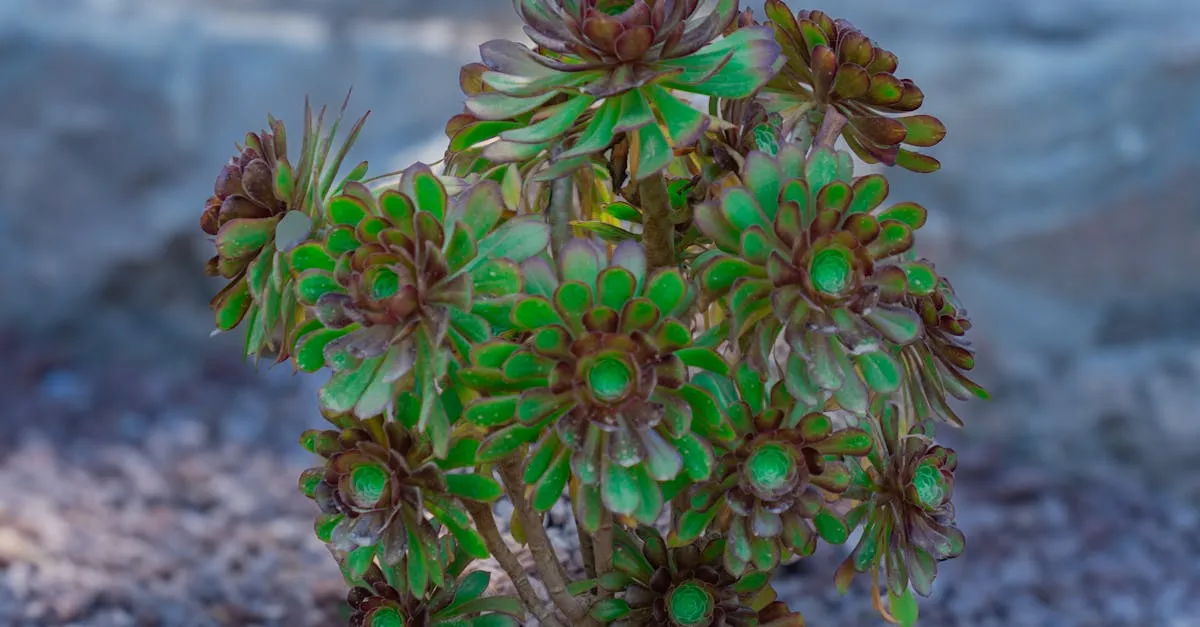
Aeoniums break the usual succulent rules, and that catches owners off guard. The most important thing to know about aeonium succulent care is that these plants are winter growers: they put on growth through the cooler months and slow right down in summer heat. If your aeonium curls its rosettes tight, drops lower leaves, and looks half dead by July, it is almost certainly dormant, not dying.
Why aeoniums grow in winter and rest in summer
Aeoniums come from the Canary Islands and parts of North Africa, where summers are hot and dry and winters are mild and damp. They have adapted to that pattern, so their active season is the opposite of most houseplants. Through autumn, winter, and spring, expect open, flat rosettes and steady new growth. As temperatures climb above roughly 80°F (27°C), the plant protects itself: the rosettes fold inward into tight balls, lower leaves shrivel and drop, and growth stops. This summer dormancy looks alarming but is the plant working exactly as it should. Do not try to feed or force it out of this state.
Aeonium succulent care through the reversed watering cycle
Watering is where most aeoniums are lost, because the instinct to water more in summer is exactly wrong here.
Autumn to spring (growing season). Water thoroughly when the top inch or two (3 to 5 cm) of soil are dry, then let the excess drain away. In active growth the plant uses water steadily, so this may mean watering every week or two depending on your conditions. The rosettes should look open and firm.
Summer (dormancy). Cut back hard. A small drink every few weeks is enough to stop the roots drying out completely. The curled rosettes need very little, and soggy soil in summer heat is the fastest route to root rot. When in doubt, wait.
The general rule for succulents, that you water less in winter, is reversed for aeoniums. If you keep one alongside other succulents, water it on its own schedule rather than the group’s.
Light, soil, and temperature
Light. Aeoniums need bright light to keep their color and compact shape. A spot right at a sunny window is ideal indoors. Too little light and the rosettes stretch, the stems go leggy, and the dark varieties fade to plain green. If yours is stretching out, it needs more light, not less water.
Soil. Use a free-draining mix: a standard cactus and succulent compost, or potting mix cut with extra grit or perlite. The pot must have a drainage hole.
Temperature. Aeoniums are happy in normal room temperatures and prefer it on the cooler side. They are not frost hardy, so keep them above about 40°F (5°C).
Growing black rose and other varieties
The variety most people want is Aeonium ‘Zwartkop’, the so-called black rose, with near-black rosettes on tall branching stems. That dark color is sunlight-dependent: in strong light it deepens to glossy maroon-black, and in poor light it reverts to green. The color is not a fixed trait you bought, it is a response you maintain with good light.
Other common types behave the same way. Aeonium arboreum forms branching shrubs of green rosettes. Aeonium ‘Sunburst’ has variegated cream and green leaves with pink edges. Aeonium tabuliforme grows as a flat, almost two-dimensional disc. All of them are winter growers with summer dormancy, so the care above applies across the board. If you want other compact, colorful plants to grow alongside an aeonium, polka dot plant care and kalanchoe care are both worth a look for their vivid, manageable foliage and flowers.
A black rose that has turned green has not been damaged, it has simply been told there is not enough light.
One quirk worth knowing: aeoniums are monocarpic. An individual rosette that flowers will die after blooming. This is normal and not a care failure. Branching types carry many rosettes, so losing one to flowering does not end the plant.
Feeding and propagation
Feeding. Feed lightly during the growing season only, autumn through spring, with a diluted balanced or succulent fertilizer every month or so. Never feed a dormant summer plant.
Propagation. Aeoniums root easily from stem cuttings. Take a cutting in the growing season, let the cut end callus for a few days, then set it in dry, free-draining mix and water sparingly until roots form. Unlike many succulents, aeoniums do not reliably grow from single leaves, so use stem or rosette cuttings.
Letting your aeonium ride out the summer
The mistake that kills most aeoniums is reaching for the watering can when the rosettes curl tight and the lower leaves drop in the heat; that is dormancy, not thirst, and extra water in warm, slow-draining soil is exactly what turns a resting plant into a rotting one. Leave it nearly dry until autumn, keep it in the brightest spot you have, and the flat, open rosettes will come back on their own as the weather cools. A healthy aeonium is meant to look its worst in high summer and do all its real growing once everything else has stopped.
Where to go next
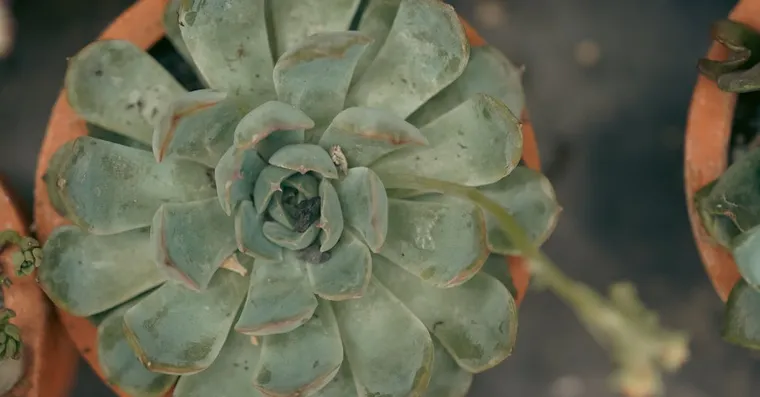
Echeveria Care: Keeping the Rosette Succulent Colorful
How to care for echeveria succulents indoors and out, with advice on light, watering, soil, and keeping their rosettes tight and bright.
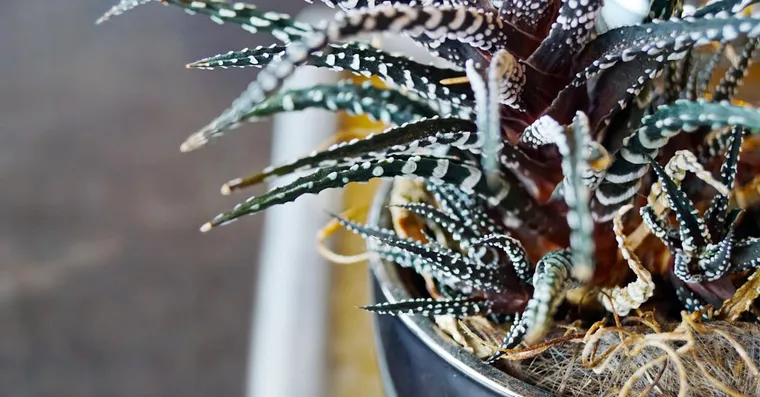
Haworthia Care: Growing the Zebra Succulent Indoors
A care guide for haworthia, the zebra succulent, covering its tolerance for lower light, careful watering, and slow, tidy growth.
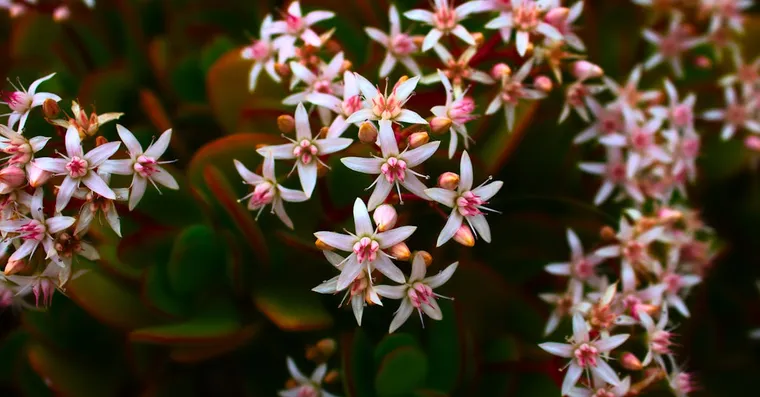
Jade Plant Care: Growing Crassula Ovata Indoors
A complete care guide for the jade plant, covering light, watering, soil, pruning, and how to keep this slow succulent compact and healthy.
Not sure what plant you have? Identify it from a photo and we will point you at its care guide.