Echeveria Care: Keeping the Rosette Succulent Colorful
How to care for echeveria succulents indoors and out, with advice on light, watering, soil, and keeping their rosettes tight and bright.
Some links in this guide go to Amazon. As an Amazon Associate we earn from qualifying purchases, at no extra cost to you. How this works.
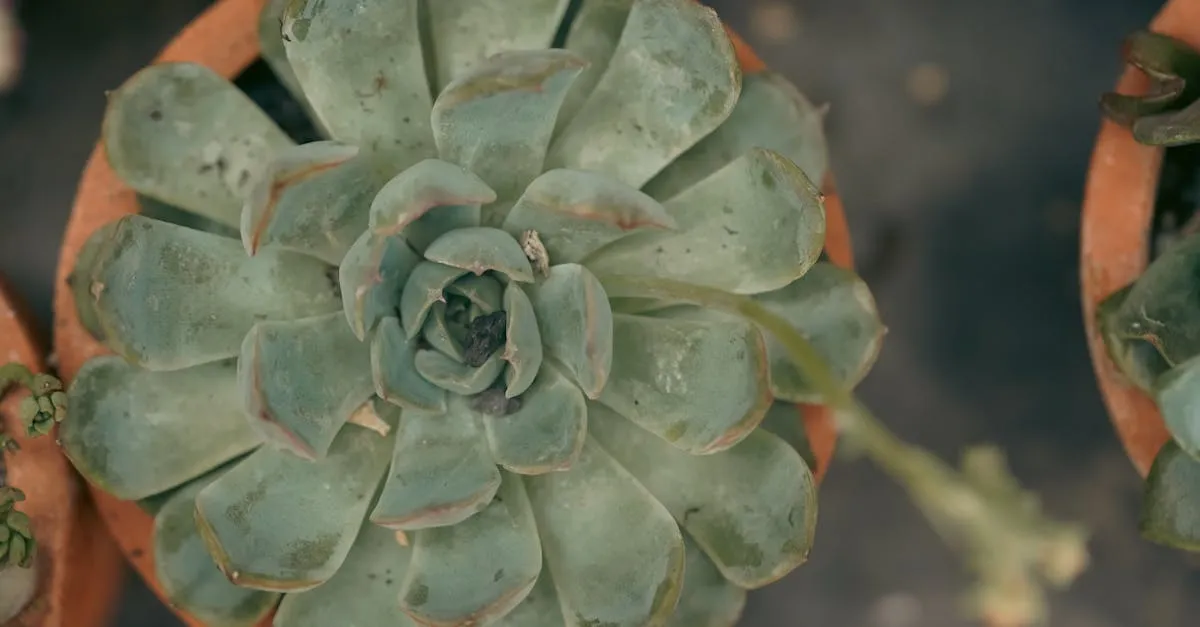
Echeverias are sold as easy succulents, and they are tough plants. But the honest truth behind good echeveria care is light: these rosettes evolved in bright, open ground, and indoors they rarely get enough of it. Without strong light they stay alive but stretch out and fade, losing the tight, colorful form that made you want one.
What an echeveria actually needs
Echeverias are rosette-forming succulents from Mexico and Central America. In the wild they sit in full sun on rocky slopes, which is why the leaves are thick, waxy, and often tinted pink, blue, or purple. Those colors are a stress response to light, not a default state. Indoors, your job is to give the plant enough light and dry enough roots to keep that compact shape.
Light. This is the whole game. Give an echeveria the brightest spot you have, ideally a south or west-facing windowsill with several hours of direct sun. An east window can work but is often marginal. If the plant is more than 3 feet (1 m) from the glass, it is almost certainly underlit.
Water. Soak the soil thoroughly, then leave it completely until it is bone dry. That usually means watering every two to three weeks in summer and far less in winter. Water the soil, not the rosette: liquid trapped between the leaves invites rot.
Soil and pot. Use a gritty, fast-draining mix, either a bagged cactus and succulent compost or houseplant compost cut with about a third perlite or coarse sand. The pot must have a drainage hole. A terracotta pot helps, because it dries the soil faster than plastic.
Why echeveria care indoors is mostly a light problem
Most echeveria failures are not watering failures. They are light failures. A windowsill that feels bright to you is dim by succulent standards, and the plant responds in two visible ways.
First, it stretches. The stem lengthens, the rosette opens up, and the leaves point upward and space out, reaching for more light. This is etiolation, and it does not reverse. The stretched growth is permanent, though you can behead and re-root the rosette to start a tighter one.
Second, it fades. The pinks, reds, and purples drain away and the plant turns plain green. Green is the plant’s survival color: it maximizes light capture when light is scarce. Bring the light back up and new growth will color again, but the faded leaves stay green.
If your echeveria is green and reaching, it is not unhappy with water, it is starving for light.
Getting the color and shape back
If your plant has already stretched or faded, you have a few options, ranked by how well they work.
- Add a grow light. This is the most reliable indoor fix. A decent LED grow light run for 10 to 12 hours a day gives an echeveria the intensity a windowsill cannot. See our grow light buying guide for what to look for.
- Move to the strongest window. If you have a bright south-facing sill that is currently empty, that is the best free option.
- Behead and re-root. Cut the rosette off the stretched stem, leave the cut end to callus for a few days, then set it on dry soil to grow new roots. You get a compact plant again, and the bare stem often sprouts offsets.
Move plants into stronger light gradually. An echeveria taken straight from a dim room into direct summer sun can scorch, leaving pale or brown patches that do not heal.
Common echeveria problems
Soft, translucent, mushy leaves. This is overwatering or rot. Lower leaves naturally shrivel and die, which is normal, but soft upper leaves mean trouble. Check the causes of a soft, mushy succulent and act quickly.
A bare, leggy stem. Etiolation from low light. Behead and re-root as above.
Powdery white coating rubbing off. That is the plant’s natural waxy bloom, called farina. It protects against sun and water loss, so handle leaves as little as possible and do not wipe it away.
White cottony tufts in the rosette. Mealybugs, which love the sheltered crevices between echeveria leaves. Treat them early, before they spread.
Let the rosette tell you when the light is wrong
Before you reach for the watering can, read the rosette: a tight, colored form means the light is right, while stretching and fading mean it is not, and no amount of watering tweaks will fix that. The mistake to avoid is waiting until winter, when indoor light drops sharply and a marginal east or north window tips an already-struggling plant into etiolation, so sort out a brighter spot or a grow light before the dark months arrive. Keep the rosette compact and the color will look after itself.
Where to go next
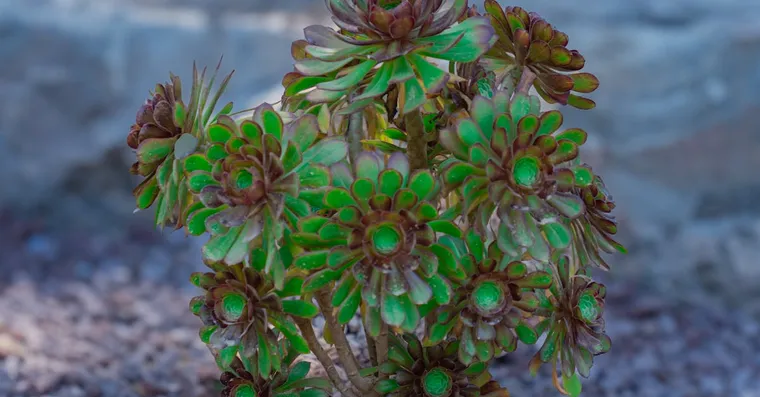
Aeonium Care: Growing Black Rose and Other Varieties
How to care for aeonium succulents including the dark Zwartkop, with advice on their summer dormancy, watering, and light needs.
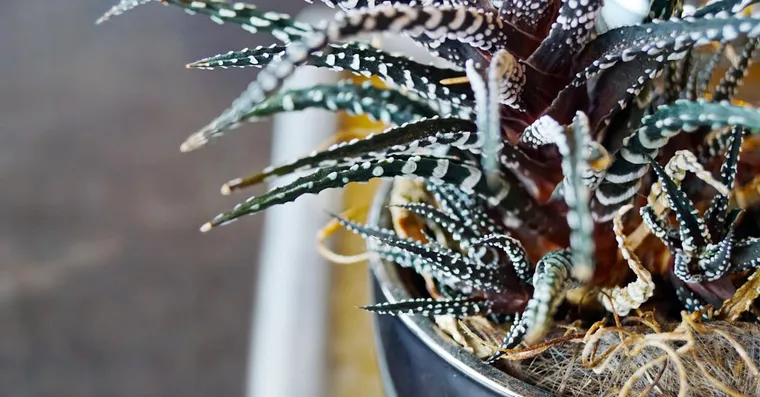
Haworthia Care: Growing the Zebra Succulent Indoors
A care guide for haworthia, the zebra succulent, covering its tolerance for lower light, careful watering, and slow, tidy growth.
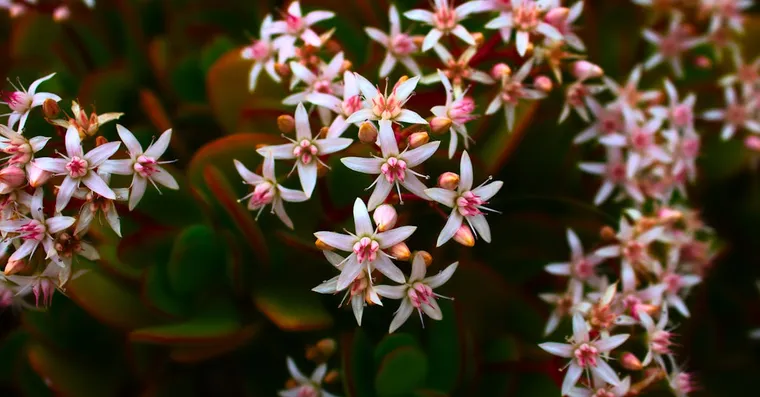
Jade Plant Care: Growing Crassula Ovata Indoors
A complete care guide for the jade plant, covering light, watering, soil, pruning, and how to keep this slow succulent compact and healthy.
Not sure what plant you have? Identify it from a photo and we will point you at its care guide.