Haworthia Care: Growing the Zebra Succulent Indoors
A care guide for haworthia, the zebra succulent, covering its tolerance for lower light, careful watering, and slow, tidy growth.
Some links in this guide go to Amazon. As an Amazon Associate we earn from qualifying purchases, at no extra cost to you. How this works.
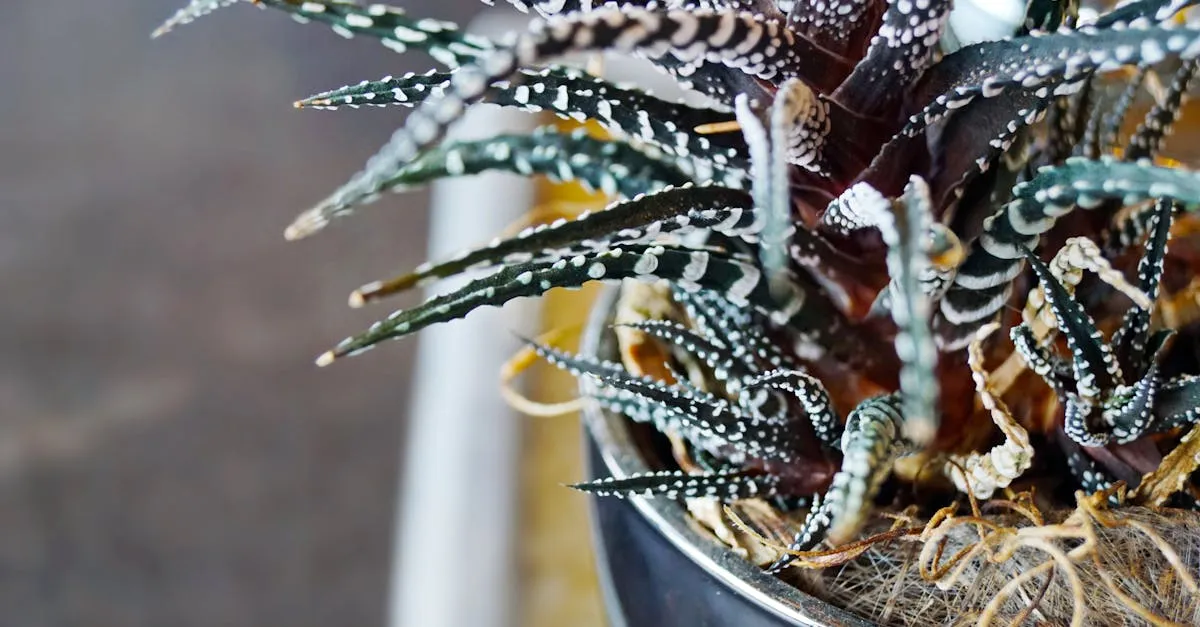
Most succulents sold as “indoor plants” are quietly struggling, because a sunny windowsill rarely matches the desert light they evolved for. Haworthia is the exception. Genuine haworthia succulent care works indoors because this small rosette plant naturally grows in the shade of rocks and taller plants, so the bright indirect light most homes can offer is close to what it wants.
Why haworthia suits indoor light
The plant most people mean by haworthia is the zebra succulent, Haworthia fasciata or the similar Haworthia attenuata, named for the white raised stripes across its dark green leaves. In the wild it grows in southern Africa, tucked between rocks and grasses where direct sun is filtered for much of the day.
That habitat is the whole point. Unlike echeveria or most other rosette succulents, haworthia does not need a south-facing window blasting it for hours. It is content with the brightest spot in an ordinary room, which makes it one of the few succulents that genuinely belongs on a desk or a bookshelf rather than pressed against glass.
Getting the light right
Aim for bright indirect light: a position near a window where the plant is clearly lit but not sitting in a beam of direct sun for long stretches. An east-facing windowsill is close to ideal. A west or south window works if the plant is set back a little or screened by a sheer curtain.
You can read the plant. Healthy haworthia is a deep, firm green. If the leaves turn pale, yellowish, or develop red or brown patches, it is getting too much direct sun. If the rosette stretches upward and the leaves spread apart, it is reaching for light and needs a brighter spot. That stretching has a name, and the fix is the same here as for any succulent: see why is my succulent stretching.
Haworthia also copes with less light than most succulents, so it is a fair choice for a home office where the brightest available spot is still fairly modest.
Watering without causing rot
Watering is where most haworthia die, and the error is almost always too much, too often. The roots are fine and store little, so soggy soil suffocates and rots them quickly.
Water only when the soil has dried out completely, then water thoroughly until it runs from the drainage hole. In a bright room that usually means every two to three weeks in the growing season and considerably less in winter. When in doubt, wait: a thirsty haworthia recovers in hours, a rotted one does not recover at all.
Watch the leaves for the honest signal. Plump, firm leaves mean the plant is fine. Slightly soft or wrinkled leaves mean it is genuinely thirsty. Leaves that turn translucent, yellow, or mushy at the base mean it is overwatered, and you should check the roots for root rot straight away.
With haworthia, an empty watering can is safer than a full one.
The pot and the gritty mix
Drainage decides whether your watering habits are forgiving or fatal. Use a pot with a drainage hole, and never leave the plant standing in a saucer of water.
Skip standard houseplant compost, which holds far too much moisture around these roots. Use a gritty, fast-draining mix: either a bagged cactus and succulent compost, or ordinary potting mix cut by roughly a third to a half with perlite, coarse sand, or fine grit. The mix should feel sharp and loose, not soft and spongy. There is more on matching mix to plant in choosing a potting mix.
Haworthia has a small root system and is slow growing, so it rarely needs repotting more than every two or three years. A snug pot is genuinely fine.
Routine care and common questions
Temperature. Normal room temperatures suit it well. Keep it above about 40°F (5°C) and away from cold drafts.
Feeding. Feed lightly, at most two or three times across spring and summer, with a diluted succulent fertilizer. It is a slow grower and does not need much.
Offsets. Haworthia produces small pups around the base. Once a pup has its own roots, you can separate it and pot it on as a new plant.
Erring on the dry side
If you remember only one thing, make it that a haworthia would rather be forgotten than fussed over, so set a reminder to check the soil rather than to water on a fixed day. Through winter, scale right back to roughly monthly or less, since the plant is barely growing and cannot use the moisture. Get the dry side right and a zebra succulent will sit happily on the same shelf for years, slowly offsetting into a small colony you can split and share. Note that zebra plant (Aphelandra) shares the common name but is an entirely different plant with different care needs.
Where to go next
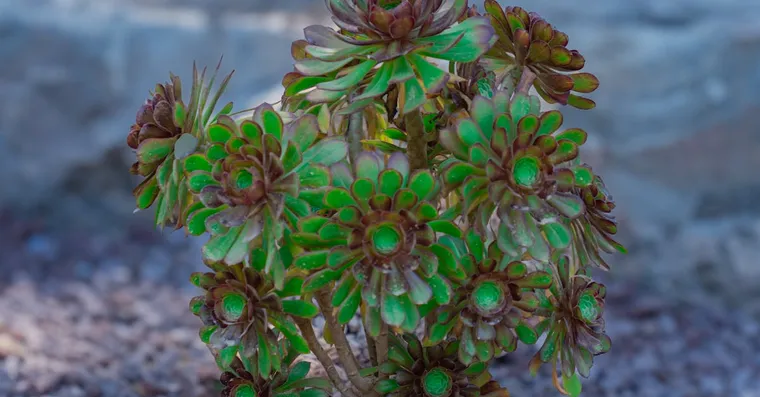
Aeonium Care: Growing Black Rose and Other Varieties
How to care for aeonium succulents including the dark Zwartkop, with advice on their summer dormancy, watering, and light needs.
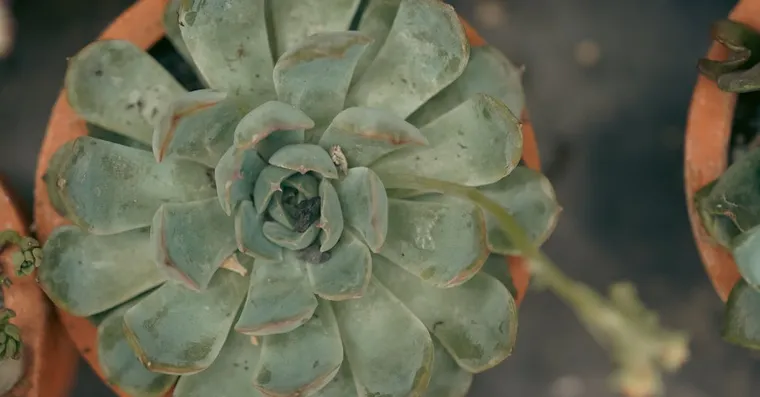
Echeveria Care: Keeping the Rosette Succulent Colorful
How to care for echeveria succulents indoors and out, with advice on light, watering, soil, and keeping their rosettes tight and bright.
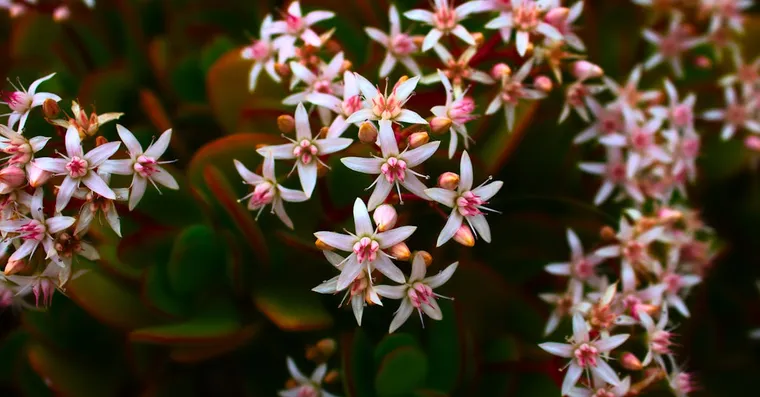
Jade Plant Care: Growing Crassula Ovata Indoors
A complete care guide for the jade plant, covering light, watering, soil, pruning, and how to keep this slow succulent compact and healthy.
Not sure what plant you have? Identify it from a photo and we will point you at its care guide.