Jade Plant Care: Growing Crassula Ovata Indoors
A complete care guide for the jade plant, covering light, watering, soil, pruning, and how to keep this slow succulent compact and healthy.
Some links in this guide go to Amazon. As an Amazon Associate we earn from qualifying purchases, at no extra cost to you. How this works.
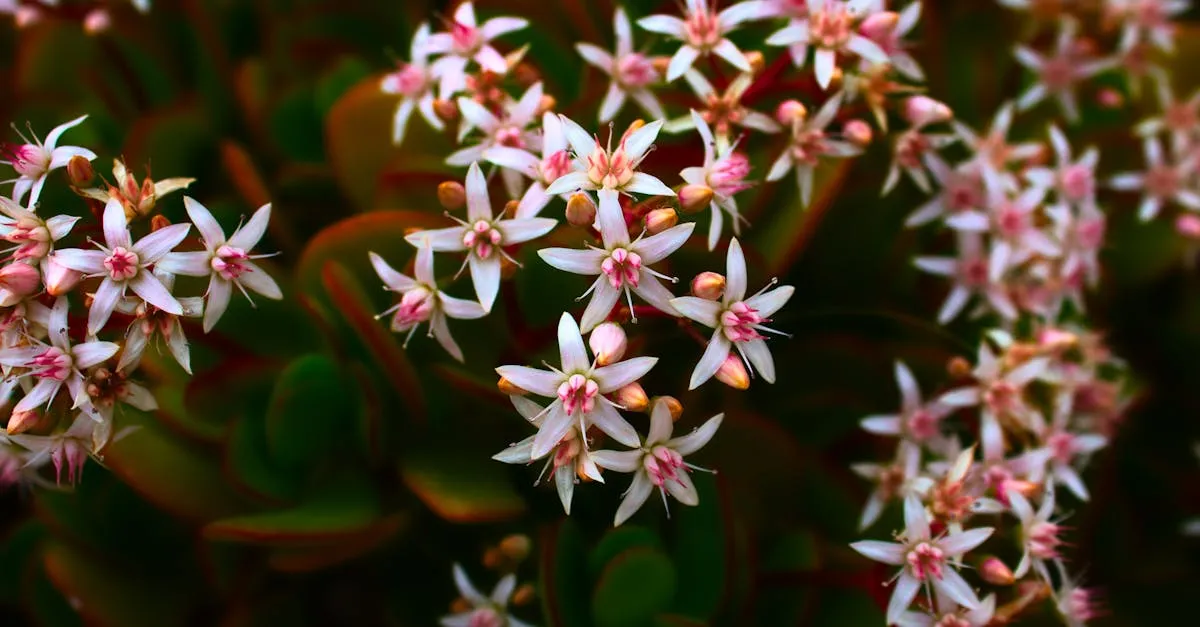
The jade plant is one of the few houseplants you can genuinely keep for a lifetime. Good jade plant care is less about doing the right things often and more about doing very little, very consistently: bright light, soil that drains fast, and water only when the plant has earned it. Crassula ovata is a slow grower that lives for decades, and it rewards patience far more than fussing.
Why jade plant care is mostly about restraint
A jade plant stores water in its thick leaves and stems, which is why it survives neglect that would kill a fern. The mistake almost every owner makes is treating it like a thirsty tropical plant. Most jade plants are not killed by drought. They are killed by kindness: frequent watering, rich soil, and dim corners. Once you accept that the plant wants to be left alone, the rest is straightforward.
Light: the one thing it cannot do without
Light is where jade plants are genuinely demanding. They need several hours of direct sun every day, ideally from a south or west-facing window. In bright light, growth is compact and the leaf edges often blush red or bronze. In weak light, the plant stretches: long, pale gaps appear between leaves, stems grow thin, and the plant leans toward the window.
If your brightest window still is not enough, especially through winter, a grow light closes the gap. Turn the pot a quarter every week or two so growth stays even rather than one-sided.
How to water a jade plant
Water thoroughly, then wait until the soil is completely dry before watering again. In a bright spot through summer, that often means every two to three weeks. In winter, it can stretch to once a month or less. Forget any fixed schedule and check the soil instead: push a finger in, and if you feel any moisture, wait.
When you do water, soak the soil until it runs from the drainage hole, then empty the saucer. Never leave the pot sitting in water. Signs of overwatering are soft, yellowing, translucent leaves and a swollen, mushy stem base. For a side-by-side breakdown of the symptoms, see overwatering vs underwatering houseplants.
Winter watering: the common mistake
Between October and February, most jade plants need water once every 3 to 5 weeks at most. The soil must be bone dry for at least a week before you reach for the watering can. Many healthy plants die in February, not December, because their owners assume spring has arrived and resume a summer schedule before the plant has fully broken dormancy. If in doubt, wait another week.
Wrinkled vs soft leaves: a two-minute diagnosis
Both dehydration and rot cause leaves to wrinkle, and treating one as the other will kill the plant.
Wrinkled leaves, firm to the touch mean the plant is dehydrated. Water it and the leaves will firm up within a day or two.
Wrinkled leaves that feel soft, or a stem base that gives when you squeeze it point to rot, not thirst. Do not water. The decision rule is straightforward: squeeze the stem at soil level. If it gives at all, treat it as rot, stop watering immediately, and see root rot treatment for next steps.
Soil and pots that drain fast
Standard potting compost holds far too much water around jade roots. Use a gritty, fast-draining mix: a cactus and succulent compost with extra perlite, coarse sand, or fine grit stirred through it, roughly one part grit to two parts compost. The potting mix guide covers how to judge a good blend.
Always use a pot with a drainage hole. Terracotta is ideal because it dries the soil faster than plastic. Choose a pot only slightly larger than the root ball; a jade in an oversized pot sits in damp soil for too long.
A jade plant would rather be too dry than too wet, every single time.
Feeding, repotting, and pruning
Feeding. Jade plants need very little. A balanced or low-nitrogen succulent fertilizer at half strength, once or twice across spring and summer, is plenty. Do not feed in autumn or winter.
Repotting. Repot every three to four years at most, in spring. Slow growth means they rarely become pot-bound quickly, and they are quite content slightly crowded.
Pruning. Prune in spring to shape the plant or thicken the trunk. Cut just above a leaf pair, and the plant usually branches into two stems from that point.
Propagating jade: stem cuttings are the reliable route
Take a stem cutting 1 to 2 inches (3 to 5 cm) long with at least two leaf pairs. Then do the step most people skip: lay the cutting on a dry windowsill and let the cut end callus for 7 to 10 days before you pot it. Potting before the wound has sealed rots the cut end almost every time. Once a dry, papery skin has formed over the cut, pot it into gritty compost, water once, and leave it.
Leaf cuttings do occasionally produce a plantlet, but the process is slow and fails more often than it succeeds. Lucy leans entirely on stem cuttings at the nursery for this reason: a leaf can take months just to grow a tiny pink root, while a roughly 3 inches (8 cm) (three-inch) stem cutting roots in about two weeks. For jade, stem cuttings are the reliable route every time. For the full propagation framework, see how to propagate succulents.
Getting jade to flower
Most indoor jade plants never flower, and the reason is straightforward: they sit in a heated room all winter and never experience the cool, dry conditions that trigger blooming. Lucy Liu, at her London nursery, describes getting a jade to flower indoors as like catching lightning in a bottle: it does happen, but only after a genuinely hot dry summer, a sudden drop in temperature, and completely uninterrupted darkness through the autumn nights.
Mature jade (typically 3 to 5 years old or more) will flower after a genuine winter rest. In autumn, move the plant to an unheated room or porch where night temperatures fall to 50 to 55°F (10 to 13°C), and withhold water almost entirely for 6 to 8 weeks. Then return it to warmth. The small, star-shaped flowers appear in late winter or early spring. Without that cool period, flowering is unlikely regardless of the plant’s age or health.
Leggy stems: fix the light, but prune first
Etiolated stems (long, pale, weakly jointed) will not tighten up or revert after you move the plant to brighter light. The stretched growth is permanent. The right sequence is: prune back to a healthy node first, then move the plant brighter. New growth from the cut point will be compact and properly spaced. For the full framework on why houseplants stretch and how to stop it, see leggy houseplants: causes and fixes.
Common problems, ranked
Dropping leaves is the most frequent complaint; the causes are covered fully in why your jade plant is dropping leaves.
Soft, mushy stems or leaves point to overwatering and possible rot. Stop watering, and if the base is affected, take healthy stem cuttings and start again.
Pests are uncommon, but mealybugs sometimes hide in leaf joints as small white tufts.
Toxic to pets. Jade is toxic to cats and dogs if chewed, causing vomiting and lethargy. Keep it somewhere they cannot reach, and see our pet-safe houseplants guide for non-toxic alternatives.
The plant you can almost forget
If you take one habit from this guide, make it the late-winter pause: keep the soil bone dry through February and resist the urge to water just because the days are lengthening. A jade kept in a bright window, potted in gritty soil, and watered only when it has dried out completely will quietly outlive most of the other plants in your home. Treat the occasional wrinkled, firm leaf as a normal sign it is ready for a drink, not a problem to fix.
Where to go next
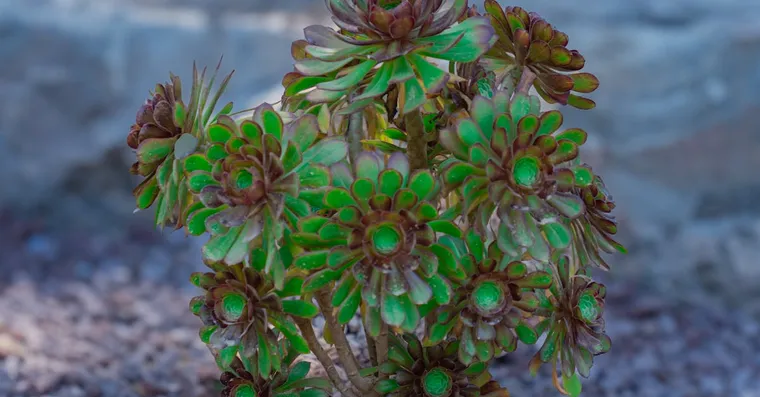
Aeonium Care: Growing Black Rose and Other Varieties
How to care for aeonium succulents including the dark Zwartkop, with advice on their summer dormancy, watering, and light needs.
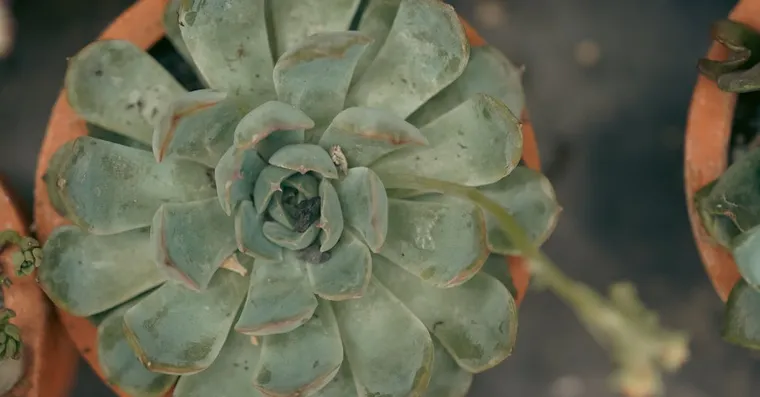
Echeveria Care: Keeping the Rosette Succulent Colorful
How to care for echeveria succulents indoors and out, with advice on light, watering, soil, and keeping their rosettes tight and bright.
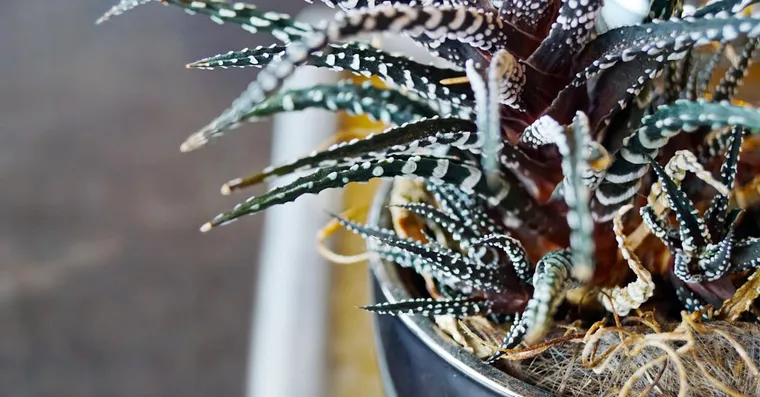
Haworthia Care: Growing the Zebra Succulent Indoors
A care guide for haworthia, the zebra succulent, covering its tolerance for lower light, careful watering, and slow, tidy growth.
Not sure what plant you have? Identify it from a photo and we will point you at its care guide.
Frequently asked questions
How often should I water a jade plant in winter?
In winter (October to February), water once every 3 to 5 weeks at most. The soil must be bone dry for at least a week before you water again. Many jade plants are killed in late winter by owners who resume a summer schedule too early.
Why are my jade plant's leaves wrinkled?
Wrinkled leaves that still feel firm mean the plant is dehydrated and needs water. Wrinkled leaves that feel soft, or a stem base that gives when squeezed, points to rot. Do not water a plant showing soft wrinkles; treat it for rot instead.
How do I make a jade plant flower?
Jade plants typically need to be 3 to 5 years old or more before they will flower. Give the plant a cool, dry winter rest with night temperatures of 50 to 55°F (10 to 13°C) for 6 to 8 weeks in autumn, then return it to warmth. Most indoor jade never flowers because heated rooms prevent the cool period it needs.
Should I use a stem or leaf cutting to propagate jade?
Use a stem cutting. Take a 1 to 2 inches (3 to 5 cm) cutting with two leaf pairs, let the cut end callus for 7 to 10 days on a dry windowsill, then pot it up. Leaf cuttings can eventually produce a plantlet but are slow and often fail entirely.