How to Propagate Succulents from Leaves and Cuttings
Step-by-step methods for propagating succulents from single leaves, stem cuttings, and offsets, with realistic timelines and success rates.
Some links in this guide go to Amazon. As an Amazon Associate we earn from qualifying purchases, at no extra cost to you. How this works.
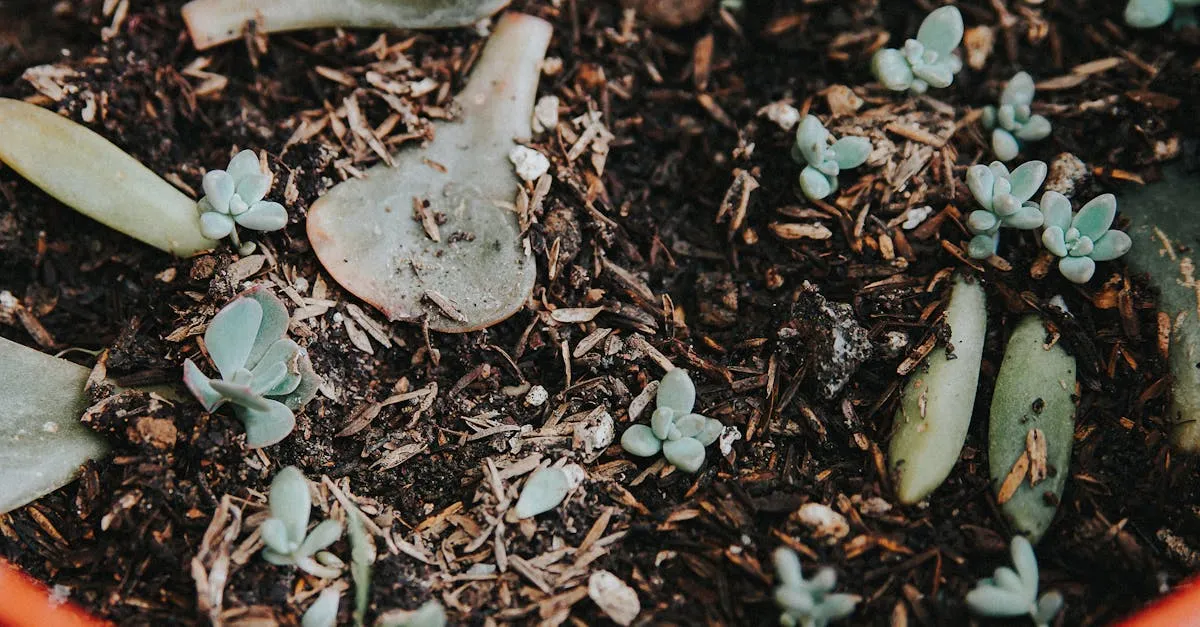
Succulents propagate well, and most types can be grown from a single leaf, a stem cutting, or a small offset pulled from the base of the parent. The honest summary of succulent propagation is this: it works, but the three methods are not equal. Leaf propagation is the slowest and least reliable, while cuttings and offsets are faster and far more likely to succeed.
What you need before you start
You do not need much. A free-draining gritty mix is the main thing: ordinary potting compost holds too much water and rots cuttings before they root. A proper succulent or cactus mix works, or amend standard compost with plenty of perlite or coarse sand.
Beyond that, use a clean sharp knife or scissors for cuttings, a shallow tray, and a bright spot out of harsh direct sun. Spring and early summer give the best results because the plant is in active growth. Propagating in winter is possible but much slower.
Why succulent propagation from leaves is slow
Leaf propagation is the method most often shown online, and it is genuinely satisfying when it works. It is also the least dependable.
Twist a healthy leaf gently from the stem so it comes away whole, with no torn base. A leaf that tears or is cut will usually fail. Let it sit dry for two to three days until the wound calluses over, then lay it on top of the gritty mix. Do not bury it.
Mist the soil lightly every few days. After several weeks you may see tiny pink roots and a miniature rosette at the leaf base. The original leaf eventually shrivels and feeds the new plant.
The honest reality: even with good leaves, expect roughly half to fail, and some types such as echeveria propagate this way far better than others such as aeonium, which barely work from leaves at all. A leaf can also take three to six months to become a plant worth potting. Start more leaves than you need and accept the losses.
Leaf propagation rewards patience, not effort: once a leaf is laid down, the best thing you can do is leave it alone.
Stem cuttings: the faster, more reliable route
Cuttings skip most of the waiting. Because a cutting already has a stem and growth point, it roots and grows into a recognizable plant much sooner than a leaf.
Cut a healthy stem section an inch or two (3 to 5 cm) long, just above a leaf node on the parent. Remove the lowest leaves so a bare stem is exposed, then let the cutting callus for two to four days in a dry, shaded spot. Skipping the callusing step is the most common cause of rot.
Set the calloused stem into barely moist gritty mix and keep it in bright indirect light. Wait about a week before the first proper watering, then water only when the soil is fully dry. Most succulent cuttings root within two to four weeks. This is also how you fix a stretched, etiolated succulent: behead the leggy growth and replant the top as a cutting.
Offsets: the easiest method of all
Offsets, often called pups, are baby plants the parent produces around its base. They are the most reliable option because each one is already a complete plant with its own developing roots.
Many common succulents offset freely, including aloe vera, haworthia, and many echeverias. Wait until a pup is a reasonable size, then separate it: gently pull or cut it from the parent, keeping any roots it has already formed. If the offset has roots, pot it straight away. If it has none, let it callus for a day or two first, then treat it like a cutting.
Caring for new succulents while they root
The biggest risk at this stage is too much water, not too little. New roots are fine and rot easily in soggy soil.
Water. Keep the mix barely moist for unrooted material and let it dry fully between waterings once roots appear. When in doubt, wait.
Light. Give bright, indirect light. Strong midday sun can scorch tender new growth, and too little light makes the new plant stretch.
Patience. Do not tug at cuttings or leaves to check for roots. Disturbing them sets propagation back. If a piece turns translucent and mushy, discard it and move on.
Which method to reach for first
If you simply want more plants with the least disappointment, start with offsets or cuttings and treat leaf propagation as a bonus experiment rather than your main supply. The single mistake that sinks most attempts is watering too soon, so let every piece callus and stay on the dry side until roots are clearly established. Begin in spring while the plants are actively growing, and you will see roots in weeks rather than waiting out a slow winter.
Where to go next
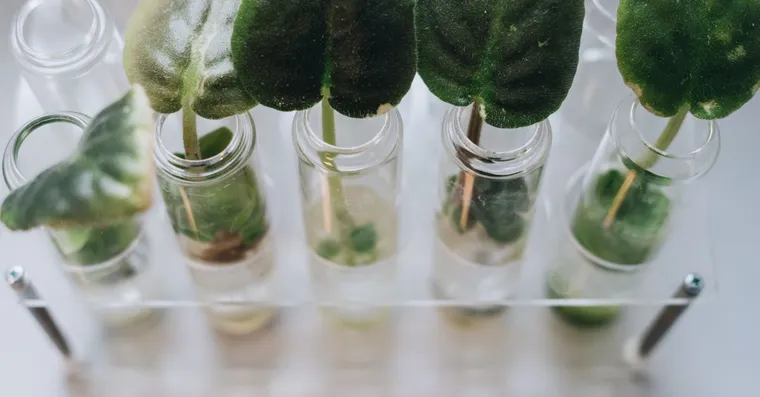
Best propagation stations for houseplants
A buying guide to propagation stations: which vessel suits water rooting, what actually helps roots form, and when a jam jar does the same job for free.
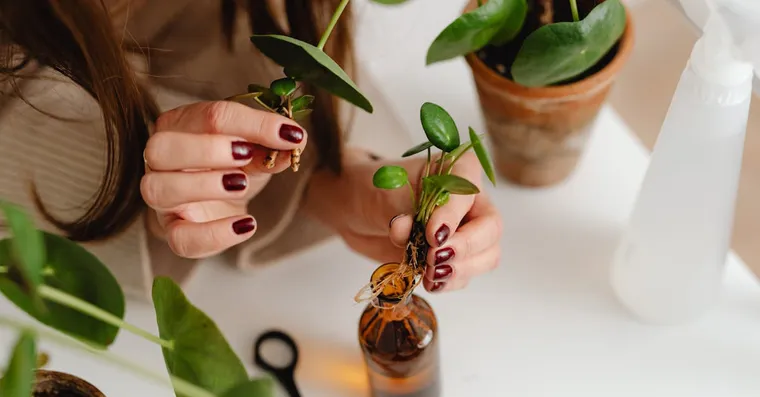
Do You Need Rooting Hormone to Propagate Houseplants?
What rooting hormone does, which cuttings actually benefit from it, and an honest take on whether most houseplant propagation needs it at all.
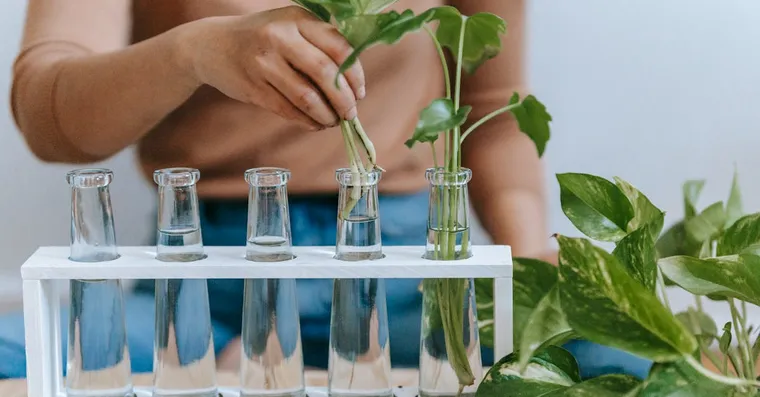
Propagating in Water vs Soil: Which Is Better for Cuttings?
The honest trade-offs between rooting houseplant cuttings in water and in soil, why water roots struggle in soil, and how to choose for each plant.
Not sure what plant you have? Identify it from a photo and we will point you at its care guide.