Propagating in Water vs Soil: Which Is Better for Cuttings?
The honest trade-offs between rooting houseplant cuttings in water and in soil, why water roots struggle in soil, and how to choose for each plant.
Some links in this guide go to Amazon. As an Amazon Associate we earn from qualifying purchases, at no extra cost to you. How this works.
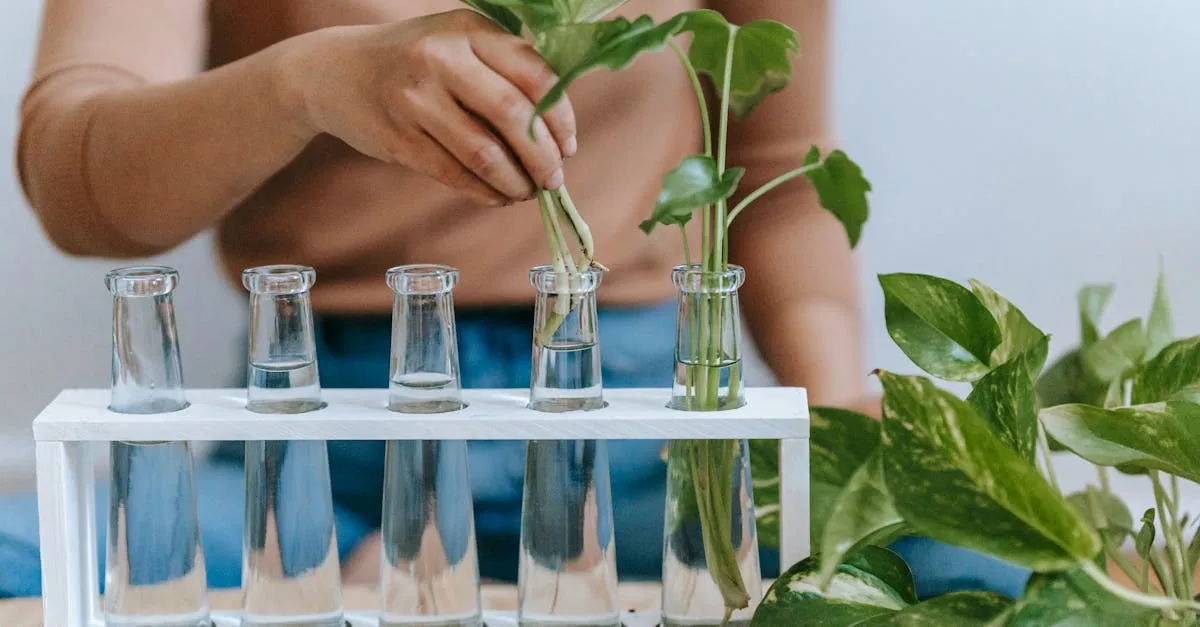
The honest answer to propagating in water vs soil is that neither method is better in every case: water roots faster and lets you watch progress, while soil roots more slowly but skips the transplant shock that water cuttings face when you pot them up. Most plants will root either way. The right choice depends on the plant and on how much you mind the trade-off that water propagation quietly carries.
Quick answer
Neither method is better in every case. Water roots faster and lets you watch progress, but water-grown roots are thinner and more brittle, and many die back when you pot the cutting into soil. Soil roots more slowly and out of sight, but the roots are soil roots from day one, so there is no transplant shock. Use water for fast trailers like pothos, philodendron, tradescantia, and monstera, and pot up once roots are 3/4 to 2 inches (2 to 5 cm) long. Start succulents, woody stems, and fussier plants straight in soil.
Why water propagation is so popular
Water is the easiest place to start a cutting, and that popularity is earned. You drop a node into a jar or propagation station, set it somewhere bright, and watch white roots appear over one to three weeks. Nothing is hidden. You can see exactly when roots form, spot rot early because the stem is visible, and you do not have to guess whether anything is happening underground.
This makes water ideal for learning and for plants that root fast and freely: pothos, heartleaf philodendron, tradescantia, monstera, and most soft-stemmed trailers. If you have ever wondered whether your cuttings are even rooting, water removes the doubt.
The transplant shock nobody mentions
Here is the downside that rarely gets said out loud. Roots grown in water are not the same as roots grown in soil. They are thinner, more brittle, and adapted to pull oxygen and nutrients directly from water. When you move that cutting into a pot, those water roots are poorly suited to soil, and many of them die back. The plant then has to grow a second set of proper soil roots, and during that gap it often droops, drops a leaf, or stalls for a couple of weeks.
The longer a cutting sits in water, the bigger the root system it has to lose when it finally meets soil.
This is real, but it is not a reason to avoid water entirely. It is a reason to pot up sooner rather than later.
Pot up early. Move the cutting to soil once roots are 3/4 to 2 inches (2 to 5 cm) long, not when they are a tangled mass. Younger roots adapt better.
Keep the soil wetter at first. For the first one to two weeks, water more often than you normally would. This eases the transition while soil roots develop, then taper back to normal.
Expect a pause. A little wilting or one yellow leaf in the first two weeks is the changeover, not failure. Keep it out of harsh sun and leave it be.
When soil is the better choice
Soil propagation skips the shock entirely, because the roots that form are soil roots from day one. There is no second adjustment, so the cutting often establishes into a stronger plant. The cost is visibility: you cannot see what is happening, and a cutting that fails will sit there looking deceptively fine until it collapses.
Soil suits a few cases in particular:
Plants that resent being moved. Fussier or fleshy-stemmed plants, and many succulents, do better started straight in their final medium. See propagating succulents, which root best in dry soil.
Cuttings you will not babysit. If you would rather plant and forget, soil needs less attention than topping up and refreshing a jar.
Larger or woody cuttings. Rubber plants, figs, and similar woody stems tend to build sturdier roots in a moist mix than in water.
A halfway option worth knowing: rooting in an inert medium like perlite or LECA gives you some of the visibility of water with roots that adapt to soil more easily.
A quick recommendation by plant type
| Your situation | Better choice | Why |
|---|---|---|
| Fast trailers: pothos, philodendron, tradescantia, monstera | Either, water if you want to watch | They root fast and freely; pot up early from water |
| Woody stems: rubber plant, ficus, hoya | Soil or a moist inert medium | Sturdier roots, and the shock from water is more noticeable |
| Succulents and cacti | Soil, kept dry | Water tends to cause rot rather than roots |
| A plant you will keep in water permanently | Water | Pothos and lucky bamboo can stay in water, which sidesteps the transplant problem |
| A cutting you will not babysit | Soil | Needs less attention than topping up and refreshing a jar |
Ranked from the most forgiving to the most particular:
Fast trailers (pothos, philodendron, tradescantia, monstera). Either method works. Use water if you want to watch, then pot up early.
Woody stems (rubber plant, ficus, hoya). Soil or a moist inert medium. Water works but the shock is more noticeable.
Succulents and cacti. Soil, kept dry. Water tends to cause rot rather than roots.
Plants you intend to keep in water. Some, like pothos and lucky bamboo, can stay in water permanently if you prefer, which sidesteps the transplant problem altogether. The full list of species that suit this approach is in our guide to growing houseplants in water.
Match the method to the plant, then pot up on time
The one mistake worth avoiding is leaving a water cutting in the jar until its roots are long and tangled, because that is exactly when the move to soil costs you the most. Start fussy, fleshy, or woody plants in soil from the outset, save water for fast trailers when you want to watch progress, and transfer those while the roots are still short. Get the timing right and the transplant shock people blame on water propagation mostly stops being a problem.
Where to go next
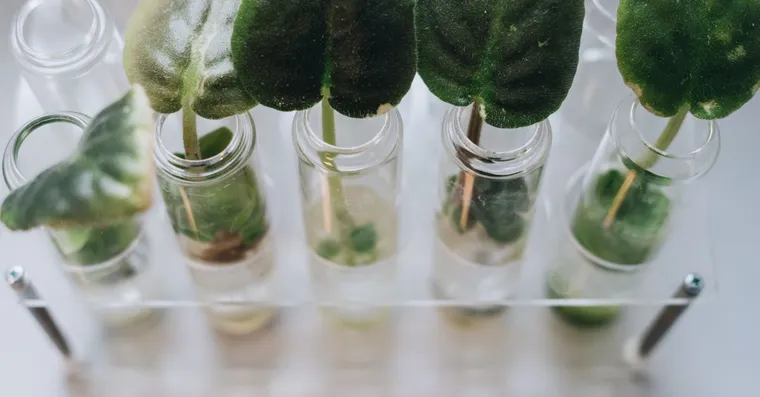
Best propagation stations for houseplants
A buying guide to propagation stations: which vessel suits water rooting, what actually helps roots form, and when a jam jar does the same job for free.
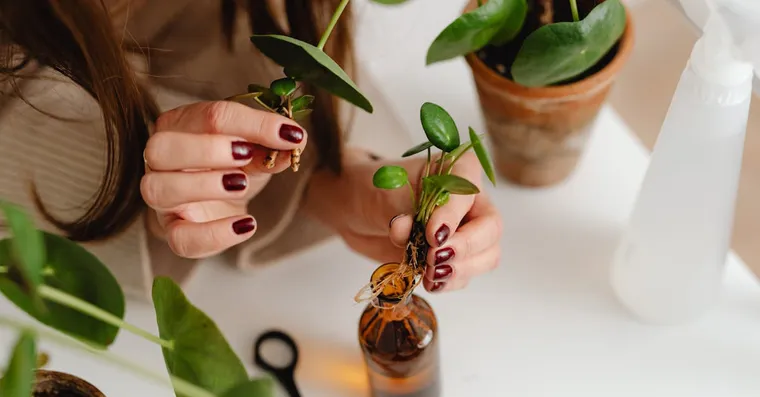
Do You Need Rooting Hormone to Propagate Houseplants?
What rooting hormone does, which cuttings actually benefit from it, and an honest take on whether most houseplant propagation needs it at all.
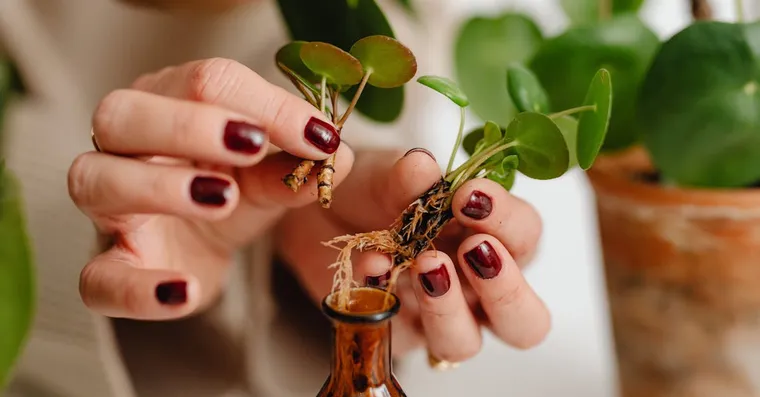
Why Are My Cuttings Not Rooting? Common Reasons and Fixes
A diagnostic guide to cuttings that will not root, from missing nodes and rot to cold, low light, and simple impatience, with how to fix each.
Not sure what plant you have? Identify it from a photo and we will point you at its care guide.
Frequently asked questions
Is it better to propagate houseplants in water or soil?
Neither is better in every case. Water roots faster and lets you watch progress, but water-grown roots are thinner and more brittle, and many die back when the cutting meets soil. Soil roots more slowly and out of sight, but the roots are soil roots from day one, so there is no transplant shock.
When should I move a water cutting into soil?
Once the roots are 3/4 to 2 inches (2 to 5 cm) long, not when they are a tangled mass. Younger roots adapt better, and the longer a cutting sits in water, the bigger the root system it has to lose when it finally meets soil.
Why is my cutting wilting after I potted it up from water?
That is the changeover, not failure. Water-grown roots are poorly suited to soil and many die back while the plant grows a proper soil root system, so a little wilting or one yellow leaf in the first two weeks is normal. Keep the soil wetter than usual for the first week or two and keep the cutting out of harsh sun.
Which plants should be propagated straight in soil?
Succulents and cacti, which tend to rot rather than root in water; larger or woody cuttings like rubber plants and figs, which build sturdier roots in a moist mix; and fussier plants that resent being moved. Fast trailers like pothos, philodendron, tradescantia, and monstera root freely either way.