Why Are My Cuttings Not Rooting? Common Reasons and Fixes
A diagnostic guide to cuttings that will not root, from missing nodes and rot to cold, low light, and simple impatience, with how to fix each.
Some links in this guide go to Amazon. As an Amazon Associate we earn from qualifying purchases, at no extra cost to you. How this works.
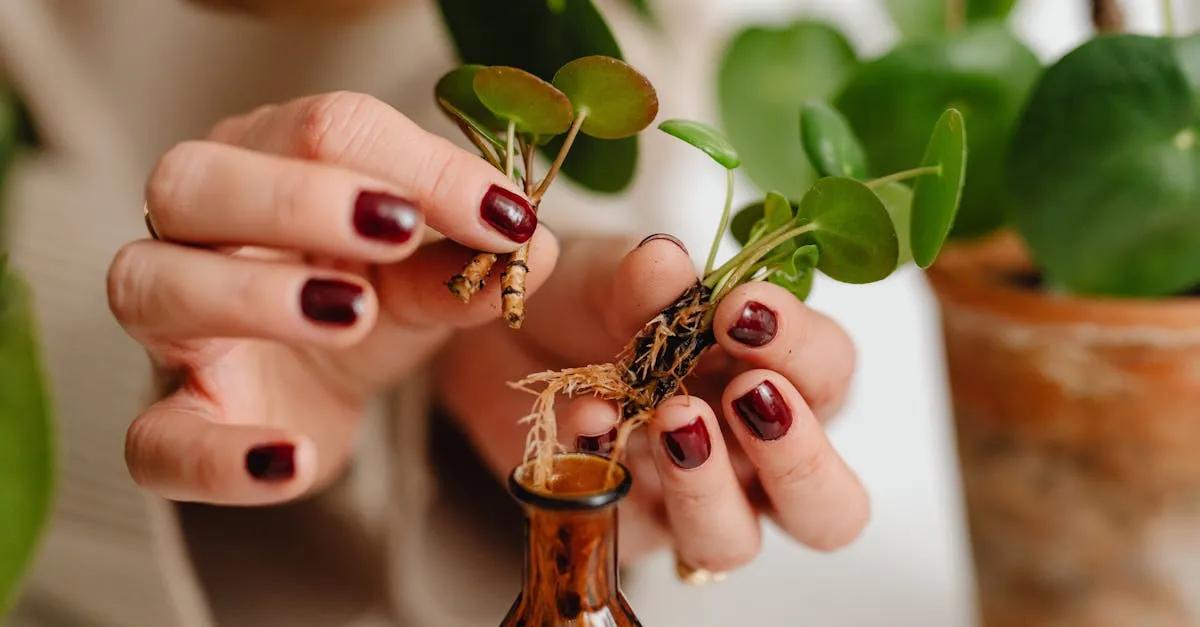
Most cuttings that fail to root die for one of a small number of reasons, and almost none of them are bad luck. If you are asking why are my cuttings not rooting, the honest answer is usually a missing growth node, rot from stale water or soggy soil, or simply a plant that needs more time than you have given it. Work through the list below in order, because the most common cause is also the one most people get wrong.
Quick answer
The usual reasons a cutting will not root are a missing growth node, rot from stale water or soggy soil, cold, low light, or simple impatience, in that order. Check the node first: on vining plants like pothos, philodendron, and monstera, roots grow only from a node, so a bare stem without one will never root. Change propagation water every three to five days, keep the cutting warm and in bright indirect light, and give slow species like snake plant or ZZ plant two to three months; most houseplants root fastest between 70 and 80°F (21 and 26°C).
You cut below a node, or there is no node at all
This is the mistake that kills more cuttings than everything else combined. Roots on most trailing and climbing plants, including pothos, philodendron, and monstera, grow from the node: the small bump or band on the stem where a leaf or aerial root emerges. A length of bare stem with leaves on the end but no node will sit in water for weeks and never root, because it has nowhere to root from.
Check your cutting now. You want at least one node sitting in the water or soil, with the cut made just below it (about half an inch / 1 cm under). A leaf on its own, with no piece of stem and no node, also will not produce a full plant for most species. Some plants are exceptions and root from leaf tissue, which is covered in propagating from leaf cuttings, but for vining houseplants the rule is simple: no node, no roots.
The water went murky, or the soil stayed soggy
Rot is the second great killer. If the cut end turns brown, soft, or slimy, bacteria got there before the roots did.
- Water propagation. Change the water every three to five days, sooner if it looks cloudy. Stale, oxygen-poor water breeds the bacteria that rot a stem. Use a clear glass so you can see what is happening, and keep only the node submerged, not the leaves.
- Soil propagation. The mix should be moist, never waterlogged. A cutting has no roots to drink, so soaking soil just suffocates and rots the stem. A light, airy mix and a pot with drainage make the difference. If you suspect rot has already set in, the wider picture is in root rot.
If a cutting has gone mushy at the base, trim back to firm, healthy tissue below a fresh node and start again in clean water.
It is too cold for roots to form
Cuttings root through cell division, and that slows to a crawl in the cold. A cutting on a windowsill at 60°F (15°C) or below can stall for weeks. Most houseplants root fastest between 70 and 80°F (21 and 26°C).
Warmth and clean water revive more stalled cuttings than any rooting product on the shelf.
Move the jar somewhere warm and stable: the top of a fridge, a shelf away from drafts, or near (not on) a radiator. Avoid cold windowsills overnight in winter. Bottom heat from a seedling mat speeds things up noticeably, but it is rarely essential.
There is not enough light
A cutting needs light to power root growth, but not direct sun. Bright, indirect light is the target. In a dim corner, the cutting simply has too little energy to do anything, and progress stalls. In harsh direct sun, a rootless cutting cannot replace the water it loses and wilts. Place it near a window with good light but no scorching midday rays. If your home is genuinely dark, a basic grow light closes the gap.
You are not actually doing anything wrong, you are just impatient
Some cuttings take a long time, and that is normal. Pothos and tradescantia may show roots in a week or two. A snake plant leaf or a ZZ plant can take two to three months, and a ZZ may form its underground rhizome before any leaf appears above the soil. Lifting a cutting out to check, or restarting it every few days, only sets it back.
Leave it be. As long as the stem is firm and green and the leaves have not collapsed, it is working. Resist the urge to fiddle. If you want to know which approach roots faster for your plant, compare water versus soil.
Work down the list before you start over
When a cutting stalls, check it in this order: confirm there is a node, then the water or soil, then warmth, then light, and only then assume you are being impatient. Nine times out of ten the fix is a fresh cut just below a node into clean water in a warm, bright spot, not a new bottle of rooting hormone. If you are propagating over winter, expect everything to take longer and resist the urge to keep restarting; a firm, green stem is still working even when nothing has happened above the waterline.
Where to go next
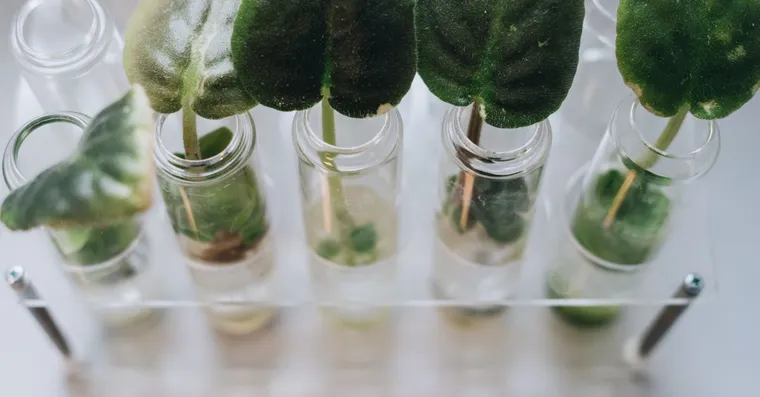
Best propagation stations for houseplants
A buying guide to propagation stations: which vessel suits water rooting, what actually helps roots form, and when a jam jar does the same job for free.
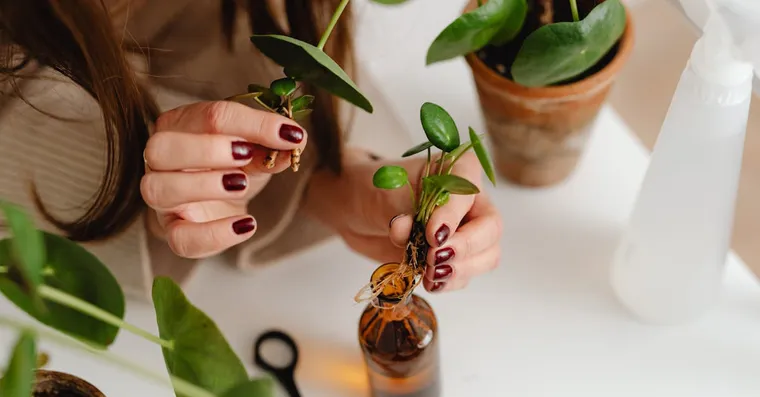
Do You Need Rooting Hormone to Propagate Houseplants?
What rooting hormone does, which cuttings actually benefit from it, and an honest take on whether most houseplant propagation needs it at all.
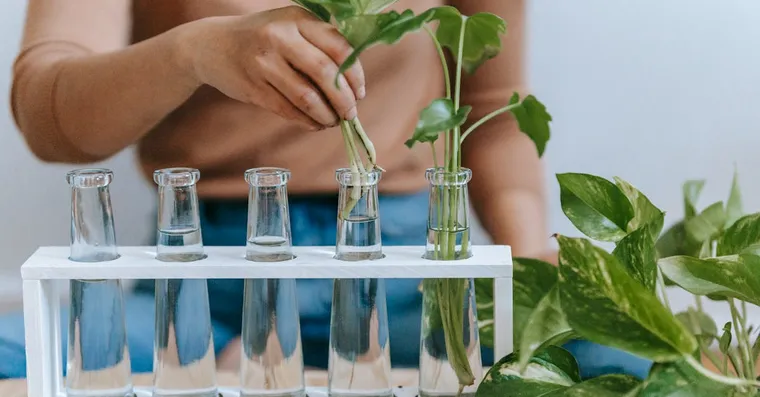
Propagating in Water vs Soil: Which Is Better for Cuttings?
The honest trade-offs between rooting houseplant cuttings in water and in soil, why water roots struggle in soil, and how to choose for each plant.
Not sure what plant you have? Identify it from a photo and we will point you at its care guide.
Frequently asked questions
Can a cutting root without a node?
For most trailing and climbing houseplants, no. Roots on pothos, philodendron and monstera grow only from the node, the small bump or band on the stem where a leaf or aerial root emerges, so a length of bare stem with leaves on the end will sit in water for weeks and never root. Make the cut about half an inch (1 cm) below a node and keep at least one node in the water or soil. A few plants do root from leaf tissue, but for vining houseplants the rule is simple: no node, no roots.
How long should a cutting take to root?
It depends entirely on the plant. Pothos and tradescantia may show roots in a week or two. A snake plant leaf or a ZZ plant can take two to three months, and a ZZ may form its underground rhizome before any leaf appears above the soil. As long as the stem is firm and green and the leaves have not collapsed, it is still working. Lifting it out to check, or restarting it every few days, only sets it back.
Why is my cutting rotting instead of rooting?
Bacteria reached the cut end before the roots did, which shows as a base that has turned brown, soft or slimy. In water, that comes from letting it go stale: change it every three to five days, sooner if it looks cloudy, and keep only the node submerged rather than the leaves. In soil, it comes from a waterlogged mix, because a cutting has no roots to drink and soaking soil just suffocates the stem. If the base has gone mushy, trim back to firm tissue below a fresh node and start again in clean water.
What temperature do cuttings need to root?
Most houseplants root fastest between 70 and 80°F (21 and 26°C). Rooting happens through cell division, which slows to a crawl in the cold, so a cutting on a windowsill at 60°F (15°C) or below can stall for weeks. Move the jar somewhere warm and stable, such as the top of a fridge or a shelf away from drafts, and keep it off cold windowsills overnight in winter. Warmth and clean water revive more stalled cuttings than any rooting product on the shelf.