Why Houseplants Get Leggy, and How to Make Them Bushy Again
Why houseplants grow leggy with long bare stems and small leaves, why it is almost always a light problem, and how to prune and fix it for bushier growth.
Some links in this guide go to Amazon. As an Amazon Associate we earn from qualifying purchases, at no extra cost to you. How this works.
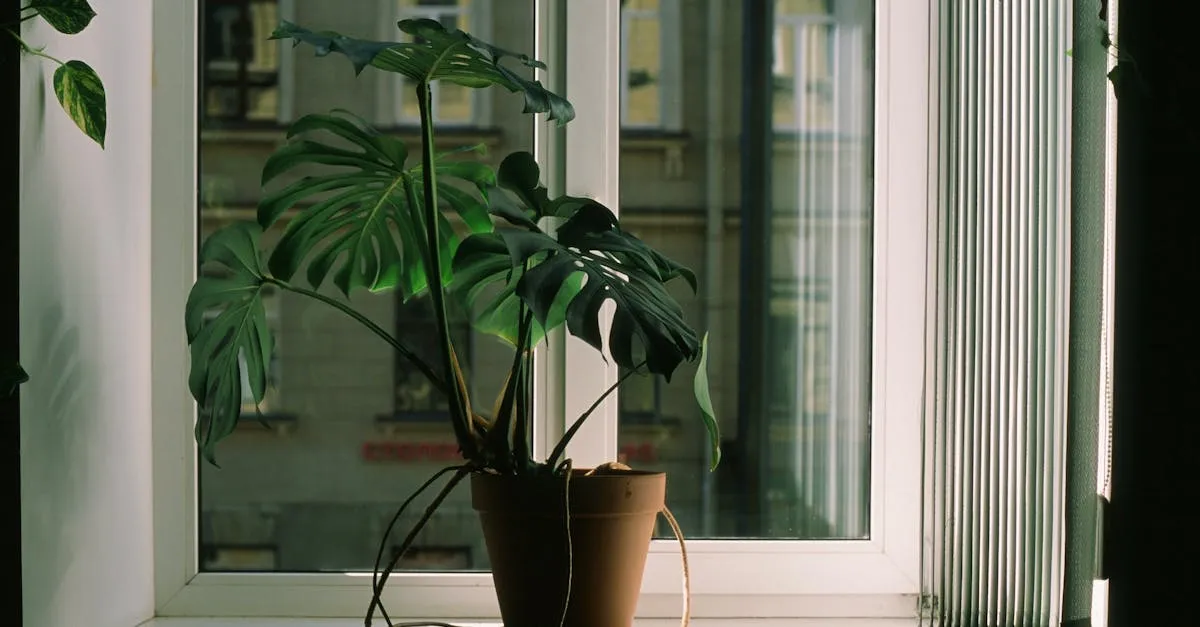
A leggy houseplant is telling you something specific: long bare stretches of stem, leaves spaced far apart, and a visible lean toward the nearest window. In almost every case the plant is reaching for light it is not getting. Fixing it properly means understanding two things first: what etiolation actually looks like, and why the stretched sections you can already see will not compact again.
What etiolation looks like
Botanists call this light-driven stretch etiolation. Three signals confirm it:
- Long internodes. The gaps between leaf-attachment points are noticeably longer than on the same plant’s lower, older growth.
- Smaller and paler leaves. New leaves on a light-starved stem come out undersized and washed out compared to leaves that formed in better conditions.
- A visible lean or twist. The whole stem bends toward the brightest point in the room rather than growing upright or evenly.
Do not confuse etiolation with normal lower-leaf drop. Losing the oldest leaves at the base of a stem is part of a plant’s natural cycle and does not signal a light problem on its own.
A stretched stem will not shrink back
This is the fact that changes how you approach the fix. Once a stem section has elongated, those cells are already expanded. Better light will stop further stretching from that point, but it will not compact the internodes that already exist.
The practical reframe: treat the leggy section as a cutting rather than something to rehabilitate in place. Prune the stretched stem back to a healthy node, improve the light, and root the cuttings in water or compost before potting them back into the same container. This is how you actually fill the plant out again, rather than waiting for stretched internodes to recover on their own. Lucy Liu, at her London nursery, finds that moving a stretched pothos or heartleaf philodendron to better light brings compact new growth at the tips while the old bare vine stays a bare string throughout. She gives any dormant nodes about two weeks to respond before acting; when nothing stirs, she chops the leggy sections, roots the tips, and presses them back into the top of the pot to close the bald spot. For the propagation method, see the guide on propagating houseplants.
Why leggy houseplants happen, in order of frequency
Light deficit. The main cause by far. A plant 10 feet (3 m) from a window, or behind a sheer curtain, often receives a fraction of what it needs. Check how much light your plant actually needs before deciding whether your spot is adequate.
One-sided light with no rotation. Even in a bright room, a plant that is never turned commits growth to the lit side. The unlit side goes bare, and the whole plant leans and stretches toward the source rather than growing evenly.
Warm room with low light. A heated room keeps the plant actively growing. Without enough light to support compact growth, that energy comes out as thin, elongated stems.
Nitrogen overfeeding in low light. High-nitrogen feed pushes leafy, sappy growth. In low light, that growth becomes elongated rather than lush. Ease off feeding until the light situation improves.
Skipped pruning. Many plants will not branch naturally without being cut. Left untouched, a single stem simply keeps extending rather than filling out.
Fixing the light
Move the plant to a brighter position: an east or west-facing windowsill suits most foliage plants, with a south-facing spot for sun-lovers. If your home does not have a bright enough position, a grow light on a timer is a reliable solution. If the space genuinely cannot provide adequate light for the plant you have, consider whether a lower-light species would suit the room better.
Pruning shapes the plant, but light is what determines whether new growth comes in compact.
Pruning to force bushier growth
With the light improved, cut just above a node: the small raised point on the stem where a leaf grows or once grew. The plant sends out two or more new shoots from that point rather than continuing the bare stem.
- Cut back far enough to matter. A minimal trim gives you a slightly shorter leggy stem. Cutting to a node closer to the base gives you new growth from a much better starting point.
- Use clean, sharp scissors or snips. A clean cut reduces the risk of disease entering the wound.
- Root the cuttings. Many trailing and upright plants root readily. Pot them back into the same container to fill it out rather than discarding them.
Time heavy pruning for spring or early summer when the plant is growing actively. For node-by-node technique across different plant types, see pruning houseplants for bushier growth.
How different plants respond
Succulents and cacti etiolate fast and dramatically. An echeveria or cactus that has stretched even an inch or two (3 to 5 cm) in low light will have permanently altered proportions, and the elongated section will not revert. Prune back, root the healthy rosette or tip, and move the plant to much brighter light immediately. For the full picture on stretched succulents, see etiolated succulent stretching.
Trailing and vining plants (pothos, tradescantia, string-of-pearls) get long bare vines with leaf clusters only at the tips. Pinch early and often rather than waiting until the stems are completely bare: once a trailing stem has several bare nodes in a row, the lower section rarely leafs back out. Pinch above a node when the gap between leaves is just starting to widen, and pot the cuttings back into the container to keep it full.
Upright and rosette plants (pilea, peace lily, snake plant, croton) respond differently. A pilea or croton will lean and produce smaller leaves; moving it to a brighter spot and rotating it regularly brings new growth back in shape. A stemless rosette plant like a peace lily cannot be hard-pruned at the stem, so rotation and better light are the main tools available. The umbrella plant (Schefflera) is another upright species prone to legginess in low light; it responds well to a hard cutback and a brighter position. If new leaves on any of these plants are coming in both small and curled, see why houseplant leaves curl as a related signal.
Winter legginess
As days shorten and central heating runs, plants face lower light and warmer temperatures at the same time. The result is accelerated stretch through winter, and this is a predictable seasonal pattern rather than a sign that something has gone wrong.
What to do from autumn through to late winter:
- Move to the sunniest window available, south-facing if possible.
- Add a grow light on a timer set to extend the effective day length.
- Ease off feed from October through to February. High-nitrogen fertilizer in low-light conditions makes stretch worse.
- Accept some lean through winter and correct it with rotation and a light prune once days lengthen in spring.
Growth that forms during winter is often adequately compact once supported by better spring light. Aggressive pruning mid-winter is rarely worth it unless the plant is becoming structurally unstable.
Preventing legginess
- Rotate regularly. A quarter-turn every one to two weeks keeps each side of the plant getting even light and stops it committing to a lean.
- Choose the brightest viable spot. Most foliage plants do best within 3 to 6 feet (1 to 2 m) of a window.
- Add a grow light in low-light rooms. North-facing rooms and rooms without large windows benefit from supplemental light on a timer.
- Ease off high-nitrogen feed when light drops, whether from season, weather, or a darker position.
- Pinch trailing plants early. A quick pinch above a node every few weeks is far less disruptive than a rescue prune after the vines have gone bare.
The first move is always light, not scissors
The mistake that traps most people is reaching for the snips before fixing the spot the plant sits in: cut a stretched stem in dim light and the replacement shoots come in just as bare, so you have lost growth for nothing. Sort the position or add a grow light first, give it a couple of weeks, and let the new tips tell you the light is right before you prune. Once compact growth is coming in at the ends, a quarter-turn every week or two is usually all it takes to keep it that way.
Where to go next
Why Isn't My Monstera Splitting? Fenestration Explained
New monstera leaves without holes or splits are almost always a sign of youth or too little light, not a disease you need to treat.

Best grow lights for indoor plants
A practical buying guide to grow lights for houseplants: which type to choose, what the specs actually mean, and when you do not need one at all.
Sunburn on Houseplant Leaves: Bleached and Crispy Patches
How to tell houseplant sunburn from other leaf damage, why pale or brown scorched patches appear, and how to move a plant into stronger light safely.
Not sure what plant you have? Identify it from a photo and we will point you at its care guide.
Frequently asked questions
Will my leggy plant go back to normal with more light?
More light will stop further stretching and help new growth come in compact, but the stretched internodes already on the stem are permanent. The cells have already expanded and will not compact again. To restore a full shape you need to prune back to a healthy node and either root the cuttings or pot them back into the same container.
Should I cut off leggy stems?
Yes, but fix the light first. Pruning back to a healthy node triggers the plant to send out new shoots from that point. If you prune without improving the light, the replacement growth will be just as stretched. Cut with clean, sharp snips just above a node, and keep the cuttings to propagate or pot back in.
Why is my plant leggy in winter?
Shorter days combined with central heating mean lower light and warmer temperatures at the same time, which accelerates stretch. This is a predictable seasonal pattern. Move the plant to the sunniest window available, add a grow light on a timer, ease off fertilizer until spring, and prune or correct the lean once days lengthen again.