Why Isn't My Monstera Splitting? Fenestration Explained
New monstera leaves without holes or splits are almost always a sign of youth or too little light, not a disease you need to treat.
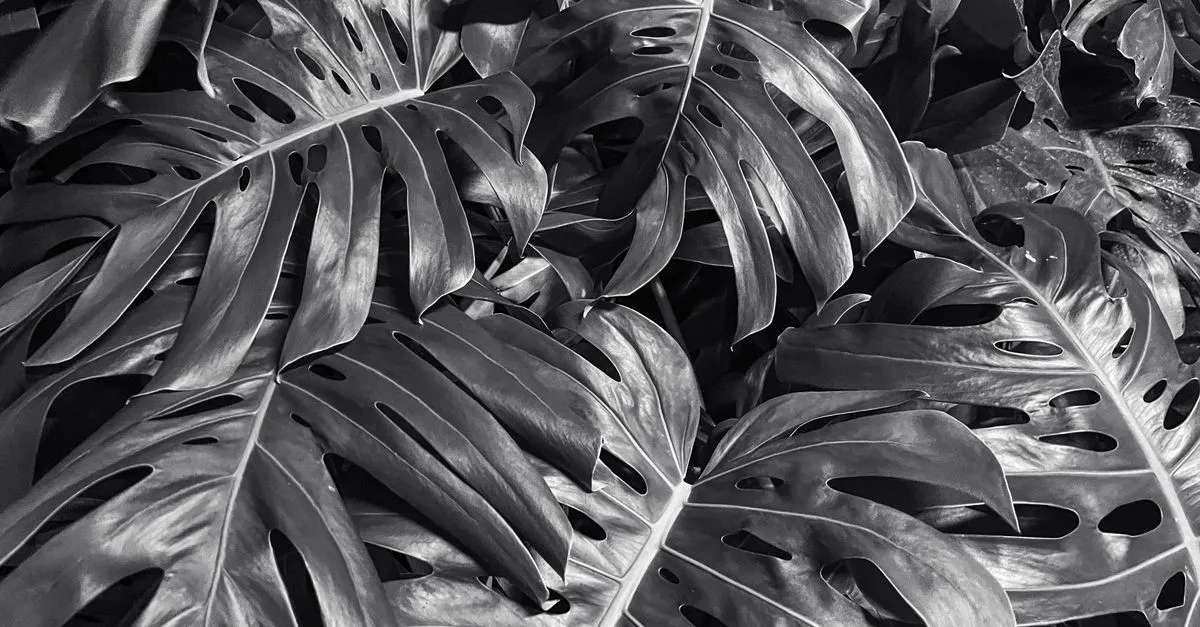
Every young monstera goes through a leafless-slit phase, and the honest answer to why isn’t my monstera splitting is almost always the same: your plant is still too young, or it is not getting enough light to bother. Fenestration, the name for those famous holes and splits, is something a monstera grows into with age and better conditions. You cannot force it on a juvenile plant, so the fix is patience and a few changes to its setup, not a quick trick.
Why isn’t my monstera splitting yet
A monstera produces solid, heart-shaped leaves when it is young. The splits and holes appear only once the plant matures and starts putting out larger leaves, usually after it has several established leaves and a stem thick enough to support them. If your plant is a small cutting or a recent supermarket buy, plain leaves are completely normal and not a sign anything is wrong.
The other common reason is light. In dim conditions a monstera has no reason to invest energy in the elaborate leaf shape that helps it handle bright, dappled light in the wild. Give it more light and it will typically start fenestrating on its own within a few new leaves.
Age and size decide when splits begin
Fenestration is tied to maturity, not to a calendar date. A monstera raised from a single node might grow plain leaves for a year or more before the first splits show. Watch the newest leaf each time: as the plant matures, each leaf should emerge slightly larger than the last, and at some point one arrives with notches along the edge. That is the plant crossing into its adult form.
If new leaves are the same size as old ones, or smaller, the plant is not maturing. That points to conditions rather than age, and light is the first thing to check.
Light is the biggest lever you control
More light is the single most reliable way to encourage splitting. A monstera wants bright, indirect light for most of the day: a spot right beside an east or west window, or 3 to 6 feet (1 to 2 m) back from a bright south-facing one. A plant surviving in a dim corner will stay alive but keep growing plain, undersized leaves.
Move it closer to a window before you change anything else. If your home simply does not have a bright spot, a grow light left on for ten to twelve hours a day does the same job. It helps to know how much light your houseplant actually needs so you can judge whether your current spot is genuinely bright enough or only looks it.
Fenestration is earned through maturity and light, not bought with a bottle of feed.
A moss pole speeds things along
In nature a monstera climbs tree trunks, and climbing seems to trigger larger, more fenestrated leaves. Giving it something to climb indoors mimics that. A moss pole lets the aerial roots attach and signals the plant to grow upward into its adult form, which is why staked monsteras often split earlier and more dramatically than ones left to sprawl.
Push a pole into the pot and loosely tie the main stem to it, guiding the aerial roots towards the moss. Keep the pole lightly damp so the roots grip. Our guide to moss poles and trellises for climbing houseplants covers setup and how to train a stem that has been growing sideways.
What will not work
Here is the honest part. There is no fertilizer, hormone, or feeding schedule that forces a young plant to fenestrate. Feeding a monstera that lacks light or maturity just pushes weak, leggy growth, not splits. A balanced houseplant feed during the growing season supports healthy leaves, but it is not the missing ingredient and never has been.
Misting, extra humidity, and repotting into a huge pot are all sold as splitting boosters and none of them deliver. Humidity keeps leaf edges from crisping but does nothing for fenestration. Give the plant time, light, and support, and ignore the rest. If you want the full routine, the monstera deliciosa care guide puts watering and feeding in context.
What to watch for over the next few months
Splitting is a waiting game you win with conditions, not effort. Move the plant somewhere bright, add a moss pole, and then judge progress by the newest leaf rather than the old ones: each should come out a little larger, and eventually one will arrive notched. If leaves keep getting bigger but still have no holes, keep going, because that steady size increase is the sign fenestration is on its way.
Where to go next
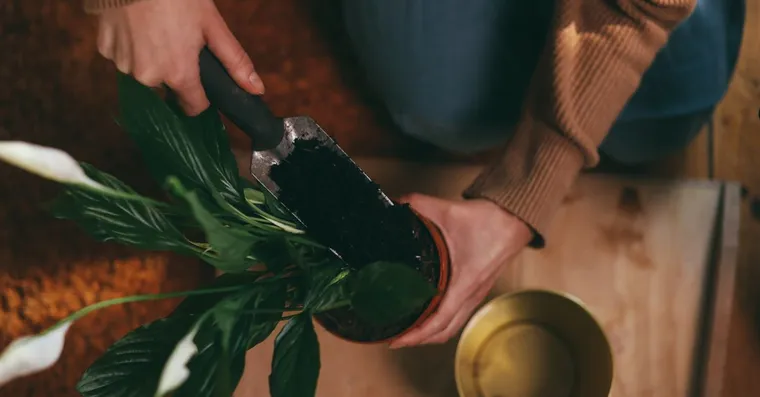
The Best Soil Mix for a Monstera (and a Simple Recipe)
Monstera roots want a chunky, fast draining aroid mix rather than plain potting soil; here is a simple recipe and what each ingredient does.
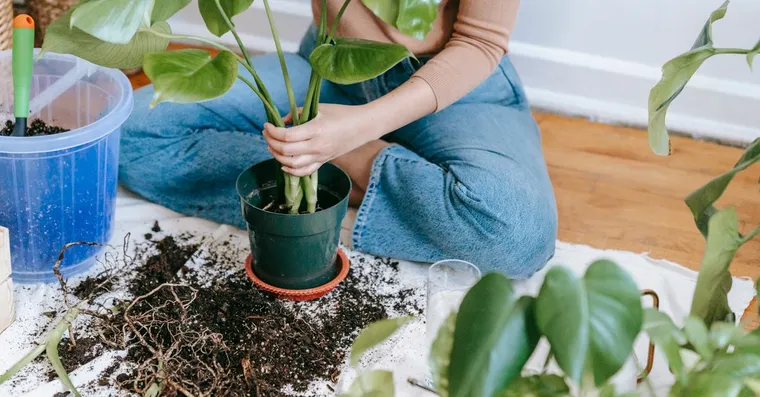
Monstera Aerial Roots: What They Do and What to Do With Them
Those thick roots growing from your monstera stem are normal aerial roots for climbing; here is whether to cut, bury, or train them.
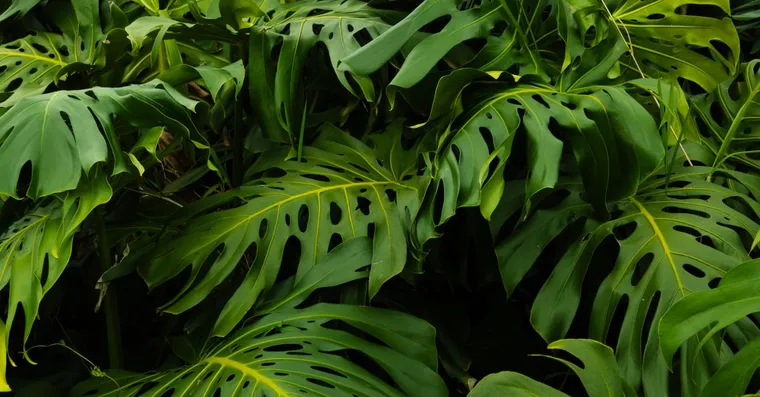
Why Is My Monstera Turning Yellow? Causes and Fixes
Yellow leaves on a monstera usually mean a watering problem, but light, feeding, and age all matter; here is how to tell them apart.
Not sure what plant you have? Identify it from a photo and we will point you at its care guide.
Sources
- Missouri Botanical Garden Plant Finder, Monstera deliciosa: 'Mature leaves of this plant are very large, glossy, deep green and distinctively cut and perforated. Juvenile leaves are small and mostly uncut.'
- Muir, C.D. (2013). How Did the Swiss Cheese Plant Get Its Holes? The American Naturalist 181(2):273-281. Hypothesizes that fenestration in mature Monstera leaves lets a given amount of leaf tissue spread over a larger area to intercept sunflecks in the shaded forest understory.