How to Prune Houseplants for Bushier, Healthier Growth
Learn when and where to cut houseplants, how pruning above a node encourages branching, and which plants you should leave alone.
Some links in this guide go to Amazon. As an Amazon Associate we earn from qualifying purchases, at no extra cost to you. How this works.
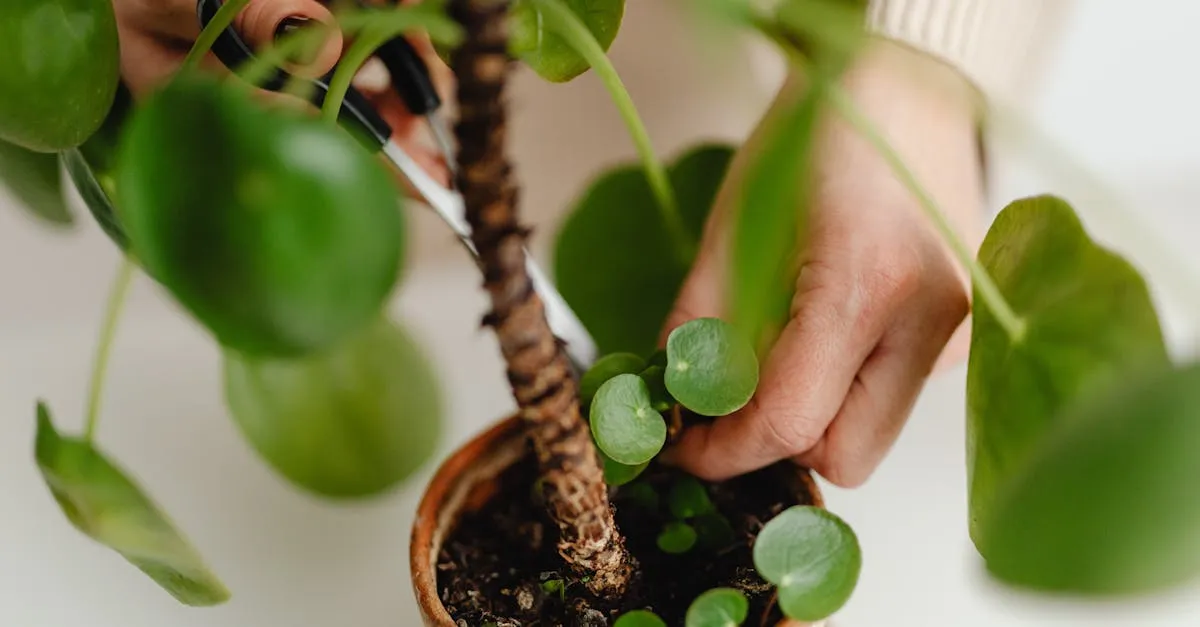
A bushier plant is almost always a pruned plant. If you have ever wondered how to prune houseplants without harming them, the honest answer is that most leafy, branching plants respond well to a few well-placed cuts, but a handful of plants should never be cut back at all. This guide covers where to cut, how to encourage fuller growth, and which plants to leave alone.
Why pruning makes plants fuller, not smaller
Most houseplants grow from buds at the tips of their stems. While a tip is active, it releases hormones that suppress the buds further down, so the plant pours its energy into getting taller rather than wider. This is called apical dominance. When you remove a growing tip, those dormant lower buds wake up, and one stem becomes two or three. That is the whole mechanism behind a bushier plant: you trade a little height now for several new branches later.
This is why a leggy pothos or a stretched-out heartleaf philodendron fills out after a trim, and why an untouched one keeps trailing into a few long, bare vines.
Where to cut: always just above a node
A node is the small bump or joint on a stem where a leaf, bud, or aerial root emerges. New growth can only come from a node, so it is the only place a cut makes sense.
- Cut about half half an inch (1 cm) above a node, not below it and not flush against it. Cutting below the node removes the bud you were trying to activate. Leaving a long stub above it invites rot and dieback.
- Cut at a slight angle so water runs off the wound rather than pooling on it.
- Prune above a node that faces the direction you want growth to go. The new shoot will head that way, which lets you steer a lopsided plant back into shape.
The pieces you remove are not waste. Most stem cuttings with a node will root in water or soil, so a single prune can give you new plants. See how to propagate houseplants from cuttings for the method.
Pinching for bushiness on soft-stemmed plants
For plants with soft, green stems, you do not even need tools. Pinching means removing the very tip of a stem with your thumbnail and finger, just above a node. It triggers the same branching response as a proper cut, and it is gentle enough to do often.
Pinch trailing and herb-like plants such as pothos, philodendron, tradescantia, and coleus every few weeks during the growing season. Each pinch doubles a stem. Done regularly from when a plant is young, pinching is the single most effective way to build a dense, full shape rather than a few long runners.
Removing dead and damaged growth
Some pruning is not about shape at all. Cutting away spent growth lets the plant stop spending energy on tissue it cannot save and redirect it into healthy leaves.
- Yellow, brown, or mushy leaves. Remove them at the base of the leaf stalk. If a leaf is only partly brown, you can trim the dead portion and follow the leaf’s natural outline, though it will not regrow the missing part. Persistent yellowing usually points to a care problem worth diagnosing using the yellow leaves guide.
- Leggy, bare stems. Cut these back to a node with a few leaves still attached, so the plant can rebush from there.
- Spent flowers and flower stalks. Removing these tidies the plant and, on many plants, encourages more blooms.
Never remove more than about a quarter to a third of a plant’s foliage in one session, or you take away more energy than the plant can spare.
Why clean, sharp tools matter
Pruning is a wound, and a wound is an entry point for disease. A clean cut from a sharp blade seals over quickly; a crushed, ragged cut from blunt scissors heals slowly and invites rot.
Use sharp scissors or secateurs, and wipe the blades with isopropyl alcohol before you start and between plants. This is not fussiness: pruning is one of the easiest ways to carry common houseplant diseases from a sick plant to a healthy one. For thin, soft stems, clean scissors are plenty; for woody stems like a rubber plant or fiddle leaf fig, use secateurs so you do not crush the stem.
The plants you should never top
Pruning for bushiness assumes a plant branches. Many do not, and topping them does real harm.
- Palms, including the parlor palm, grow from a single central point at the crown. Cut that off and the whole growing point is gone; the stem will not branch or regrow. Only remove fully dead fronds. The umbrella plant is different: Schefflera responds well to cutting and branches readily from a hard prune.
- Most rosette plants, such as snake plants and many succulents, grow from the center and do not branch from a cut leaf. Remove damaged leaves at the base instead of shortening them.
- Single-stem plants without lower nodes have nothing to rebush from, so cutting the top simply leaves a bare stick.
When in doubt, look for nodes and side buds. If a plant has them, it can usually be pruned to branch. If it grows from one central crown, leave the growing point alone.
Time your bigger cuts for spring
The one mistake that catches people out is hard-pruning in the depths of winter, when a resting plant cannot push the new shoots that justify the cut and the bare stub just sits there for months. Save shaping cuts for early spring through summer, when active growth means a pinch or a trim turns into visible new branches within a few weeks. Remove dead or mushy leaves whenever you spot them, but make your first real shaping cut on a small, healthy section so you can see how that plant responds before you commit to the rest.
Where to go next
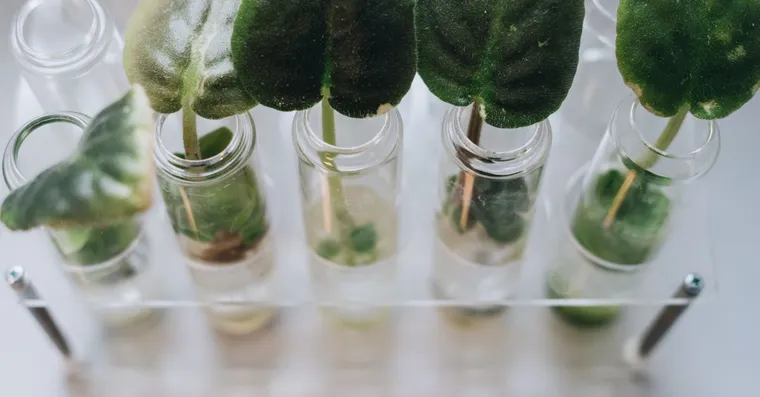
Best propagation stations for houseplants
A buying guide to propagation stations: which vessel suits water rooting, what actually helps roots form, and when a jam jar does the same job for free.
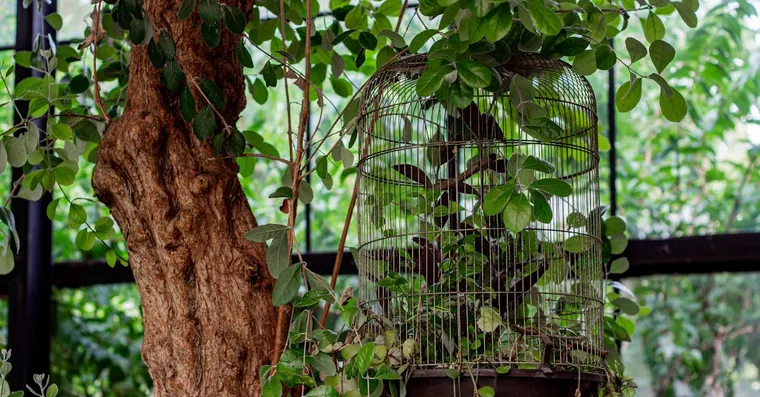
Air Layering Houseplants: Propagating Big Plants Without the Risk
How to air layer a houseplant to root a stem before you cut it, the method step by step, and why it suits leggy monsteras, rubber plants, and fiddle leaf figs.
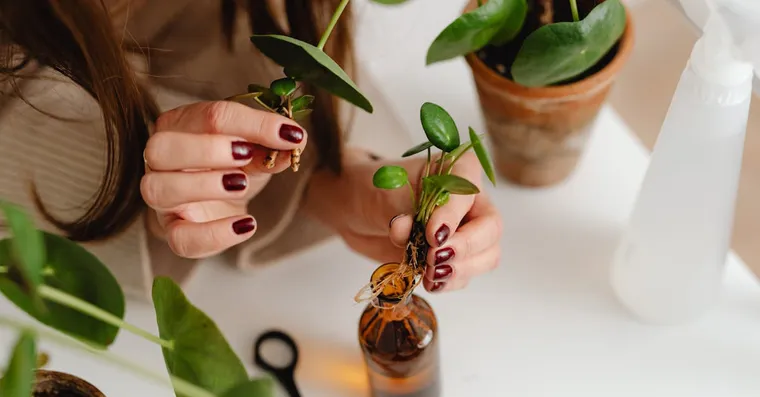
Do You Need Rooting Hormone to Propagate Houseplants?
What rooting hormone does, which cuttings actually benefit from it, and an honest take on whether most houseplant propagation needs it at all.
Not sure what plant you have? Identify it from a photo and we will point you at its care guide.