Heartleaf Philodendron Care: An Easy Trailing Plant
The heartleaf philodendron is one of the most forgiving trailing plants you can grow. Leaves go soft when thirsty and recover within hours of a drink.
Some links in this guide go to Amazon. As an Amazon Associate we earn from qualifying purchases, at no extra cost to you. How this works.

The heartleaf philodendron (Philodendron hederaceum) is one of the easiest trailing plants you can grow, and also one of the most misidentified: it is regularly sold as, or mistaken for, a pothos. The honest answer is that it asks for very little. Give it reasonable light, water it when the soil dries, and it will trail happily for years.
Heartleaf philodendron vs pothos: 4 testable tells
The two plants share shelf space in most garden centers, and their care is nearly identical, but they are different genera. You can confirm which one you are holding before you buy.
1. Look for the cataphyll. This is the single most reliable tell. Philodendron new growth unfurls from a papery brown sheath that dries and drops once the leaf opens. Pothos has no such sheath; new leaves emerge directly.
2. Feel the petiole join. Run your finger down the stem to where a leaf attaches. On pothos, a fleshy ridge continues down the stem from the petiole (decurrent attachment). On philodendron, the join is clean and flush. Lucy Liu, at her London nursery, extends this into a thumb test she uses before purchase: run your thumb along the length of the petiole itself, not just at the join point. On philodendron, it is round and smooth, and the leaf tip tapers to a distinctive pinched tail; on pothos, the sharp ridge running down the stem is immediately obvious under your thumb. Customers watching her do it tend to stare at their own hands as though she has performed a trick.
3. Check the leaf texture. Pothos leaves are waxy, slightly puckered, and often variegated. Philodendron leaves are smooth and matte, with a neat pointed tip.
4. Pinch the stem. Philodendron stems are round in cross-section. Pothos stems are slightly flattened with a shallow groove along one side.
Both are toxic if chewed, so neither belongs on a pet-safe houseplants shortlist.
Which cultivar to choose
Brasil is the common one: cream-and-green variegation on a fast-growing vine that forgives lower light better than the other two. It is the right starting point for most spaces.
Micans has velvety, iridescent leaves with a coppery sheen that makes it genuinely beautiful. The trade-off: that sheen fades noticeably below about 50% relative humidity and in dry indoor air. In an air-conditioned apartment without supplemental humidity, it will look duller than the catalog photos.
Lemon Lime produces striking chartreuse foliage that earns its place on a bright windowsill. The honest trade-off: below about 1,000 lux the leaves revert to plain green and the point of the cultivar is lost. It is the most demanding of the three for light.
Light: low to bright indirect
Bright, indirect light gives the fullest growth, with leaves held close together along the vine. An east or west window, or a spot 3 feet (1 m) back from a brighter one, is ideal.
Low to moderate light is genuinely tolerated, which is why this plant appears on lists of low-light houseplants that actually survive. Growth slows and stems get leggier, with wider gaps between leaves, but the plant carries on.
Direct sun through glass scorches the leaves, leaving pale, bleached patches. A few hours of soft morning sun is fine; harsh midday sun is not.
How to water it
Let the top 1 to 2 inches (3 to 5 cm) of soil dry out between waterings, then water thoroughly until it drains from the bottom and empty the saucer. In winter, when growth slows, wait longer.
The leaves go soft and the vine droops when it is thirsty, then recovers within hours of a drink. Leaves yellowing while soil stays wet points to overwatering. When in doubt, wait a day; this plant forgives a missed watering far more readily than a soggy pot.
Trailing down or climbing up
Left to trail from a shelf or hanging pot, vines grow long and leaves stay fairly small, typically 2 to 3 inches (5 to 7 cm). Given something to climb, the aerial roots grip on and leaf size changes materially.
The key detail is moisture: trained on a moist moss pole where aerial roots maintain contact with a consistently damp surface, mature leaves reach 4 to 6 inches (10 to 15 cm). A dry coir pole produces no size change, because it is the wet contact, not the physical support, that drives the response. For how to set one up, see moss poles and trellises for climbing houseplants.
Pinching to keep vines bushy
The preventive move is pinching: while a vine is still short (under about 12 inches / 30 cm) and before any bare section develops, pinch out the soft pale growing tip with your fingers. The plant responds by pushing two or more shoots from below the pinch point, building density from the start.
Once a vine has gone bare near the base, pinching the tip no longer helps much. At that stage, cutting back hard to a healthy node is the remedial fix. For that case, see leggy houseplants: causes and fixes.
Pruning and propagation
Long vines naturally go bare near the base, especially in lower light. Cut just above a node and the plant pushes out two new shoots below the cut; trimming back by half encourages dense regrowth. Do not throw the trimmings out: each is a ready-made cutting. Place it in water or moist potting mix, strip the lower leaves, and roots appear within one to two weeks. For the full method, see how to propagate houseplants from cuttings.
Every cutting you take is two things at once: a tidier parent plant and a free new one.
Start pinching before it gets leggy
This plant rarely dies on you; the way it disappoints is by going bare and stringy near the base, and by the time that happens your only real fix is cutting back hard to a node. Get into the habit of pinching the growing tips while the vines are still short, and keep the pot on the dry side rather than the wet side. A heartleaf pinched young and watered only once the top inch or two (3 to 5 cm) have dried will stay full and trailing for years with almost no further intervention.
Where to go next
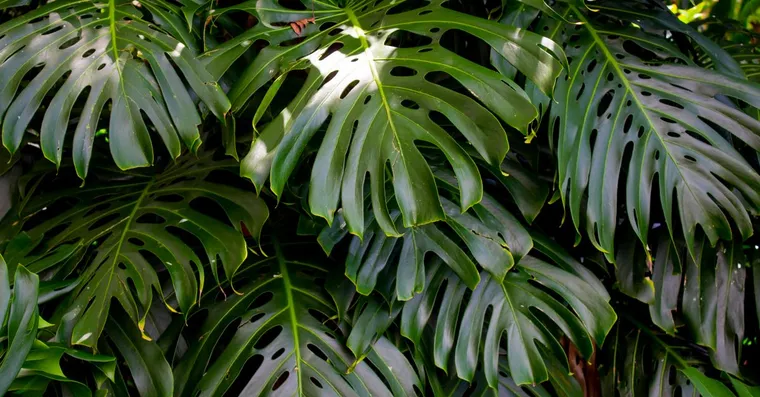
Monstera vs Split-Leaf Philodendron: Not the Same Plant
Monstera deliciosa and the split-leaf philodendron are two different plants that shops routinely mislabel. Here is how to tell which one you actually own.
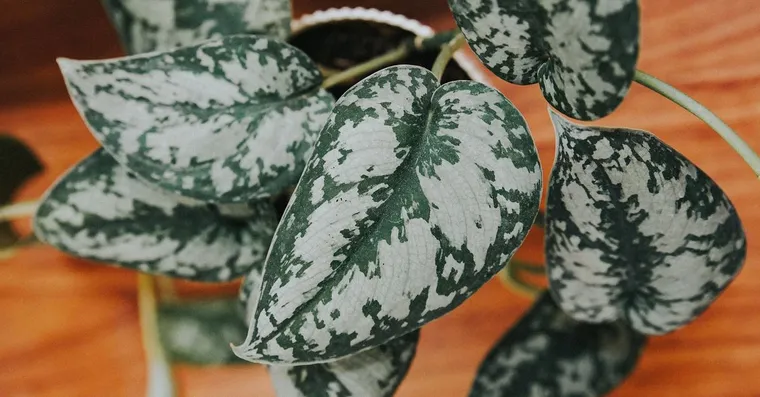
Pothos vs Heartleaf Philodendron: How to Tell Them Apart
The reliable ways to tell a pothos from a heartleaf philodendron: cataphylls, petioles, leaf texture and new growth, plus why shops so often mislabel them.
Houseplant tools every beginner needs
A no nonsense starter kit for new plant owners: the few tools genuinely worth buying first, the ones you can skip, and roughly what to spend.
Not sure what plant you have? Identify it from a photo and we will point you at its care guide.
Frequently asked questions
Is heartleaf philodendron toxic to cats?
Yes. Heartleaf philodendron contains calcium oxalate crystals and is toxic to cats and dogs if chewed. Keep it out of reach of both; this note does not replace a vet's advice if your pet ingests any part of the plant. See our guide to pet-safe houseplants for safer alternatives.
What is the difference between a philodendron and a pothos?
The single most reliable tell is the cataphyll: philodendron new growth unfurls from a papery brown sheath that dries and falls away; pothos has none. You can also check the petiole attachment (pothos has a decurrent ridge running down the stem, philodendron attaches cleanly), leaf texture (pothos waxy and puckered, philodendron smooth and matte), and stem cross-section (philodendron round, pothos slightly flattened with a groove).
Why are my heartleaf philodendron leaves small?
Trailing vines kept in open air typically produce leaves of 2 to 3 inches (5 to 7 cm). Training the plant up a moist moss pole, where the aerial roots can grip a consistently damp surface, allows mature leaves to reach 4 to 6 inches (10 to 15 cm). A dry coir pole produces no size change. Low light and infrequent watering also suppress leaf size.