Common Houseplant Diseases: How to Identify and Treat Them
Identify and treat the most common houseplant diseases, including leaf spot, powdery mildew, and gray mold, plus how to stop them spreading.
Some links in this guide go to Amazon. As an Amazon Associate we earn from qualifying purchases, at no extra cost to you. How this works.
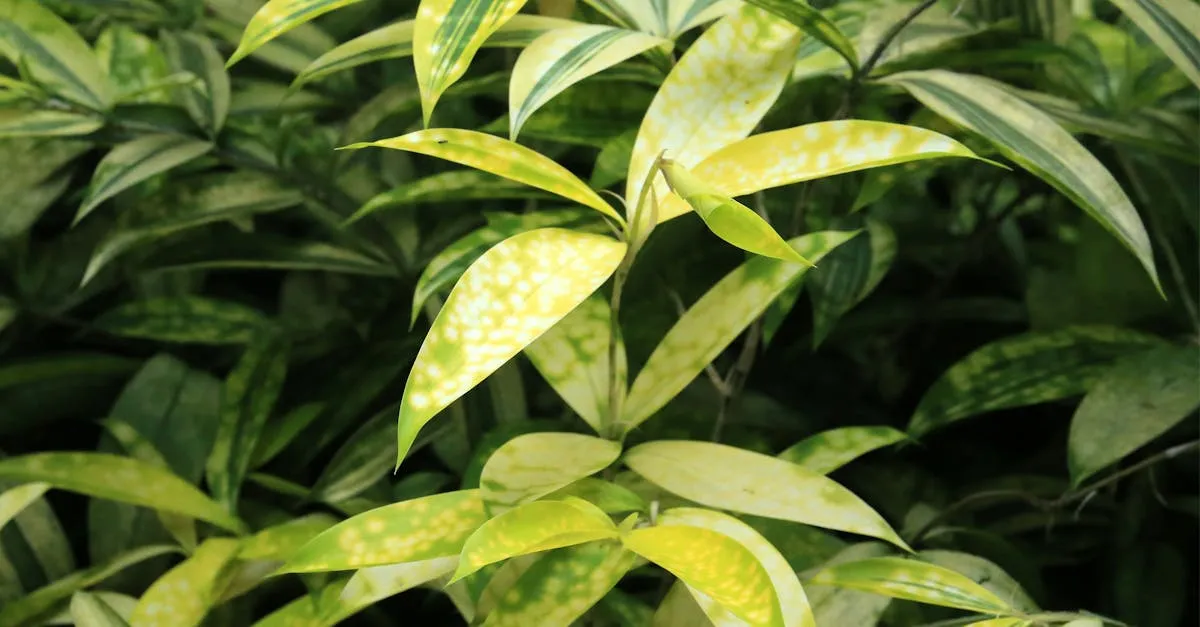
This page is a disease hub: its job is to help you name what you are seeing and route you to the right next step. If you are not sure you are even looking at a disease, start with the decision fork below.
Is this a disease or a cultural problem?
If you have uniform yellowing, leggy growth, crispy leaf tips, or wilting with dry soil, stop here. Those are cultural or watering issues, not infections. True infections produce marks that spread, have defined edges, and cannot be reversed by adjusting your watering.
Quick decision fork:
- Spreading marks with defined edges? Stay on this page.
- Uniform stress symptoms across the whole plant? Go to overwatering vs underwatering or how to water houseplants.
Disease ID at a glance
| Disease | Visual tell | Key distinguisher | Where to go next |
|---|---|---|---|
| Fungal leaf spot | Brown or black spots, dry defined edge, yellow halo possible | Spots stay dry and bounded | Brown spots guide |
| Bacterial leaf spot | Water-soaked, soft, angular patches; sometimes oozing; yellow halo | Angular shape follows vein lines; feels wet to touch | Remove leaves; fix conditions; discard if severe |
| Root rot | Mushy dark roots, stem collapse at soil line, sour smell | Confirm with the root-snap test below | Root rot treatment |
| Powdery mildew | White floury dust on upper leaf surface | Spreads in still air without wet leaves | Powdery mildew guide |
| Botrytis/gray mold | Fuzzy gray coating on flowers and soft tissue | Cool, damp trigger; starts on dead or dying material | Remove all debris; increase airflow |
| Mosaic virus | Mottled light and dark patches, distorted growth, no clean lesion boundary | No consistent lesion shape; spreads via sap-sucking pests | Isolate immediately; discard if confirmed; sterilize tools |
Root rot: the most common killer
Root rot causes more houseplant deaths than any other disease, yet it shows no leaf symptoms until the damage is advanced. The tell is below the soil. Lift the pot and check the roots. Healthy roots are white or tan and snap cleanly when you bend them. Rotten roots are brown or black, feel soft and mushy, and slide apart rather than snap. A sour, fermented smell from the compost confirms it.
Catch it early and you can remove the rotten roots and repot into fresh, dry compost. If the entire root ball has turned to mush, there is nothing left to save; discard the plant before the pathogen spreads. Full guidance is at root rot treatment.
Fungal and bacterial leaf spot
Both cause spots on leaves but behave differently. Fungal spots have dry, defined edges and may develop a yellow halo; they spread fastest when foliage stays wet overnight. Bacterial spots look water-soaked and soft, are often angular because they follow vein boundaries, and may ooze slightly.
Remove affected leaves and throw them out, not compost. For fungal cases, a copper-based or potassium-bicarbonate spray shortens recovery once you have fixed the watering and airflow. Bacterial leaf spot has no effective spray treatment; prune hard and improve conditions, or discard a badly affected plant. For detailed guidance see brown spots on houseplant leaves.
Powdery mildew
White or gray floury dust on the upper surface of leaves: unmistakable, and almost always the result of crowded, still air. Unlike most fungi, powdery mildew does not need wet leaves to spread, which is why simply watering less does not stop it.
Move the plant to better airflow first. Then treat with a potassium-bicarbonate or copper-based spray. Coated leaves will not clear up, so remove them. Full treatment guidance is at powdery mildew on houseplants.
Botrytis (gray mold)
Fuzzy gray coating on flowers, soft leaves, or dead tissue, most common in cool and damp conditions. Botrytis feeds on dying material first, so spent blooms and fallen leaves are its entry point. Remove every affected part and all debris from the soil surface, cut back into healthy tissue, then reduce humidity and increase airflow.
If surface mold is appearing on the soil rather than on the plant itself, that is a separate issue covered in mushrooms and mold in houseplant soil.
Mosaic virus
Mottled light and dark patches across leaves, often with distortion or streaking, and no clean lesion boundary separating infected tissue from healthy tissue. There is no fungicide or cultural adjustment that will clear a virus. Once confirmed, the plant cannot recover. Lucy Liu, at her London nursery, treats mottled yellow and green coloring combined with crinkled or distorted leaves and stunted growth as a working virus diagnosis whenever no pests or fungal lesions are visible alongside it.
Isolate the plant immediately. Discard it if you are confident in the identification. Sterilize every tool that touched it, because the virus spreads through sap and a contaminated blade carries it to the next plant. Lucy’s practice is to bag the plant tightly before moving it and throw it out rather than compost it, since a sap-sucking insect landing on it in transit can carry the virus on to every plant it visits next. She notes she once misread a calathea’s natural sport variegation as a virus and discarded it unnecessarily, but in a shared growing space she considers losing one plant a fair trade for not risking the rest. The indirect prevention is controlling sap-sucking pests such as aphids and thrips, which are the primary vectors.
Do you need a fungicide?
Rarely, and only after you have fixed the underlying conditions. A fungicide applied to a plant still sitting in stagnant air with wet foliage achieves almost nothing. The two diseases where a spray genuinely shortens recovery are powdery mildew and fungal leaf spot. For both, a copper-based or potassium-bicarbonate treatment, applied once airflow and watering are corrected, helps clear residual spores.
Bacterial leaf spot: no spray helps. Mosaic virus: no spray helps. Root rot: no spray helps. Fix the environment first; spray second if at all.
Universal prevention levers
One set of habits prevents nearly every disease on this page:
- Water the soil, not the leaves. Wet foliage is the entry point for most fungi and bacteria. See how to water houseplants for the technique.
- Keep air moving. Space plants apart, avoid crowded shelves, and add gentle airflow in humid rooms. See the houseplant humidity guide for the right balance.
- Sterilize tools between cuts. Wipe blades with alcohol or dilute bleach before moving to the next plant; a contaminated blade carries pathogens from plant to plant.
- Clear dead material promptly. Fallen leaves and spent blooms give botrytis and fungal spores somewhere to establish.
- Quarantine new arrivals for two weeks before placing them near established plants.
- Isolate sick plants immediately so an infection cannot spread through your collection.
A plant in moving air with dry leaves rarely gets sick in the first place.
Treat the room, not just the leaf
The mistake that brings most diseases back is spraying the plant while leaving the conditions that caused it: still air, wet foliage, and crowded shelves. Fix those first and most infections never get a second foothold, even if a few spores linger. If a disease keeps returning to the same plant in the same spot, move the plant before you reach for another bottle.
Where to go next
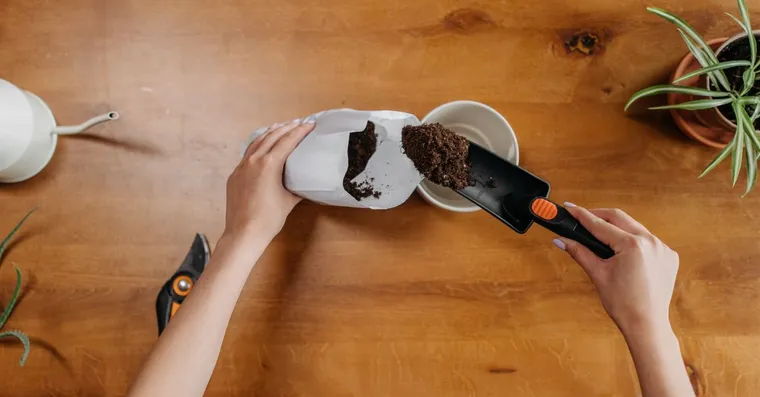
Fungus Gnat Larvae: What They Look Like and How to Kill Them
Fungus gnat larvae live in the top few centimetres of soil and eat roots. Here is how to confirm you have them and the treatments that actually clear them.
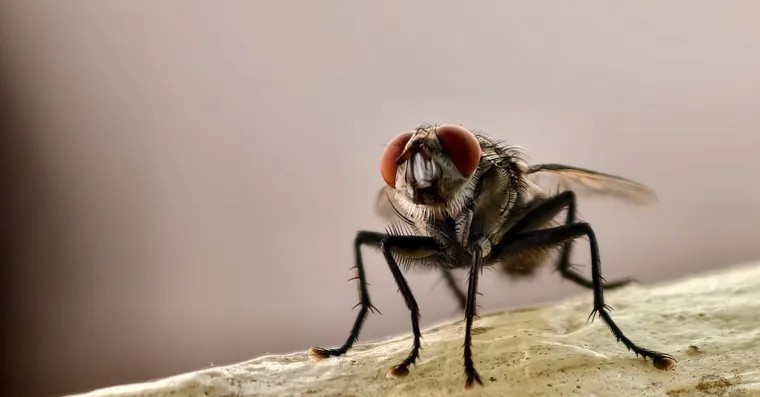
Fungus Gnats vs Fruit Flies: How to Tell Which You Have
Fungus gnats come from your plant pots, fruit flies come from the kitchen. They need completely different treatments, so identify before you treat.
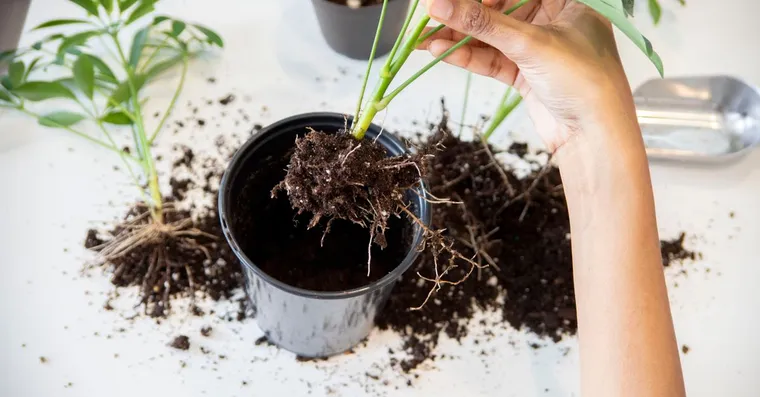
What Does Root Rot Look Like? Signs at Every Stage
Root rot is diagnosed at the roots, not the leaves. Here is what healthy and rotting roots look like, and which above-ground signs point to it.
Not sure what plant you have? Identify it from a photo and we will point you at its care guide.
Frequently asked questions
What is the most common houseplant disease?
Root rot is the disease most likely to kill a houseplant. It shows no leaf symptoms until the damage is severe, which is why checking the roots directly (lifting the pot and pulling a root tip) matters more than watching the foliage.
Do I need a fungicide for houseplant diseases?
Rarely. Fungicides only help with fungal diseases such as powdery mildew and fungal leaf spot, and only after you have fixed the underlying airflow and watering conditions. A spray applied to a plant still sitting in stagnant damp air achieves almost nothing. Bacterial leaf spot, root rot, and mosaic virus do not respond to fungicides at all.
Can mosaic virus be cured?
No. There is no fungicide, cultural adjustment, or treatment that clears a mosaic virus infection. Isolate the plant immediately, discard it if the diagnosis is confirmed, and sterilize every tool that touched it with alcohol or dilute bleach before using them on another plant.
How do I tell disease from overwatering?
Disease produces marks that spread across the plant, have defined edges, and appear on otherwise healthy tissue. Overwatering and underwatering typically cause uniform yellowing, wilting across the whole plant, or crispy tips, not spreading spots with distinct boundaries.
Sources
- Iowa State University Extension: healthy roots are firm and white while rotted roots are mushy and brown or reddish, and root rot is one of the most common indoor plant diseases seen in the plant clinic.
- University of Maryland Extension: bacterial leaf spot lesions are angular and bounded by leaf veins, often with a water-soaked appearance when backlit, unlike the rounder spots of fungal leaf spot.
- Royal Horticultural Society: powdery mildew spores carry an unusually high water content, letting them infect under drier conditions than most other fungal pathogens require.
- Royal Horticultural Society: Botrytis cinerea thrives as a saprophyte on dead organic material, with grey mould developing on decaying buds, leaves and flowers under humid conditions.
- University of Maryland Extension: there is no cure for a virus-infected plant and disposal is recommended; plant viruses spread on contaminated tools or hands and via sucking insects such as aphids and thrips.