Mushrooms and Mold in Houseplant Soil: Should You Worry?
What yellow mushrooms and white mold growing in houseplant soil actually mean, whether they harm your plant, and how to deal with them.
Some links in this guide go to Amazon. As an Amazon Associate we earn from qualifying purchases, at no extra cost to you. How this works.
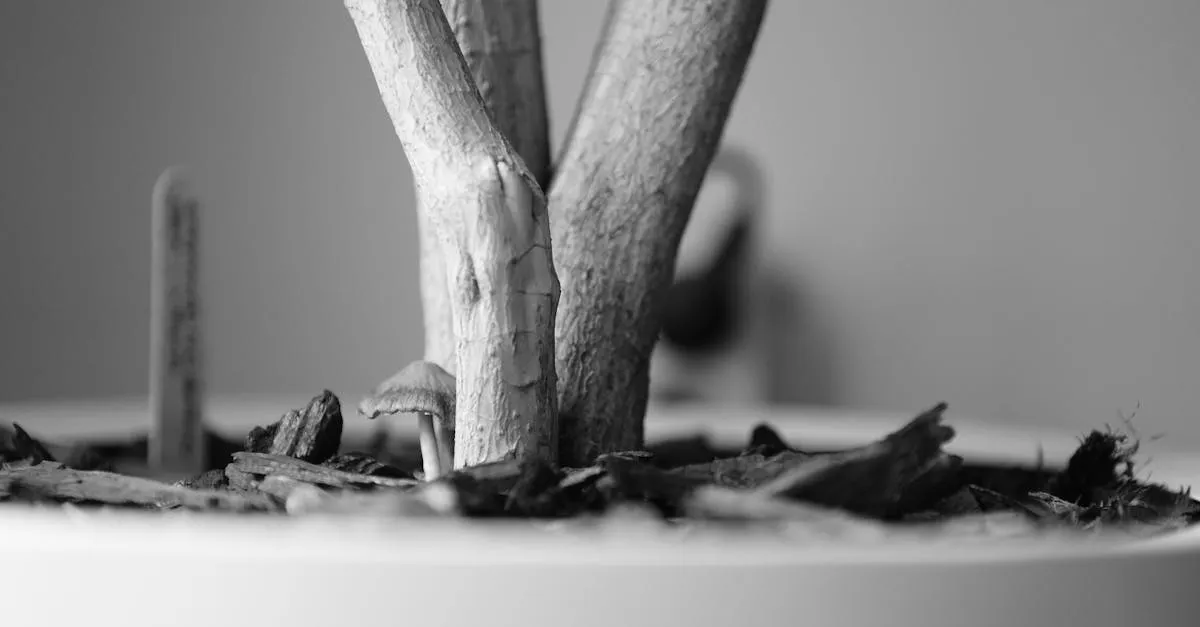
A bright yellow umbrella mushroom pushing up through your potting mix, or a patch of white fuzz on the surface, looks alarming. Neither is likely to harm your plant. What they tell you, along with the white powdery crust that people often confuse with them, is worth understanding before you reach for a fungicide.
What is actually on your soil
Three different things appear on houseplant soil and get lumped together. They have different causes, different fixes, and different levels of urgency.
| What you see | What it is | Action |
|---|---|---|
| Bright yellow umbrella-cap mushroom | Leucocoprinus birnbaumii, a saprophyte | Remove caps if pets or children are around; fix watering |
| White or gray fuzzy patch | Saprophytic mold on bark or coir | Improve airflow; let the surface dry |
| White powdery or hard crust | Mineral salts from tap water or fertilizer | See the white crust guide |
Bright yellow mushroom. The most striking one is Leucocoprinus birnbaumii, sometimes called the flowerpot mushroom. “Flowerpot parasite” is a misleading name: it is a saprophyte, meaning it feeds on dead organic matter in the mix (bark, coir, peat), not on living roots. It cannot infect your plant. The mushroom is the fruiting body of mycelium already threaded through the mix, probably present when you bought the bag. You see it now because the moisture level reached the threshold fungi need to fruit. Lucy Liu, at her London nursery, notes that the cap crumbles to a fine powder on contact, leaving a vivid yellow stain on fingers that takes several washes to clear.
White or gray fuzzy patch. This is saprophytic mold doing the same job: breaking down organic matter under damp, low-airflow conditions. It is not attacking the plant and it is not a sign of disease.
White powdery or crusty layer. This is not biological at all. It is mineral salts left behind by tap water or fertilizer as the water evaporates. The fix is different from the biological ones; see the white crust on houseplant soil guide for the right approach.
All three share one upstream cause: soil staying wet too long.
Yellow mushrooms and toxicity
Leucocoprinus birnbaumii is toxic if eaten. The soil itself carries no hazard; the risk is a pet or small child ingesting the mushroom directly. If that is a concern in your home, remove the caps before they open and release spores. Pinch each one at the base and throw it out rather than composting it.
You do not need to rehome the plant, repot it, or sterilize the soil. The mycelium is already distributed through the mix and will persist regardless. The goal is to remove the visible, ingestion-risk part and address the conditions that keep triggering fruiting. If a pet eats one, contact your vet.
Why it appears: the shared cause
Soil that dries out between waterings rarely produces mushrooms or mold. The conditions they need, consistent dampness combined with warmth and low airflow, are the same conditions that are bad for the plant anyway.
Work through these in order:
- You are watering too often. Let the top 3/4 to 1 inch (2 to 3 cm) dry before watering again. How to water houseplants covers calibrating your routine to plant type and pot size.
- Airflow is low. Still, humid air around the soil surface slows drying. A gentle fan or a better position helps.
- Light is too low. Low light means slower water uptake; soil sits wet for days. Match plant to position rather than compensating with less water.
- The mix or pot drains poorly. A dense or compacted mix, or a pot without drainage, holds water far longer than roots want. Choosing a houseplant potting mix explains what to look for.
Lucy notes that new caps tend to appear along the inside rim of the pot or beside the drainage holes, where moisture stays trapped longest against the plastic; if one returns to the same spot within three days of removal, the soil is almost certainly not drying out between waterings.
Bottom watering is one of the most effective practical changes: it hydrates roots while keeping the surface drier, which directly removes the conditions fungi need.
Fungicide is not the answer and will not prevent recurrence. The spores are already present in the mix and return from the air regardless; the only lever is moisture.
Fungus gnats often appear alongside mushrooms for exactly the same reason. If you have small flies as well, getting rid of fungus gnats starts from the same soil-drying fix. Tiny white specks that jump when disturbed are likely springtails, a different problem covered in the springtails in houseplant soil guide. Other tiny bugs in houseplant soil can look similar and are worth telling apart before treating.
Mushrooms are the symptom, not the problem. Fix the watering and they stop coming back.
When it stops being cosmetic
Mushrooms and surface mold on their own are cosmetic. The same wet conditions sustained for weeks can lead somewhere more serious.
If mushrooms or mold return within a day or two of removal and the plant shows yellowing leaves, a droop that does not recover after watering, or a soft mushy base, the chronic dampness has likely progressed to root rot. See the root rot treatment guide for how to assess and recover the plant, and overwatering vs underwatering for the diagnostic checklist.
Mushrooms and mold alone are not the crisis. Sustained wet conditions are the pathway to one.
Removing them
Pinch each mushroom at the base before the cap opens, and throw it out rather than composting it. For persistent surface mold, scrape off the top 3/4 to 1 inch (2 to 3 cm) of mix and replace it with fresh, dry potting mix.
You do not need to repot the whole plant unless the soil has become waterlogged and compacted. Baking or microwaving potting mix to sterilize it is not worth the disruption for an established plant; spores return from the air anyway.
Let the soil surface be your gauge
The honest test of whether you have fixed anything is the surface itself: give it two weeks, and if no fresh caps or fuzzy patches appear, your watering rhythm has finally matched the pot and the spot. The one mistake to avoid is treating the fungus instead of the moisture, because reaching for fungicide or sterile mix changes nothing while the soil stays wet. In a cool, dim winter room the surface dries slowly, so lean on bottom watering and a little more airflow rather than watering to a fixed weekly schedule.
Where to go next
Fungus Gnat Larvae: What They Look Like and How to Kill Them
Fungus gnat larvae live in the top few centimetres of soil and eat roots. Here is how to confirm you have them and the treatments that actually clear them.
Hydrophobic Potting Soil: Why Water Runs Straight Through the Pot
When water races out the drainage holes in seconds and the plant still droops, the soil has gone hydrophobic. How to rewet it properly and stop it recurring.
Springtails in Houseplant Soil: What They Are and What to Do
What springtails in houseplant soil actually are, why they appear, whether they harm plants, and the straightforward ways to reduce or remove them.
Not sure what plant you have? Identify it from a photo and we will point you at its care guide.
Frequently asked questions
Are mushrooms in houseplant soil harmful to the plant?
No. Mushrooms are the fruiting bodies of fungi that feed on dead organic matter in the potting mix, not on living roots. They are saprophytes, not pathogens, and cannot infect your plant. The conditions that produced them, consistently damp soil, are the real concern.
What is the white fuzz on my houseplant soil?
White or gray fuzzy growth on potting mix is saprophytic mold feeding on bark, coir, or peat in the mix. It is not attacking the plant and shares the same cause as mushrooms: soil staying wet in low-airflow conditions. Improve ventilation and let the top inch or two (3 to 5 cm) dry between waterings and it will disappear.
Is the yellow mushroom in my plant pot toxic to pets?
Yes, Leucocoprinus birnbaumii, the bright yellow mushroom most commonly found in houseplant pots, is toxic if eaten. Remove the caps promptly if pets or small children are around. The soil itself is not hazardous; the risk is direct ingestion of the mushroom. Contact a vet if a pet eats one.
How do I stop mushrooms coming back in plant soil?
Let the top 3/4 to 1 inch (2 to 3 cm) of soil dry out between waterings, improve airflow around the pot, and increase light if the spot is very dim. Bottom watering keeps the surface drier while hydrating the roots and is one of the most effective fixes. Fungicide is not the answer; the spores are already present in the mix and will return regardless.