Springtails in Houseplant Soil: What They Are and What to Do
What springtails in houseplant soil actually are, why they appear, whether they harm plants, and the straightforward ways to reduce or remove them.
Some links in this guide go to Amazon. As an Amazon Associate we earn from qualifying purchases, at no extra cost to you. How this works.
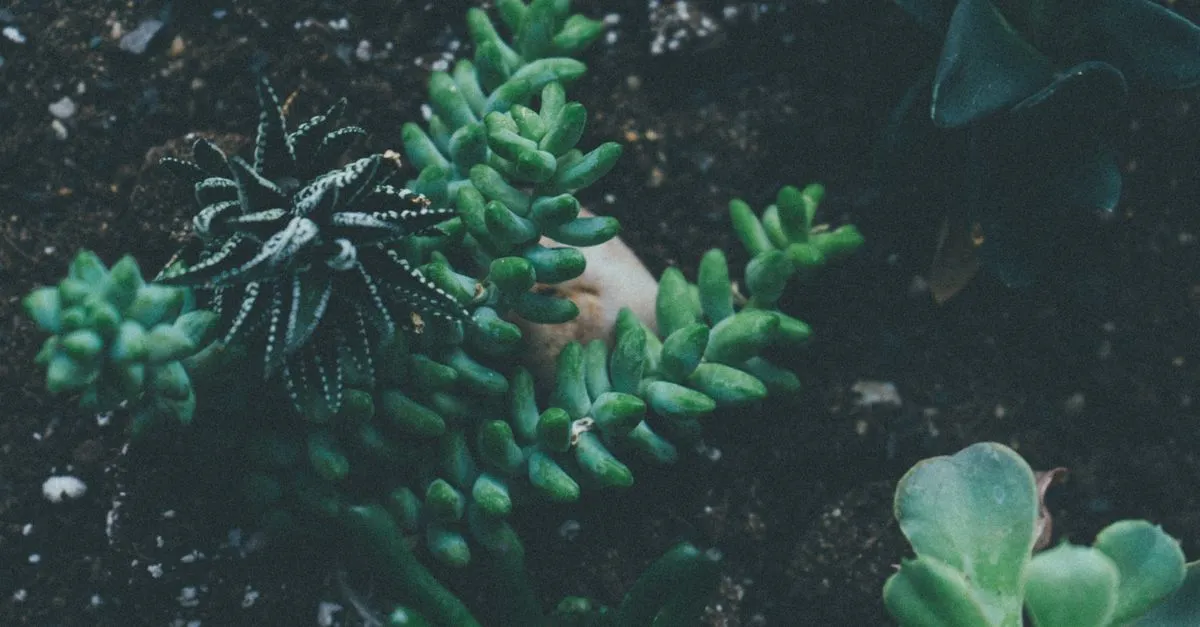
Springtails in houseplant soil look alarming the first time you spot a cloud of tiny things hopping off the surface, but the honest verdict is reassuring: they are harmless to healthy plants. Finding them tells you more about your watering habits than about any pest problem.
Quick answer
Springtails are harmless to healthy houseplants: on an established plant they eat decaying organic matter and fungal threads in the soil, nothing living, and they carry no disease. They appear because the topsoil stays damp, so the fix is to let the top 3/4 to 1 inch (2 to 3 cm) of soil dry out between waterings, and populations collapse within 1 to 2 weeks. For faster results, water once with one part 3% food-grade hydrogen peroxide to four parts water. Insecticide is unnecessary.
ID at a glance: springtail vs gnat larva vs gnat adult
Three creatures are commonly confused in a damp pot.
Springtail: about 1/16 inch (1 to 2 mm) long, white or gray, lives on the soil surface. The defining feature is the furcula, a forked appendage folded under the abdomen that snaps outward when the animal is disturbed, launching it clear of the soil. Springtails never have wings. They may also be visible floating briefly on the water surface when you irrigate.
Fungus gnat larva: a thin, translucent grub with a distinctive black head capsule, found in the top 3/4 inch (2 cm) of soil feeding on organic matter. It does not jump.
Fungus gnat adult: a tiny dark winged fly that hovers above the soil and drifts around leaves, strongly attracted to yellow sticky traps. If you see flying insects, the problem is gnats, not springtails.
The water-surface tell
The clearest self-identification moment comes when you water. The inflow dislodges springtails and they float visibly on the water surface for a few seconds, clustering briefly before they escape as the water drains away. Lucy Liu, at her London nursery, describes the surface as appearing to vibrate: hundreds of silvery-white specks suddenly in motion, each one snapping across the water like a tiny popcorn kernel before the pot drains. She also finds that when springtails flood to the surface this way the pot has almost always been sitting in a stagnant runoff tray, so the flush is a signal that conditions have become consistently too wet, not a new infestation. Small white specks on the waterline that vanish within seconds are a reliable confirmation you have springtails rather than any other pest.
What springtails actually are
Springtails are tiny arthropods that feed on decaying organic matter and fungal threads, including early-stage soil fungi such as Pythium. On an established houseplant they eat nothing living: no roots, no stems, no foliage. The one exception is germinating seedlings, whose tender roots a few species will nibble when numbers are very high, but that has no bearing on a mature plant. They do not bite, sting, or carry disease. Populations are self-limiting: when surface moisture drops, numbers collapse within 1 to 2 weeks without any chemical treatment.
Why springtails appear in houseplant soil
Springtails turn up when conditions suit them: consistently damp soil with plenty of organic matter to eat.
Soil that stays wet. Topsoil that never dries between waterings is the primary driver. If you are unsure whether you are over or underwatering, the guide on overwatering vs underwatering houseplants will help you diagnose it.
Peat-heavy or bark-rich mixes. These hold water and contain abundant organic matter, giving springtails food and habitat in the same layer. A well-draining potting mix reduces both moisture retention and food supply.
Poor drainage or standing water. A pot with no drainage hole, or a saucer left full after watering, keeps the surface permanently humid.
Their presence is a symptom rather than a standalone pest event. The same damp conditions drive fungus gnats and surface mold. If you are unsure which creature you are looking at, the guide to tiny bugs in houseplant soil covers the full cast of common soil dwellers and how to tell them apart.
Will they spread to other plants?
Springtails can walk to a neighboring pot if it is equally damp. They cannot, however, colonize a pot that dries between waterings: without persistent surface moisture they die within days. While populations are active, keep pots from touching each other and do not share water trays between affected and healthy plants. Let the source plant’s topsoil dry out and any spread stops on its own.
When to leave them alone
If you keep a closed terrarium or bioactive vivarium, springtails are the deliberate clean-up crew. Hobbyists buy springtail cultures specifically to seed new builds, where they break down waste and suppress mold. If you see them in a terrarium, the system is working as intended and there is nothing to treat. The only reason to act is if they escape into an adjacent regular houseplant pot, where the enclosed moisture cycle that sustains them is absent.
How to reduce them
Drying the soil does most of the work.
Let the topsoil dry between waterings. Allow the top 3/4 to 1 inch (2 to 3 cm) to dry before watering again. Populations collapse within 1 to 2 weeks when the surface stays dry; no chemical is needed. The guide to how to water houseplants covers judging when a pot actually needs water.
Improve drainage. Make sure the pot drains freely, empty the saucer after watering, and consider adding perlite or grit to a dense mix at the next repot.
Remove decaying matter. Clear fallen leaves and spent flowers from the soil surface to reduce the food supply.
Drench with dilute hydrogen peroxide if you want faster results. Mix 3% food-grade hydrogen peroxide one part to four parts water and water the plant as normal. It oxidizes the organic matter springtails feed on without harming roots. A single drench combined with drier watering is sufficient. Insecticide is unnecessary overcorrection: springtails pose no root threat and carry no disease, and they simply recolonize once moisture returns.
Bottom-watering as a structural preventative
Bottom-watering keeps the topsoil layer dry because water never reaches the surface. Springtails breed in that moist top layer; remove the habitat and infestations do not take hold. If recurring populations are a pattern, switching to regular bottom-watering is the most durable long-term fix.
Read a springtail sighting as a moisture reading
The mistake to avoid is reaching for insecticide, which does nothing useful against an arthropod that never touches living tissue and simply returns once the soil is wet again. Treat the next cloud of hoppers as a prompt to check your watering rhythm rather than a pest to kill, and let the top inch or two (3 to 5 cm) dry before the next drink. If the same pot keeps producing them, that is your cue to switch it to bottom-watering and settle the problem for good.
Where to go next
Fungus Gnat Larvae: What They Look Like and How to Kill Them
Fungus gnat larvae live in the top few centimetres of soil and eat roots. Here is how to confirm you have them and the treatments that actually clear them.
BTI for Fungus Gnats: How Mosquito Bits Actually Work
Sticky traps only catch adult fungus gnats. BTI, sold as Mosquito Bits, kills the larvae in the soil and actually ends the infestation. How to use it right.
Hydrophobic Potting Soil: Why Water Runs Straight Through the Pot
When water races out the drainage holes in seconds and the plant still droops, the soil has gone hydrophobic. How to rewet it properly and stop it recurring.
Not sure what plant you have? Identify it from a photo and we will point you at its care guide.
Frequently asked questions
Are springtails harmful to houseplants?
No. Springtails eat decaying organic matter and fungal threads in the soil; they do not attack living roots, stems, or foliage, and they do not spread disease. They are harmless to healthy plants.
How do I get rid of springtails in houseplant soil?
Let the top 3/4 to 1 inch (2 to 3 cm) of soil dry out between waterings. Springtail populations collapse within 1 to 2 weeks once the surface stays dry. For faster results, water once with a dilute hydrogen peroxide solution (one part 3% food-grade hydrogen peroxide to four parts water). Insecticide is not needed.
What is the difference between springtails and fungus gnats?
Springtails are about 1/16 inch (1 to 2 mm) white or gray arthropods that live on the soil surface and jump when disturbed, using a forked appendage called the furcula. Fungus gnat larvae are pale grubs with a black head that stay in the top 3/4 inch (2 cm) of soil and never jump. Adult fungus gnats are tiny dark flying insects that hover above the soil.
Will springtails spread to my other houseplants?
They can walk to a neighboring pot if it is equally damp, but they cannot survive in soil that dries between waterings. Keep pots from touching, avoid sharing water trays, and let the affected plant's topsoil dry out to stop any spread.
Sources
- Colorado State University Extension: in houseplant soils, springtails scavenge dead plant matter and feed on soil microorganisms, and do very little, if any, damage to the houseplant.
- UC Statewide IPM Program: springtails feed on decaying plant material, fungi, molds, or algae, and do not bite humans or pets, nor spread disease.
- Texas A&M AgriLife Extension: springtails eat bacteria, fungi, lichens, algae and decaying vegetation; some species eat plant roots or nibble tender young plants and can occasionally damage potted or greenhouse plants, but in most cases they benefit plants.