Aphids on Houseplants: How to Spot and Get Rid of Them
A practical guide to identifying aphids on indoor plants and clearing an infestation with washing, soap sprays, and consistent follow-up treatment.
Some links in this guide go to Amazon. As an Amazon Associate we earn from qualifying purchases, at no extra cost to you. How this works.
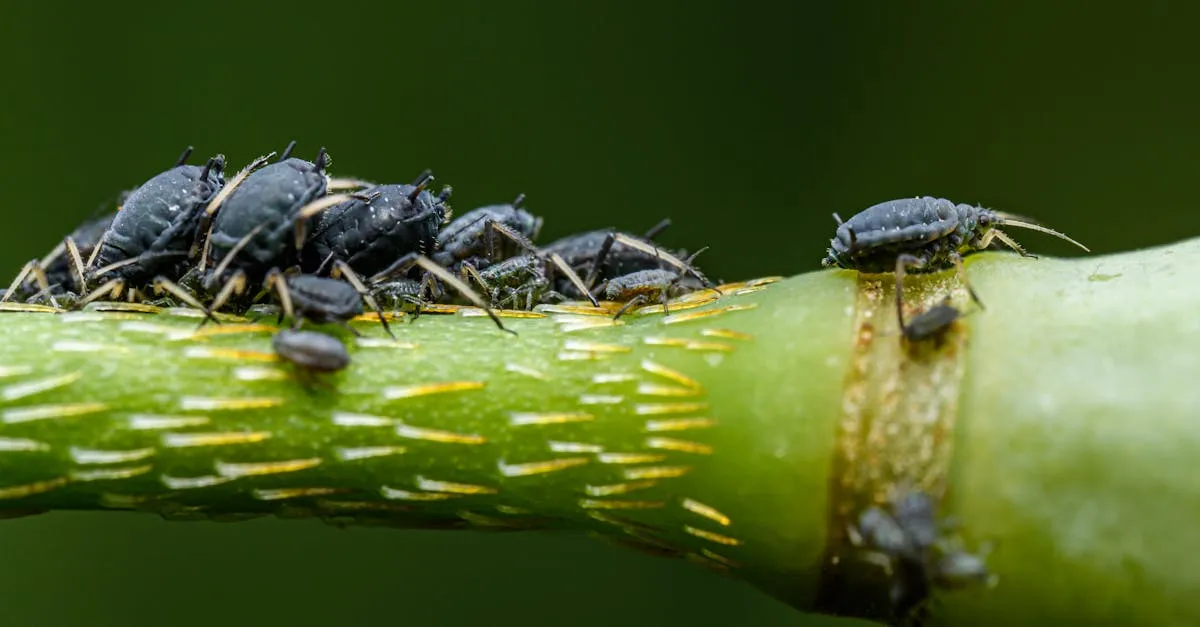
Aphids are one of the few houseplant pests you can usually see with the naked eye, which makes them easier to catch early than spider mites or thrips. If you have spotted aphids on houseplants, the bad news is they breed fast and the good news is they respond well to a steady treatment routine. Plan for three to four weekly treatments from the start; a single spray is never enough.
How to recognize an aphid problem
Aphids are small, soft-bodied insects, usually 1/16 to 1/8 inch (1 to 3 mm) long, with a pear-shaped body and a pair of short tubes (cornicles) pointing backwards from the rear end. That paired-tube detail is the confirm-tell: no other common houseplant pest looks quite like it. They are most often green, but black, brown, pink, yellow, and pale gray forms all exist. Look for them in clusters rather than as scattered individuals.
The clustering is the giveaway. Aphids gather on the parts of the plant where sap flows fastest:
- New growth. Soft tips, unfurling leaves, and flower buds are the first and heaviest hit.
- Leaf undersides. They line up along the midrib and veins, out of direct sight.
- Stems and leaf joints. Tight clusters wrap around tender stem sections.
Damage shows as curled, puckered, or stunted new leaves, because aphids drain sap from tissue that is still expanding. Lucy Liu, at her London nursery, describes finding a hoya vine tip already tightly curled and coated in a sticky sheen, with pale green and white specks massed all along the tender stem inside when she uncurled the leaf. You may also see a sticky, shiny coating on leaves and on the surface below the plant. This is honeydew, the sugary waste aphids excrete, and it often grows a black sooty mold that blocks light. Honeydew and warped new growth together are a near-certain sign of aphids.
Winged morphs. When a colony becomes crowded or the plant is stressed, some aphids develop wings and move to colonize new hosts. Winged adults indoors mean the colony is actively spreading now, not merely established on one plant. Isolate the affected plant immediately and check every plant nearby.
Is it definitely aphids?
Before treating, rule out the common lookalikes.
Whitefly adults fly off in a white cloud when you brush the leaf; aphids do not fly. Whitefly also lay distinctive rod-like eggs in neat rings on the leaf underside. If you see flying white adults, read the whitefly on houseplants guide for the right treatment.
Scale appear as hard or waxy fixed bumps on stems and older leaves, not clustered on the newest soft tips. They do not move when touched. See scale insects on houseplants.
Mealybugs form white cottony tufts and are stationary. See mealybugs on houseplants.
If the pest is soft, pear-shaped, has two small tubes at the rear, groups tightly on the newest tissue, and does not fly when disturbed, you have aphids.
Ants on the stem
Ants farm aphids: they collect the honeydew aphids produce and in return move aphids to fresh growth and defend the colony. An ant trail running up a stem is an early warning to check the growing tip, often before the aphid cluster is large enough to spot easily. On the same hoya, Lucy noticed the ant highway running up the side of the pot before she had spotted a single aphid on the stem. Catching it at this stage keeps treatment much simpler. For what to do about the honeydew left on leaves and surrounding surfaces, see sticky residue on houseplant leaves.
A treatment routine that actually works
Your target is two weeks with no aphids visible. Most infestations need three to four rounds of weekly treatment to reach it, because contact sprays kill adults on contact but miss insects tucked into curled leaves and do not clear the next generation before it hatches. Stick to the weekly cycle and you will get there.
Work through these steps each time:
- Squash visible clusters. Pinch clusters between your fingertips or dab with a cotton bud. This gives an immediate reduction before any product goes on the plant, and it is especially useful when the infestation is light.
- Rinse them off. Take the plant to a sink or shower and wash the foliage with a firm spray of room-temperature water, paying attention to leaf undersides and growing tips. This removes a large share of the surviving colony.
- Treat with insecticidal soap or neem oil. Spray every surface until it drips, undersides included. Soap kills only on contact, so coverage is everything. If soap fails after two rounds, switch to neem oil for houseplants.
- Repeat every five to seven days. Aphids reproduce without mating and give birth to live young, so a population rebuilds within days of a single treatment.
Wingless aphids are an established colony; winged ones mean active spreading. Either way, the routine is the same.
Prune the tip first
If the infestation sits on a single soft tip or bud, cut and throw that growth out before reaching for any spray. You remove the bulk of the colony in one action. Avoid this on the only growing point of a single-stemmed plant. See how to prune houseplants for where to cut.
Stopping them coming back
Once the plant is clean, lower the odds of a repeat. Quarantine new plants for two weeks before they join your collection; aphids arrive most often on new purchases. Check the growing tips when you water, since that is where aphids appear first. If you also find white cottony tufts or fine webbing, you may be dealing with mealybugs or spider mites instead, which need slightly different handling.
The two weeks that decides it
The single mistake that lets an aphid colony recover is stopping once the visible cluster is gone, while live young are still hatching inside curled tips you cannot see. Hold the weekly cycle until you have counted two clear weeks with nothing on the plant, then keep checking the new growth every time you water, because that soft tissue is where any survivor or fresh arrival will show up first.
Where to go next
Thrips on Houseplants: Identifying and Treating Them
A guide to spotting thrips, the silvery stippling they leave behind, and treating these stubborn pests before they spread across your collection.
Fungus Gnat Larvae: What They Look Like and How to Kill Them
Fungus gnat larvae live in the top few centimetres of soil and eat roots. Here is how to confirm you have them and the treatments that actually clear them.
BTI for Fungus Gnats: How Mosquito Bits Actually Work
Sticky traps only catch adult fungus gnats. BTI, sold as Mosquito Bits, kills the larvae in the soil and actually ends the infestation. How to use it right.
Not sure what plant you have? Identify it from a photo and we will point you at its care guide.
Frequently asked questions
What do aphids look like on indoor plants?
Aphids are 1/16 to 1/8 inch (1 to 3 mm) long with a soft pear-shaped body and two small tubes pointing backwards from the rear. They cluster on the newest growth, leaf undersides, and stem joints rather than spreading evenly across the plant. Color varies: green is most common but black, brown, pink, yellow, and pale gray forms all exist.
How often should I treat my plant for aphids?
Treat every five to seven days. Most infestations need three to four rounds before the plant stays clear. Keep going until two full weeks pass with no aphids visible.
Why are there ants on my houseplant?
Ants farm aphids. They collect the honeydew aphids excrete and in return move aphids to fresh growth and defend them. An ant trail running up a stem is an early sign of an aphid colony on the growing tip, often before the cluster is large enough to spot easily.
How do I tell aphids from whitefly?
Brush the leaf gently. Whitefly adults fly off in a white cloud when disturbed; aphids do not fly. Whitefly also lay rod-like eggs in neat rings on the leaf underside. Aphids have a soft pear-shaped body with two small rear tubes and stay clustered on the newest tissue without flying.
Sources
- Royal Horticultural Society: winged aphid forms develop when overcrowding or host-plant deterioration prompts a move to another plant, and aphids excrete a sticky honeydew on which black sooty moulds grow.
- UC Statewide IPM Program: ants feed on the honeydew aphids excrete and protect them from natural enemies, and adult females give birth to live young without mating, so a single aphid can produce up to 80 offspring in a week.