Thrips on Houseplants: Identifying and Treating Them
A guide to spotting thrips, the silvery stippling they leave behind, and treating these stubborn pests before they spread across your collection.
Some links in this guide go to Amazon. As an Amazon Associate we earn from qualifying purchases, at no extra cost to you. How this works.
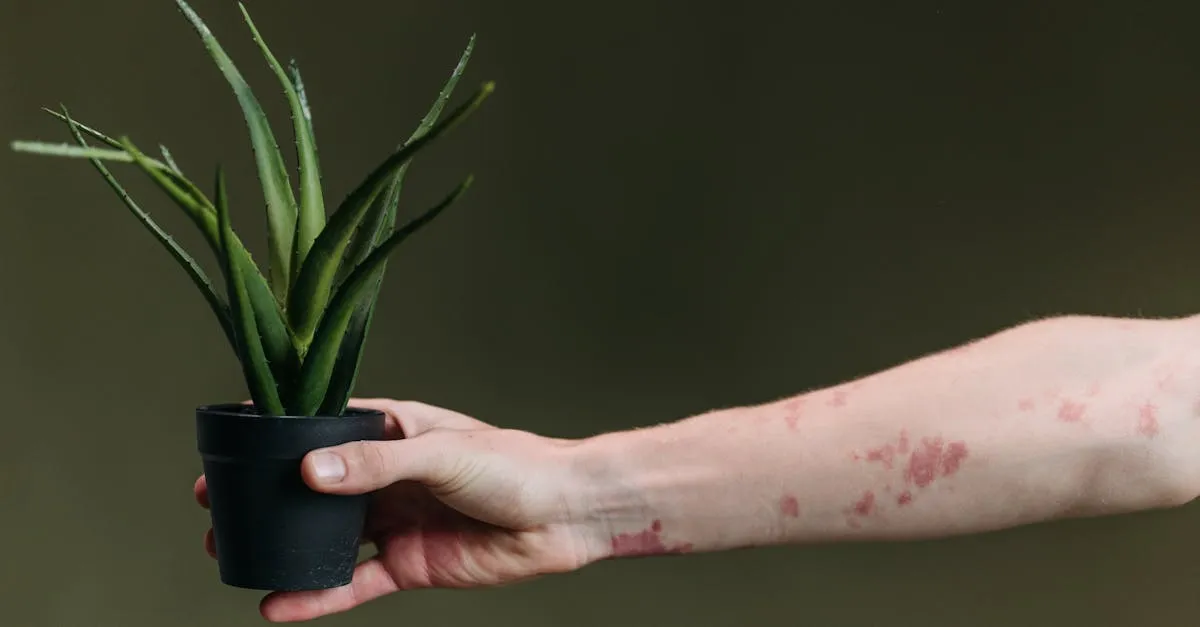
If you have noticed silvery streaks and tiny black specks on your leaves, thrips on houseplants are a likely cause. They are slender, fast-moving insects that rasp at plant tissue, and they are widely considered one of the hardest indoor pests to fully clear. The honest answer up front: you can win, but it takes repeated treatment over several weeks, not a single spray.
How to recognize thrips damage
Thrips themselves are small, around about 1/16 inch (1 to 2 mm) long, and look like thin slivers of black, brown, or pale yellow. The young (nymphs) are paler and wingless. You will often spot the damage before the insects.
The classic signs, most to least telling:
- Silvery or pale stippling. Leaves develop dull, silvery patches where thrips have scraped the surface and drained the cells. Held to the light, these areas look almost metallic.
- Tiny black dots. Thrips leave specks of dark faeces scattered across leaf surfaces. Wipe one: if it smears, it is droppings, not soil.
- Distorted new growth. Fresh leaves emerge crinkled, curled, or scarred because thrips fed on them while still folded.
- Pale flecking on flowers. Petals show bleached streaks, common on anthuriums and orchids.
Confirming it is thrips, not a lookalike
Several pests cause similar stippling, so confirm before you treat. Spider mites are the closest lookalike: their nymphs are nearly still and cluster on the underside of leaves, whereas thrips nymphs are pale green or yellow and move immediately when disturbed. See spider mites on houseplants for the full contrast; this article does not repeat it.
The non-obvious test is to shine a torch at a 45-degree angle across the leaf surface in a darkened room. Thrips scatter when the beam hits them; mites do not react. Combine this with two daylight checks: tap a leaf over a sheet of white paper and look for tiny wriggling specks dropping onto it, and wipe a black dot with a damp finger to confirm it smears (faecal matter) rather than scraping off (soil particle). All three positive means thrips; treat accordingly.
Why thrips on houseplants are so persistent
Eggs are inserted inside leaf tissue, where no spray can reach. Part of the life cycle is also spent in the soil: pupae drop off the plant and burrow 3/4 to 2 inches (2 to 5 cm) into the topsoil. A foliar spray, however thorough, cannot touch them there. The soil stage is short, roughly two to five days from pupa to emerging adult, and eggs hatch on a similarly rolling schedule, which is precisely why the 5 to 7 day spray interval exists: each new spray catches the larvae and adults that appeared since the last application, before they can lay the next batch of eggs.
Treat thrips on the calendar, not on the symptoms: a fixed schedule beats waiting for them to reappear.
The soil-pupae problem and why foliar-only fails
Because pupae survive in the compost, treating only the leaves guarantees a slow-burn re-infestation. Lucy Liu, at her London nursery, puts a pointed question to any customer whose thrips are still raging after three weeks: did you treat the soil, and did you flip every single leaf? Most people spray the top surface only, but the larvae feed on the underside, so those surfaces need equal coverage, and without soil treatment the pupae continue emerging regardless. Two responses that address the soil layer:
Top-dressing with grit. After each spray round, spread a thin layer of horticultural grit or coarse sand over the compost surface. Emerging pupae have to push through it, and many fail. It also reduces the moist surface environment that adults prefer for egg-laying.
Soil drench for severe cases. When the infestation is heavy and grit alone is insufficient, work a spinosad solution into the top half inch (1 cm) of compost to hit the larvae in that surface layer. Spinosad is a contact and ingestion insecticide rather than a systemic, so it will not penetrate sealed pupae; use it alongside foliar sprays, not instead of them. Older guides suggest an imidacloprid drench, but amateur imidacloprid products were withdrawn in the UK, so it is no longer an option here.
Exact treatment cadence, week by week
Commit to a six-spray schedule:
- Week 1: spray on days 1 and 6.
- Week 2: spray on days 8 and 13.
- Week 3: spray on days 15 and 20.
- Week 4: inspect only; do not spray unless you find live thrips.
Zero live thrips at the Week 4 inspection means the infestation is cleared. If your room is consistently above 70°F (22°C), add a fifth spray week: warmer temperatures compress the pupal stage and adults emerge faster, so the same six-spray schedule leaves a gap that new adults can slip through.
For the spray itself, apply insecticidal soap, horticultural oil, or neem oil to every surface, especially leaf undersides and new growth. For guidance on mixing and applying neem correctly, see neem oil for houseplants. Spray in the evening or out of direct sun to avoid scorching.
Use blue sticky traps rather than yellow ones throughout. Thrips are strongly attracted to blue wavelengths; yellow cards are calibrated for fungus gnats. Place them at leaf level to catch flying adults and to track whether numbers are dropping week on week.
Which plants are highest risk
Monstera, calathea, fiddle-leaf fig, peace lily, and any orchid or anthurium in flower are hit hardest. The high-moisture environment most of these prefer and their large leaf surfaces make them easy targets. Succulents and cacti are almost never affected; their dry conditions and waxy or spiny surfaces offer thrips very little.
The give-up rule
If live thrips persist after six weeks of twice-weekly treatment on a plant that has been properly isolated and consistently sprayed, one of two things is happening: the plant is being reseeded from a hidden source (check neighboring plants, the soil, and any cut flowers in the room), or it has sustained so much stem and growth-point damage that recovery is not realistic. In that second case, discard the plant, then wipe the empty pot and the shelf it stood on with diluted rubbing alcohol before placing anything else there.
Lucy applies the same cost-benefit thinking to calatheas in particular: she can clear thrips from one, but only with aggressive removal of the worst-affected leaves, weekly systemic soil drenches throughout the full schedule, and consistent wiping. A large, expensive specimen warrants that effort; on a small, inexpensive plant, cutting your losses and discarding it early protects whatever monstera or other favorite is growing nearby.
Keeping thrips from coming back
Quarantine every new plant for two weeks before it joins the others; this is the single most effective prevention step. See quarantining new houseplants for the full protocol. Inspect cut flowers before bringing them indoors; they are a common vector. Check high-risk plants weekly so you catch any re-infestation while it is still small.
Why the last clean week matters more than the first
The mistake that lets thrips win is stopping the moment new growth comes in clean, because soil pupae keep emerging on their own clock for another week or two after the leaves look fine. Hold the spray-and-grit routine all the way through the Week 4 inspection, and only call it cleared when that final check turns up zero live insects. If several plants share a room, treat the whole shelf as one outbreak rather than chasing the worst-looking specimen and letting a quiet neighbor reseed it.
Where to go next
Aphids on Houseplants: How to Spot and Get Rid of Them
A practical guide to identifying aphids on indoor plants and clearing an infestation with washing, soap sprays, and consistent follow-up treatment.
Fungus Gnat Larvae: What They Look Like and How to Kill Them
Fungus gnat larvae live in the top few centimetres of soil and eat roots. Here is how to confirm you have them and the treatments that actually clear them.
BTI for Fungus Gnats: How Mosquito Bits Actually Work
Sticky traps only catch adult fungus gnats. BTI, sold as Mosquito Bits, kills the larvae in the soil and actually ends the infestation. How to use it right.
Not sure what plant you have? Identify it from a photo and we will point you at its care guide.
Frequently asked questions
Why do thrips keep coming back after treatment?
Most re-infestations trace to soil pupae surviving in the top 3/4 to 2 inches (2 to 5 cm) of compost, where foliar sprays cannot reach them. If you treat the leaves but ignore the soil, each new generation pupates safely and emerges as adults a week later. Top-dressing with horticultural grit after each spray round disrupts this cycle. Other common sources are nearby untreated plants, cut flowers brought indoors, and new plants added without quarantine.
How long does it take to get rid of thrips on houseplants?
Expect four to five weeks of twice-weekly treatment. The standard protocol is six sprays spread across four weeks, with a final inspection-only week. Rooms warmer than 70°F (22°C) often need a fifth spray week because the lifecycle accelerates with heat. Do not stop early based on reduced symptoms alone; finish the full schedule.
Do blue or yellow sticky traps work better for thrips?
Blue sticky traps outperform yellow for thrips. Thrips are strongly attracted to blue and violet wavelengths, whereas yellow cards are better tuned for fungus gnats and whitefly. Place blue traps at leaf level, not overhead, for the highest catch rate.
Sources
- UC Statewide IPM Program: the prepupae and pupae of most thrips species drop to the soil or leaf litter, which is why treating only the foliage fails to break the cycle.
- UC Statewide IPM Program: effective insecticides must be applied at least twice, about 5 to 7 days apart, to control western flower thrips.
- Royal Horticultural Society: thrips feeding leaves a dull, silvery-white discolouration on the upper leaf surface, marked by tiny black excrement spots.
- Michigan State University Extension: the western flower thrips prepupal and pupal stages last only about one to three days each and take place in the growing media or soil rather than on the plant.