Brown Spots on Houseplant Leaves: Causes and Fixes
How to read brown spots on houseplant leaves, whether they point to overwatering, sunburn, cold, or fungal disease, and what to change for each cause.
Some links in this guide go to Amazon. As an Amazon Associate we earn from qualifying purchases, at no extra cost to you. How this works.
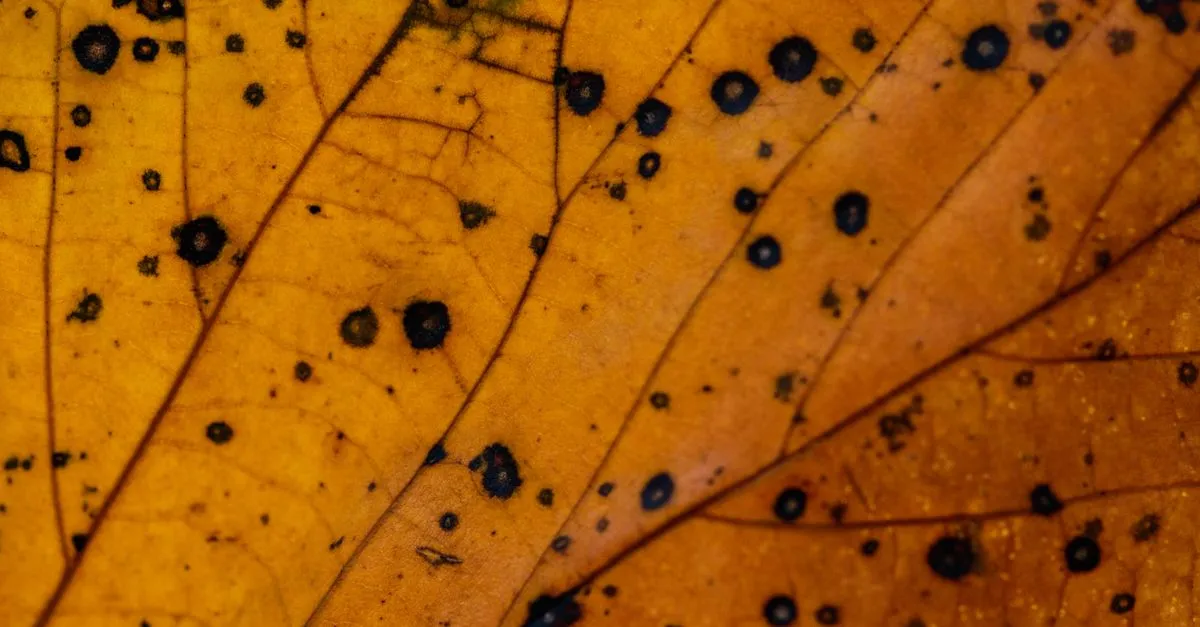
Brown spots on houseplant leaves are a symptom, not a diagnosis. The color alone tells you very little: what matters is the texture of each spot, where it sits on the leaf, and whether it is spreading. Once you read those three things, the cause is usually clear, and so is the fix.
What brown spots on houseplant leaves are actually telling you
Before you change anything, look closely in good light and press a spot gently with a fingertip.
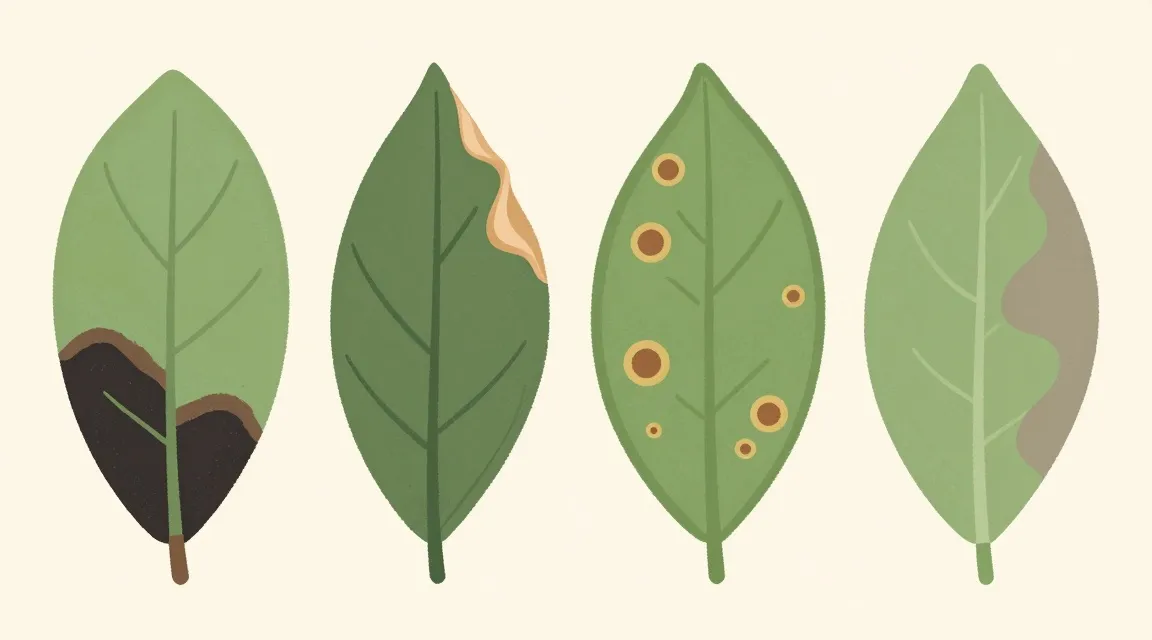
Texture. A soggy, dark, almost greasy patch points to too much water. A dry, papery, crispy spot points to too much light or heat. A patch with a soft, water-soaked edge points to cold.
Location. Spots on the oldest, lowest leaves often mean a root problem. Spots only on the side facing a window mean light. Spots scattered across many leaves at once mean disease or a recent shock.
Spread. A spot that grows, develops a yellow halo, or appears on new leaves a few days later is almost always fungal or bacterial. A fixed spot that never changes is old damage, not active disease. Corky, raised bumps that do not spread are a different phenomenon entirely; see edema on houseplant leaves if the spots feel rough or blister-like rather than sunken.
This is also why brown spots and brown tips are different problems. Tips that go brown and crisp are usually about humidity, salts, or watering rhythm, covered in brown leaf tips. Discrete spots in the middle of the leaf are a separate story.
Soggy dark patches: overwatering and root rot
This is the most common cause, especially in winter. The spots are dark brown to black, soft, and often start at the base of the leaf or along the midrib. The lower leaves go first, and the soil stays wet for days.
The plant is not thirsty, it is drowning. Roots sitting in airless, soggy compost begin to rot, and the damage shows up in the leaves. Stop watering, check that the pot actually drains, and feel the soil before every water from now on. If the spots keep spreading and the stem base feels mushy, unpot and inspect the roots: healthy roots are pale and firm, rotten ones are brown and stringy. See how to save an overwatered plant for the full rescue.
Dry, crispy brown spots: scorch and sunburn
These spots are tan to brown, dry, and slightly sunken, usually on the leaves or parts of leaves that get the most direct sun. They do not spread, because they are burns, not infection.
A burn is a scar, not a disease: it will not heal, but it will not spread either.
Move the plant back from hot glass, especially a south or west window in summer, or hang a sheer curtain between the leaves and the pane. A plant shifted suddenly from shade into strong sun scorches fastest, so make any move gradual over a week or two.
Spots with yellow halos: fungal leaf spot
If the spots have a yellow ring around them, look wet or greasy at the edge, and keep appearing on new leaves, you are likely dealing with fungal or bacterial leaf spot. Damp foliage and still, humid air let it spread from leaf to leaf.
Remove the affected leaves with clean snips, throw them out rather than compost them, and stop misting. Improve airflow, water the soil instead of the foliage, and let the leaves dry quickly after watering. Persistent or spreading cases are covered in common houseplant diseases.
Soft patches after a cold snap: cold damage
Brown or blackened patches that appear within a day or two of a cold night point to cold injury, often on leaves touching a freezing window or sitting in a draft. The tissue looks water-soaked first, then dries and browns.
Move the plant away from cold glass, exterior doors, and unheated rooms, and keep it off windowsills on frosty nights. The damaged leaves will not recover, but new growth will be fine once the plant is warm again.
Let spread, not color, decide your response
The single most useful habit is to mark or photograph a worrying spot and look again three days later: if it has grown or jumped to fresh leaves, treat it as disease and act quickly, but if it looks identical it is old damage you can safely leave alone. Heading into the colder months, keep the closest eye on soggy dark patches, since overwatering does its worst when light is low and the compost stays wet for days at a time.
Where to go next
Fungus Gnat Larvae: What They Look Like and How to Kill Them
Fungus gnat larvae live in the top few centimetres of soil and eat roots. Here is how to confirm you have them and the treatments that actually clear them.
What Does Root Rot Look Like? Signs at Every Stage
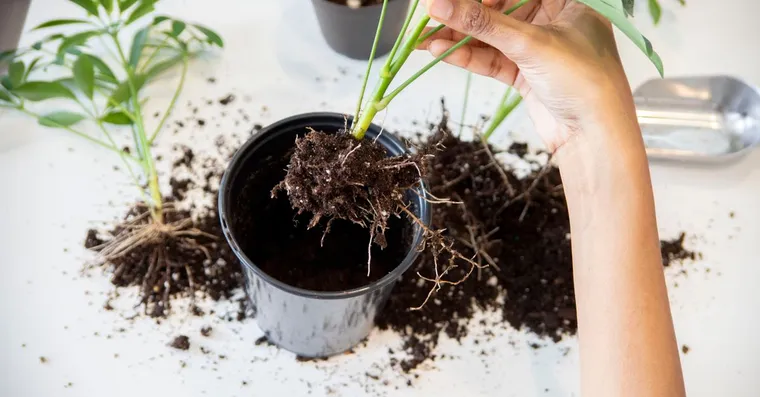
Root rot is diagnosed at the roots, not the leaves. Here is what healthy and rotting roots look like, and which above-ground signs point to it.
Why Is My Monstera Turning Yellow? Causes and Fixes
Yellow leaves on a monstera usually mean a watering problem, but light, feeding, and age all matter; here is how to tell them apart.
Not sure what plant you have? Identify it from a photo and we will point you at its care guide.
Frequently asked questions
What do brown spots on houseplant leaves mean?
Read three things, not the color. Texture: a soggy, dark, almost greasy patch means too much water, a dry papery spot means too much light or heat, and a soft water-soaked edge means cold. Location: the oldest lowest leaves point to a root problem, while spots only on the window-facing side point to light. Spread: a spot that grows or appears on new leaves is fungal or bacterial, and a fixed spot is old damage.
How do I tell fungal leaf spot from sunburn?
Sunburn spots are tan to brown, dry and slightly sunken, sit on the leaves getting the most direct sun, and never spread, because a burn is a scar rather than an infection. Fungal leaf spot has a yellow ring around it, looks wet or greasy at the edge, and keeps appearing on fresh leaves. If you are unsure, photograph the spot and look again three days later.
Will brown spots on houseplant leaves go away?
No. A brown patch is dead tissue and will not turn green again, so the useful test is whether it spreads, not whether it heals. Mark or photograph a worrying spot and look again three days later. If it has grown or jumped to fresh leaves, treat it as disease and act quickly. If it looks identical, it is old damage you can safely leave alone, and new growth will come in clean.
What causes soft dark brown patches on houseplant leaves?
Overwatering and root rot, which is the most common cause of all, especially in winter. The spots are dark brown to black and soft, often starting at the base of the leaf or along the midrib, the lower leaves go first, and the soil stays wet for days. Stop watering, check that the pot actually drains, and feel the soil before every water. If the stem base feels mushy, unpot and inspect the roots.