Sunburn on Houseplant Leaves: Bleached and Crispy Patches
How to tell houseplant sunburn from other leaf damage, why pale or brown scorched patches appear, and how to move a plant into stronger light safely.
Some links in this guide go to Amazon. As an Amazon Associate we earn from qualifying purchases, at no extra cost to you. How this works.
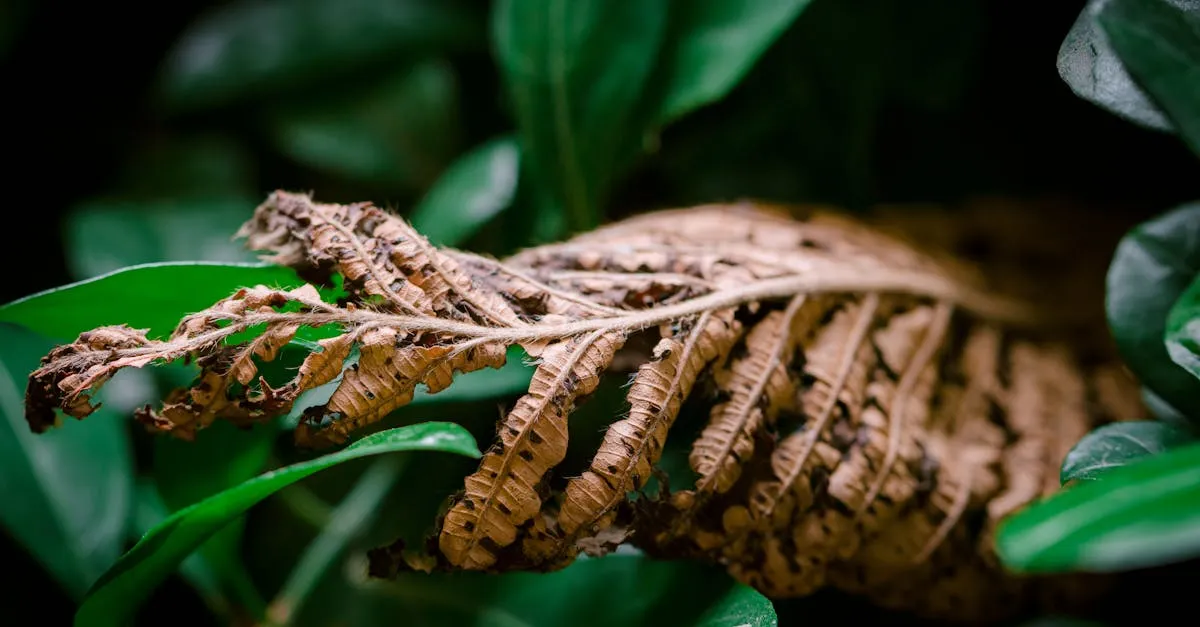
Pale, bleached, or dry brown patches on the leaves facing your window, appearing within one to three days of moving the plant or after a run of sunny weather, almost always mean sunburn. The damage is permanent but the plant is rarely in danger, and stopping it from spreading is straightforward.
How to recognize sunburn on houseplant leaves
Sunburn has a distinct look that sets it apart from most other leaf problems.
The patches face the light. Damage shows up on the side or surface of the leaf pointed at the window, not evenly across the whole plant. Leaves shaded by others are usually untouched.
The color is bleached, then tan. Mild scorch turns areas pale, washed out, or whitish, as if the color has been drained. Worse scorch dries into crisp, papery tan or brown patches, often on the part of the leaf that catches the most direct sun.
The edges are sharp and dry, not soft. Sunburnt tissue is dry and brittle. If a patch is mushy, dark, and spreading, you are looking at rot or disease, not sun.
The timing fits a change. Scorch almost always follows an event: a move to a brighter spot, the first strong spring sun, or a heatwave pressing through south or west glass. Lucy Liu, at her London nursery, has seen damage show in as little as 2 to 3 hours after a shade-grown plant is moved into direct sun, with crisp, bleached, paper-thin patches clearly visible by the following morning.
If the browning is happening at the leaf tips and margins rather than in bleached patches on the sun-facing surface, low humidity is the more likely cause. See brown leaf tips: causes and fixes for how to tell them apart.
Which plants scorch most easily
The deciding factor is not the Latin name. It is the light level the leaf was built in.
Any plant raised in low to medium indirect light has leaf cells that are simply not equipped for direct sun. Move that plant to a south or west sill and scorch follows within days. Calatheas, maidenhair and Boston ferns, pothos, peace lilies, and most variegated foliage all fall into this group. So does any plant from a dim nursery shelf or shop corner, regardless of what the label says.
A cactus, succulent, or bird of paradise can handle a full-sun south window once it has been grown in that kind of light. But take the same plant from a dim shop display and put it straight on a south sill and it burns just as readily as a calathea. The light history of that individual plant matters more than the species. For a practical guide to what the different light levels actually mean in practice, see how much light do houseplants need.
Why it happens, even to sun-loving plants
The issue is almost never that the spot is too bright in absolute terms. It is that the change was too sudden.
A leaf grown in moderate light builds its tissue for that level. Move it straight into intense direct sun and the exposed cells are damaged before they can adjust. This catches people out most in spring: a windowsill that is fine all winter can become too intense by April, when the sun’s angle steepens and the days lengthen. Check any south or west-facing sill at the start of spring and add a sheer curtain or pull the plant back if midday sun hits the leaves directly.
A plant does not burn because the light is too strong. It burns because the light changed faster than the leaf could adapt.
Do water droplets on leaves cause sunburn?
You may have heard that misting leaves in sunlight causes burn because droplets act as lenses. Indoors, this is largely a myth.
The lens-burn effect needs a drop held in a tight, near-spherical shape at a fixed distance from the surface, the kind formed by a rigid glass bead or by the fine water-repellent hairs on a leaf like a floating fern. On the smooth leaves of typical houseplants, water spreads into a shallow, flattened drop that does not focus light this way. Researchers tested this directly under full summer sun, far stronger than light through any window, and still saw no burn from water drops on smooth leaves. Direct sun hitting an unprepared leaf, and failed acclimatization, are the real causes. Misting your plants is fine.
What to do about scorched leaves
Move or shade the plant first. Pull it back from the glass, shift it to bright indirect light, or hang a sheer curtain over a harsh west or south window. This stops new damage; everything else is secondary.
Leave the leaf if less than roughly half of it is damaged. A scorched leaf will not turn green again, but the healthy tissue still photosynthesizes and supports the plant’s recovery. Removing it prematurely takes away useful leaf area at the worst moment.
Cut at the base only when the leaf is mostly crispy or gone, and only once new healthy growth is already coming in. Snip it cleanly with pruning snips. Removing a few spent leaves at that stage does no harm.
Do not overcompensate with water or fertilizer. A stressed plant does not need extra. Water on its normal schedule and hold off fertilizing until it is clearly growing again.
How to acclimate a plant to brighter light
If you want a plant in a sunnier spot, move it gradually rather than in one go.
Increase exposure over one to two weeks. Start with an hour or two of direct sun, ideally morning light, then add roughly an hour each day. This lets the leaves build thicker cells, much the same way skin adjusts to the sun.
Use morning sun, avoid harsh afternoon sun. Morning light is gentler. The fiercest scorch comes from midday and afternoon sun through south or west-facing glass.
Before a week away, do not move the plant to a brighter spot. A common instinct before a holiday is to put a plant somewhere it will “get more light.” Without you there, it cannot be monitored and it cannot acclimatize. Move it away from the glass instead, add a sheer curtain on any west or south window, keep it on its normal watering schedule, and see watering houseplants while away for keeping it hydrated while you are gone.
Watch the new leaves. Growth that emerges in the brighter spot is built for it and handles the light far better than the old foliage. This gradual approach applies whenever you bring home a new plant or relocate one, covered in more detail in acclimating a new houseplant.
Check your sills when the seasons turn
The mistake that causes nearly all of this is the abrupt move: dropping a shade-raised plant onto a bright sill in one go instead of building it up over a week or two. Set a reminder for early spring to recheck every south and west window, because a sill that suited a plant all winter can start scorching it by April. The new leaves that emerge in a brighter spot are your signal the plant has adjusted, so until you see them, keep treating it as still acclimatizing.
Where to go next
Why Isn't My Monstera Splitting? Fenestration Explained
New monstera leaves without holes or splits are almost always a sign of youth or too little light, not a disease you need to treat.
Cold Damage on Houseplants: Signs and How to Save a Chilled Plant
How to spot cold damage on houseplants, from blackened leaves to sudden drop, and the steps that give a chilled plant its best chance.
Best grow lights for indoor plants
A practical buying guide to grow lights for houseplants: which type to choose, what the specs actually mean, and when you do not need one at all.
Not sure what plant you have? Identify it from a photo and we will point you at its care guide.
Frequently asked questions
Do water droplets on leaves cause sunburn?
Almost certainly not. The lens-burn effect needs a drop held in a tight spherical shape by rigid glass or fine leaf hairs, not the flattened drops that form on the smooth leaves of most houseplants, and this holds even in full outdoor sun. Sunburn on houseplants is caused by direct sun hitting leaves that were not built for it, not by water sitting on the surface. Misting is fine.
Should I cut off sunburned leaves?
Leave a leaf if less than roughly half its area is damaged. The healthy tissue still photosynthesizes and supports recovery. Cut at the base only when the leaf is mostly crispy or gone, and wait until new healthy growth is already coming in before you remove it.
Which houseplants burn most easily in a sunny window?
Any plant raised in low to medium indirect light. Calatheas, maidenhair and Boston ferns, pothos, peace lilies, and most variegated foliage scorch quickly on a south or west sill. Even succulents and cacti burn if they were sitting in a dim nursery or shop before you bought them.
Sources
- Egri A., Horvath A., Kriska G., Horvath G. (2010), New Phytologist 185(4):979-987: sunlit water drops on the smooth, hairless leaves of Ginkgo biloba and Acer platanoides did not cause burn damage, whereas rigid glass spheres on smooth maple leaves caused serious burn on sunny days, and drops held in focus by water-repellent hairs on the floating fern Salvinia natans could cause sunburn.
- University of Maryland Extension: when shade-loving plants are exposed to full sun, strong sun and heat break down chlorophyll and damage appears as pale, bleached or faded areas that eventually turn brown and brittle; move indoor plants outdoors gradually, starting at about two hours of full sun per day.