Repotting Shock: Why Your Plant Sulks After Repotting
Why a houseplant droops, yellows, or stalls after repotting, whether it is shock or something worse, and how to help it recover.
Some links in this guide go to Amazon. As an Amazon Associate we earn from qualifying purchases, at no extra cost to you. How this works.
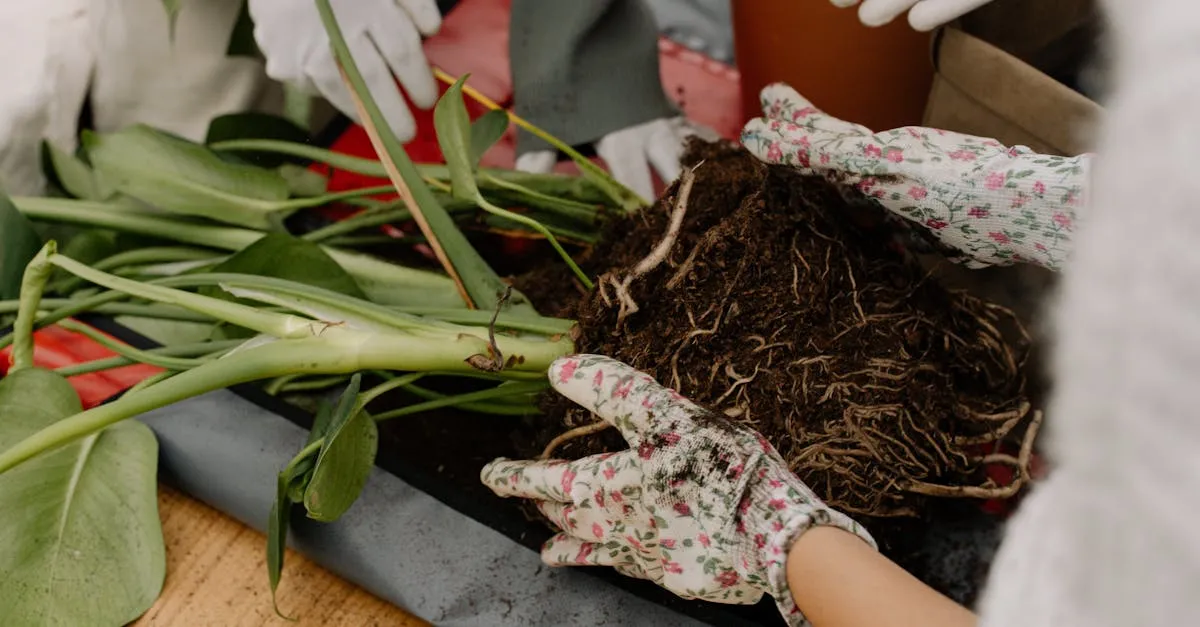
A plant that wilts, sulks, or drops a leaf or two in the days after you move it to a new pot is usually showing repotting shock, and it is rarely the disaster it looks like. When you repot, some roots tear or get disturbed, and damaged roots cannot pull up water at their usual rate, so the plant runs short for a while even though the soil is moist. In most cases the fix is patience, not intervention.
What repotting shock actually is
Roots, not leaves, do the work of taking up water. When you lift a plant out, loosen the root ball, or tease apart a tight tangle, you break some of the fine feeder roots that handle most of that uptake. For a week or three the plant is effectively running on a reduced root system, so the top growth wilts, looks dull, or pauses. The leaves are the symptom; the roots are the cause.
This is normal and temporary. The plant grows new roots, water uptake catches up, and growth resumes. Your job is to make that recovery as easy as possible and then get out of the way.
How to tell shock from root rot
This is the distinction that matters, because the two look similar at first and call for opposite responses.
Shock gets better. It appears right after repotting, holds steady or improves over one to three weeks, and the stems stay firm. A drooping leaf perks up after a careful watering, or the plant simply sits still and then pushes new growth.
Root rot gets worse. It tends to follow overwatering rather than the act of repotting, the decline keeps deepening, leaves yellow and turn soft, and the base of the stem or the soil smells sour or musty. If you see worsening mush and a bad smell, stop treating it as shock and read Root Rot: How to Identify, Treat, and Prevent It.
The simplest test is time. Shock trends upward; rot trends downward.
What actually helps a plant in repotting shock
Ranked from most to least useful:
Leave it alone. This is the real cure. The plant needs to grow roots, and fussing, moving, or feeding it only adds stress. Resist the urge to do something.
Give it a stable, warm, bright spot out of direct sun. Direct sun drives water loss through the leaves that the damaged roots cannot yet replace, which deepens the wilt. Bright indirect light lets the plant photosynthesize without that demand.
Water carefully, and do not drown it. Keep the soil lightly moist, not soggy. A stressed root system sitting in waterlogged soil is exactly how shock turns into rot. Water when the top of the soil starts to dry, then let the excess drain away.
Hold off on fertilizer. Damaged roots cannot use it, and the salts can burn them further. Wait until you see clear new growth, usually a few weeks, before you feed again.
Keep humidity steady and skip the move-around. Avoid cold drafts, heat vents, and shuffling the plant between rooms while it settles.
The best thing you can do for a recently repotted plant is almost nothing, done consistently.
Why most repotting shock is self-inflicted
The honest reality is that severe shock is usually something we cause, not bad luck. Three habits account for most of it.
Rough root handling. Yanking the plant out, shaking off all the soil, or aggressively ripping the root ball tears far more roots than necessary. Loosen gently and keep as much of the existing root system intact as you can.
An oversized pot. Jumping several sizes up surrounds the roots with a large volume of soil that stays wet long after the roots have drunk their fill, which invites rot. Go up one size, around 3/4 to 1 1/2 inches (2 to 4 cm) wider, no more. See How to Repot a Houseplant Without Killing It for the method that avoids most of this.
Fertilizing straight away. Fresh potting mix already holds nutrients, and feeding a plant with damaged roots burns them. Wait for new growth first.
Get those three right and most plants barely register the move. Some genuinely fussy plants, calatheas and ferns among them, sulk no matter how gentle you are, so a brief pause from those is expected rather than alarming.
Give it three weeks before you judge
Mark the date you repotted and watch the trend rather than any single droopy leaf: a plant that holds steady or perks up over two to three weeks is recovering normally and needs nothing from you. If it is still sliding after that window, with softening leaves and a sour smell, stop waiting and check the roots for rot. The single biggest mistake is reacting to day-two wilt by watering more or feeding, which is exactly how a recoverable sulk becomes a real problem.
Where to go next
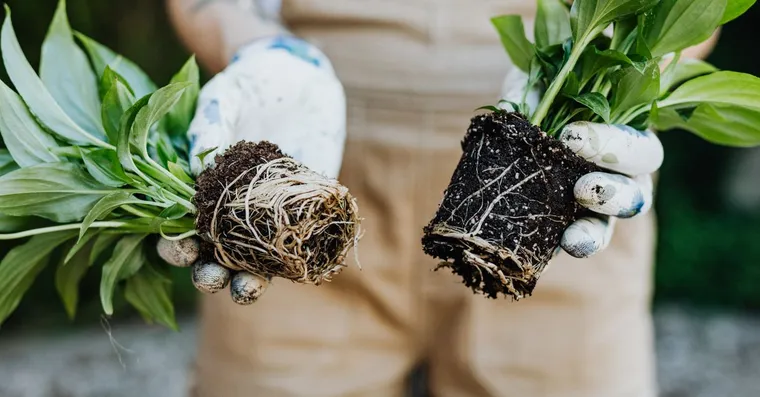
Root-Bound Houseplants: How to Tell and What to Do
How to tell if a houseplant is root-bound, when it is a problem and when it is fine, and how to ease a pot-bound plant without setting it back.
Fungus Gnat Larvae: What They Look Like and How to Kill Them
Fungus gnat larvae live in the top few centimetres of soil and eat roots. Here is how to confirm you have them and the treatments that actually clear them.
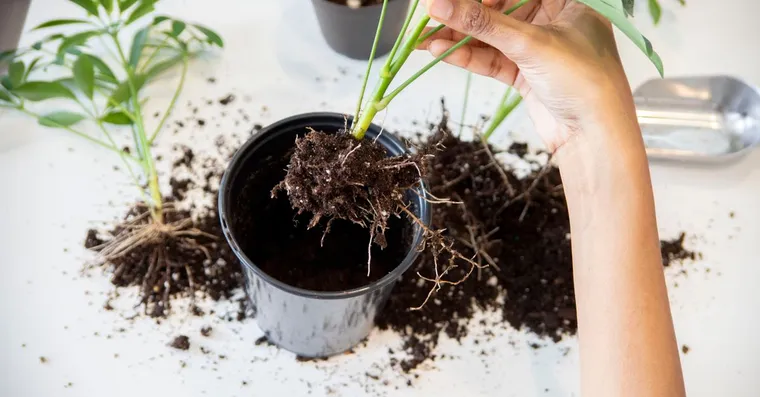
What Does Root Rot Look Like? Signs at Every Stage
Root rot is diagnosed at the roots, not the leaves. Here is what healthy and rotting roots look like, and which above-ground signs point to it.
Not sure what plant you have? Identify it from a photo and we will point you at its care guide.