Boston Fern Care: Keeping This Classic Fern Lush Indoors
Everything you need to keep a Boston fern lush indoors, covering humidity, watering, light, and why the fronds keep dropping crispy leaflets.
Some links in this guide go to Amazon. As an Amazon Associate we earn from qualifying purchases, at no extra cost to you. How this works.
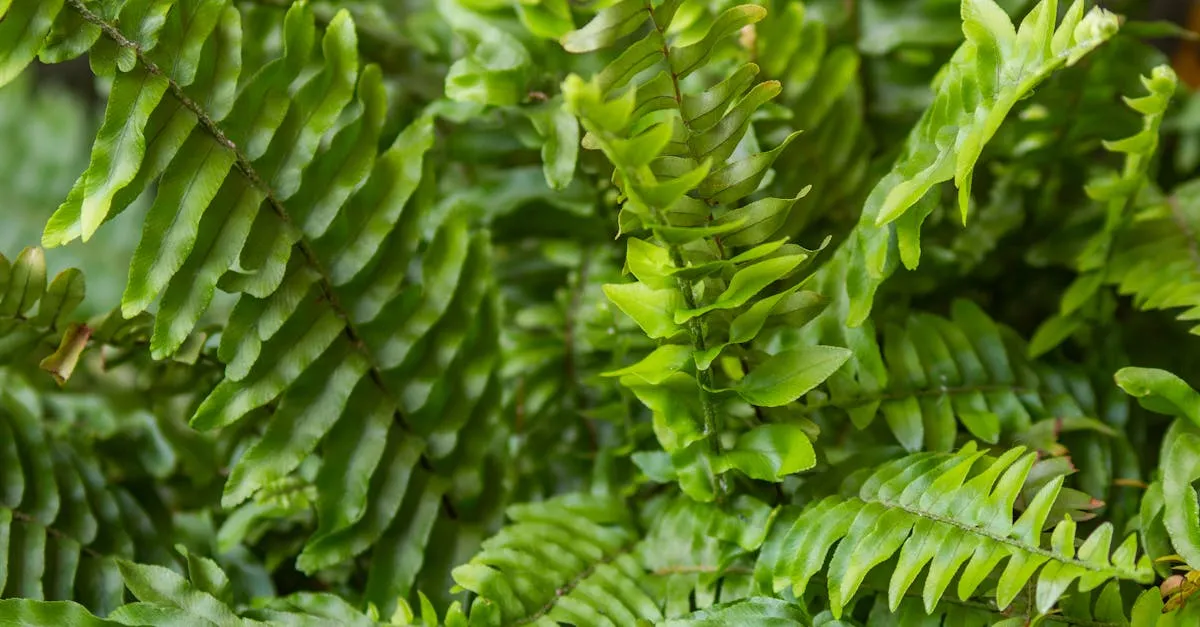
The Boston fern earns its reputation as a beautiful plant and a demanding one in equal measure. Good Boston fern care comes down to accepting two facts: this plant drinks more water than most houseplants, and it wants more humidity than the average living room provides. Get those right and the rest is easy.
What the Boston fern actually is
The Boston fern (Nephrolepis exaltata ‘Bostoniensis’) is a sport of the wild sword fern, selected over a century ago for its arching, soft fronds. Outdoors in warm regions it grows in dappled shade with steady moisture and warm, damp air. Indoors you are recreating that environment, and the gap between a humid forest floor and a heated room is the main thing standing between you and a lush plant.
Watering: the part most people get wrong
Boston ferns are genuinely thirsty. Their fine roots sit in a dense root ball that dries out faster than a typical potting mix, and once it dries fully it sheds leaflets quickly.
- Check often. Feel the top 3/4 to 1 inch (2 to 3 cm) of soil. Water as soon as it feels barely damp, not bone dry. In a warm room this can mean watering two or three times a week.
- Water thoroughly. Pour until it runs from the drainage holes, so the whole root ball wets evenly. A quick splash only dampens the surface.
- Never let it sit dry. A fully dried root ball can be hard to rewet. If the soil has pulled away from the pot, soak the whole pot in a basin for 15 minutes.
- Drain afterwards. Constant sogginess invites root rot, so empty the saucer once the pot has finished draining.
Aim for soil that is consistently moist but not waterlogged. That balance is the single biggest factor in keeping the plant lush.
Humidity is not optional
This is where most indoor Boston ferns struggle. They want humidity around 50 to 70 percent, and heated or air-conditioned rooms often sit far below that. Dry air shows up as brown, crispy frond tips.
Misting helps very little because the effect fades within minutes. What actually works: a pebble tray with water beneath the pot, grouping plants together, or running a small humidifier nearby. A bright bathroom or kitchen is often the easiest spot in the house. For the full range of options, see how to raise humidity for houseplants.
If you cannot commit to higher humidity, a Boston fern will survive, but it will never look as full as the ones in photographs.
Light and placement
Boston ferns want bright, indirect light. An east-facing window is close to ideal. They tolerate some morning sun, but harsh midday light scorches the fronds and dries them out faster than you can water.
They also dislike sudden change. Keep the plant away from heating vents, radiators, and cold drafts, all of which strip moisture from the air around the fronds. A stable, gently bright spot beats a brighter but drafty one.
Feeding without overdoing it
Boston ferns are light feeders. During spring and summer, use a balanced liquid fertilizer diluted to half strength roughly once a month. That is enough. Too much fertilizer burns the delicate root tips and leaves a salt crust on the soil. Stop feeding in autumn and winter when growth naturally slows. For the wider picture, see how to fertilize houseplants.
Shedding leaflets is normal
A Boston fern indoors will drop tiny leaflets onto the floor and shelf below it. This is normal. The plant constantly renews its fronds, and a little litter is the cost of a healthy, growing fern, not a sign of a crisis.
Worry only when shedding is heavy and paired with browning across whole fronds. That usually points to dry air or inconsistent watering rather than disease. This guide covers the Boston fern specifically; for shared fern principles and the full run-down of why fronds turn brown, see general indoor fern care. The staghorn fern is a striking relative if you want a more architectural fern once you have the basics down.
Setting your Boston fern up to thrive
The single habit that keeps a Boston fern lush is checking the soil by hand every couple of days, because a root ball that dries out fully is far harder to recover than one you have kept evenly moist. Pair that with a genuinely humid spot, a bright bathroom or a pebble tray rather than a misting bottle, and you have solved the two problems that defeat most people. Going into winter, ease off the feeding and move the plant well clear of radiators, since dry heated air is what turns those fronds crispy in the colder months.
Where to go next
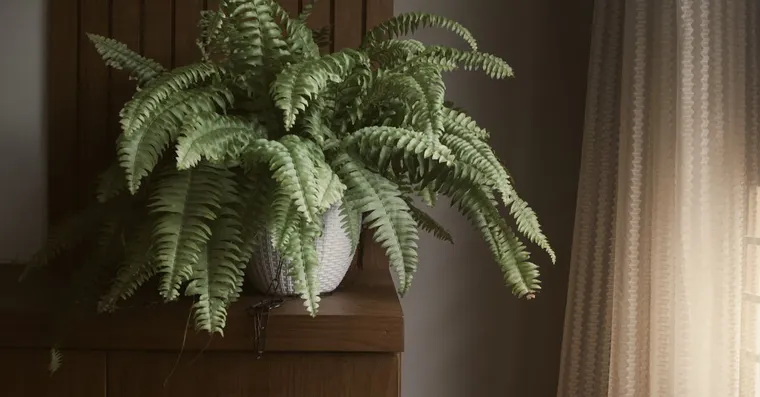
Indoor Fern Care: How to Keep Ferns Alive Inside
How to keep indoor ferns green and lush: the humidity, watering, light, and soil they need, plus why fronds turn brown and crispy and how to fix it.
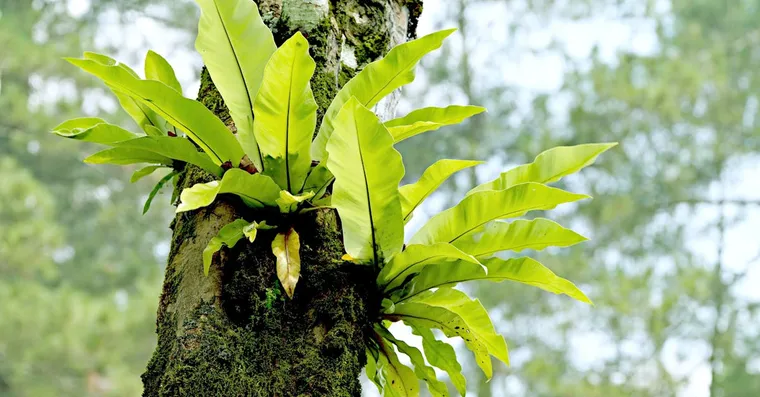
Bird's Nest Fern Care: A Forgiving Fern for Lower Light
How to care for a bird's nest fern indoors, a forgiving fern that tolerates lower light and needs less fuss than most ferns.
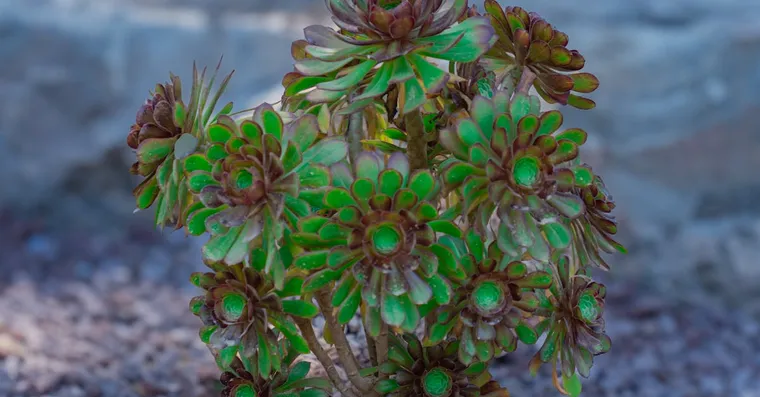
Aeonium Care: Growing Black Rose and Other Varieties
How to care for aeonium succulents including the dark Zwartkop, with advice on their summer dormancy, watering, and light needs.
Not sure what plant you have? Identify it from a photo and we will point you at its care guide.