Do Houseplants Actually Purify the Air?
The popular claim comes from one 1989 NASA study. Here is what that study really showed and what houseplants can and cannot do for indoor air.
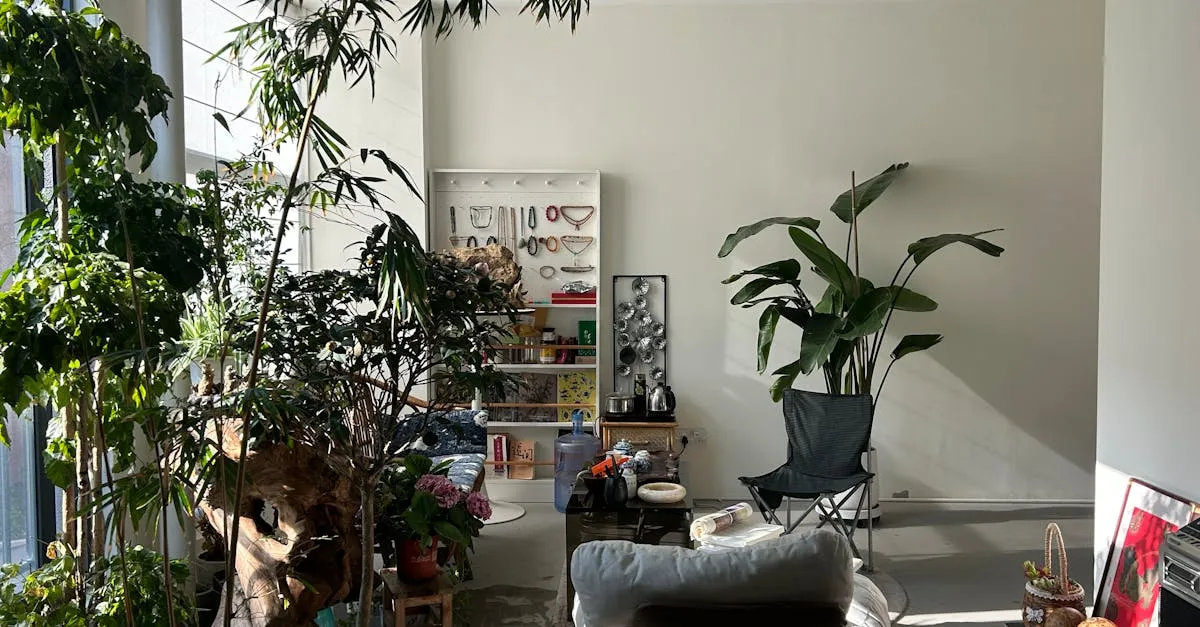
The honest answer: not in any way that matters for your health. Houseplants do interact with the air around them, but the popular claim that a few pots will scrub your home of pollutants does not hold up. They are still worth keeping, just for reasons that are smaller and more truthful than the headlines suggest.
Where the air-purifying claim came from
The idea traces almost entirely to a 1989 study by NASA, the Clean Air Study. Researchers wanted to keep air breathable in sealed spacecraft, so they placed single plants in small, airtight chambers, injected a known pollutant, and measured how the level dropped. The plants did remove it. That part is real.
The problem is the leap that followed: marketing took a result from a sealed box and applied it to a living room with doors, windows, furniture, and constant air exchange. A sealed chamber and a real home behave nothing alike.
What the 1989 study actually measured
The real numbers are smaller than the headlines imply. The chambers held roughly 0.15 to 0.88 cubic meters of air, so the largest was about the size of a chest freezer. Researchers injected a single dose and watched the level fall, which measures a one-off clear-down in a sealed box, not a sustained rate against a pollutant that keeps re-entering your home. Only three compounds were tested, each alone: formaldehyde, benzene, and trichloroethylene. A real room carries those as a mixed, constantly topped-up cocktail from furniture, paint, and cleaning products, so the result tells you little about a furnished room.
What later research actually found
A 2019 review reanalysed decades of chamber studies and worked out how many plants you would need to match the cleaning that ordinary ventilation already provides. The figure was impractically large: dozens to hundreds of plants per room, sometimes around one plant per square meter of floor or more. That is a small indoor forest, not a shelf of pots. Your house is not sealed, so the air leaking in and out around windows, doors, and vents all day dilutes pollutants far faster than a handful of leaves can absorb them.
Put the three on one scale and the gap is plain. A HEPA air purifier sized for a room moves roughly 100 to 250 cubic meters of air per hour. A houseplant clears well under 1 cubic meter per hour for VOCs, so a purifier does the work of hundreds of plants, and a cracked window exchanges hundreds of times more air than one plant.
What clears indoor air, ranked
If indoor air quality is your goal, here is what moves the needle, in order.
Ventilation. Opening a window for a few minutes, or running an extractor fan, exchanges far more air than any number of plants. It is the single biggest lever you have, and it costs nothing.
Removing the source. Low-VOC paint, fragrance-free cleaning products, and not smoking indoors stop pollutants entering in the first place.
A proper air filter. A HEPA filter or purifier sized for the room captures fine dust and particles, as the numbers above show.
Plants. Real, but a rounding error next to the three above.
Opening a window for five minutes does more for your air than a room full of plants will all week.
But what about the TED talk and the engineered plants?
The 2009 TED talk by Kamal Meattle is the source of the “three plants per person” rule. The Delhi office it described did report cleaner air, but the building ran mechanical air handling alongside the plants, so the plants were never the only thing cleaning the air. The result has not been independently replicated, so it is not a reliable basis for your own home.
Newer companies such as Neoplants are a different case. They engineer a plant and its root microbes to absorb specific pollutants far better than an ordinary pothos, so the science is real rather than recycled hype. The honest caveats: it is early, expensive, and still short on independent real-room data confirming it changes the air in a normal home. Promising, but not yet a proven swap for a window or a filter.
What houseplants genuinely offer
This is not a reason to throw out your plants. They earn their place another way.
A small humidity boost. Plants release moisture through their leaves, a process called transpiration. In a dry room, a cluster can lift local humidity slightly, easing dry skin and a scratchy throat. The effect is modest but real. If dry air is your concern, group several plants or see our guides on houseplants that add humidity and raising humidity around your plants.
A little less dust. Leaf surfaces catch airborne dust, which settles rather than circulates. You wipe it off when you clean the leaves, so it is housekeeping help, not filtration.
A genuine psychological benefit. This is the strongest evidence of all. Studies consistently link indoor plants and visible greenery to lower stress, better mood, and improved focus. If you want plants for how a room feels, the research is on your side. Our piece on whether houseplants reduce stress covers what that evidence shows.
One honest caution: if you have allergies, more plants mean more damp soil and the fungus gnats or mold that come with it. See houseplants and allergies before filling every windowsill.
Keep the plants, but fix the air a different way
The one mistake to avoid is treating a shelf of pots as your air-cleaning plan and skipping the things that actually work. If clean air is the goal, crack a window daily and buy a HEPA filter sized for the room, then keep your plants for the mood, the modest humidity, and the look. Bought on those terms, they will never disappoint you the way the purifying myth eventually does.
Where to go next
Houseplants and Allergies: What Helps and What to Avoid
Houseplants rarely trigger allergies the way people fear, but damp soil and a few specific plants can. Here is how to keep a low-allergen indoor garden.
Houseplants That Add Humidity to Dry Indoor Air
Plants release moisture as they transpire. The effect is small per plant, but the right choices and grouping can take the edge off dry winter air.
Snake Plant Benefits, Bedroom Air, and Feng Shui Meaning
Snake plants get credit for cleaning air, releasing oxygen at night, and bringing good feng shui; here is what holds up and what is overstated.
Not sure what plant you have? Identify it from a photo and we will point you at its care guide.
Sources
- Wolverton, B. C., Johnson, A. & Bounds, K. (1989). Interior Landscape Plants for Indoor Air Pollution Abatement. NASA Technical Memorandum, John C. Stennis Space Center.
- Cummings, B. E. & Waring, M. S. (2020). Potted plants do not improve indoor air quality: a review and analysis of reported VOC removal efficiencies. Journal of Exposure Science & Environmental Epidemiology, 30, 253-261.
- Lee, M. S., Lee, J., Park, B. J. & Miyazaki, Y. (2015). Interaction with indoor plants may reduce psychological and physiological stress by suppressing autonomic nervous system activity in young adults: a randomized crossover study. Journal of Physiological Anthropology, 34, 21.