Do Office Plants Actually Boost Productivity and Focus?
A look at what the research really says about office plants and whether they improve focus, attention, and wellbeing at your desk.
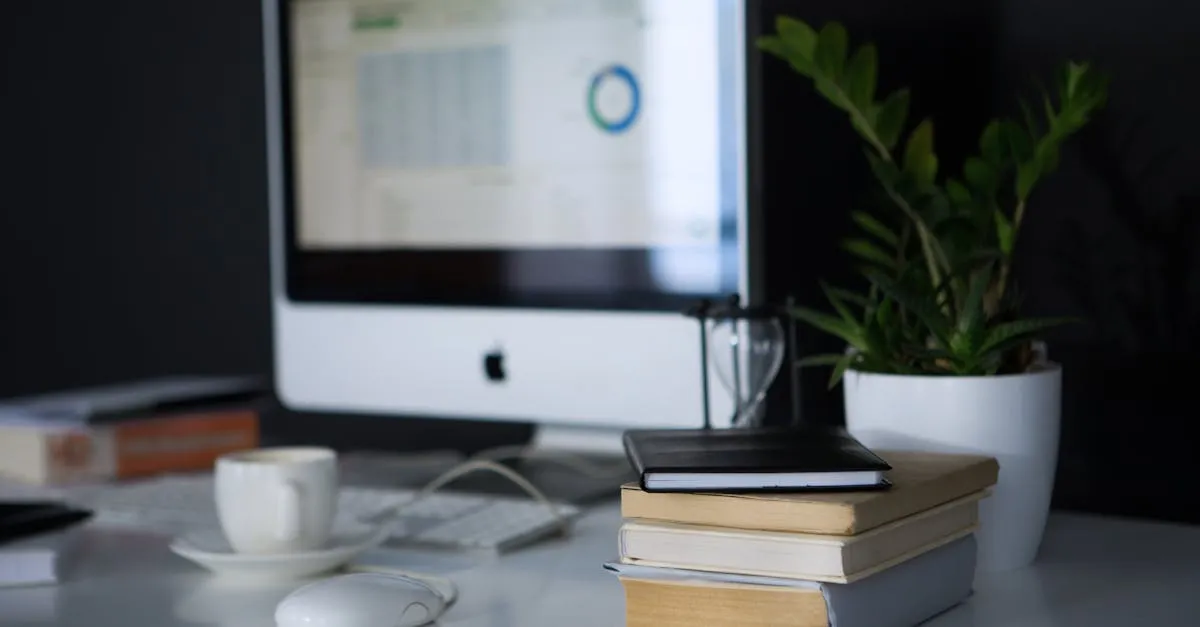
Open-plan offices love a good plant, and the marketing around them promises a lot: sharper focus, fewer sick days, big jumps in output. So do office plants improve productivity, or is that just a comfortable story we tell ourselves? The honest answer is that plants reliably nudge how you feel at work, but the headline productivity numbers are far softer than the claims suggest.
What the studies actually measured
Most of the research falls into two camps, and it helps to keep them separate.
Attention restoration. This is the strongest theory behind the claims. The idea, developed by psychologists Rachel and Stephen Kaplan, is that natural scenes hold your attention gently and let the brain’s directed-attention system recover. Lab studies have shown that people who glanced at greenery during a break performed slightly better on the focused task that followed. The effect is real but small, and it is about recovery from mental fatigue, not a permanent upgrade to your concentration.
Self-reported wellbeing. A larger body of work simply asks people how they feel. In studies where plants were added to previously bare offices, workers reported modest gains in concentration, mood, and workplace satisfaction. One often-cited field study across UK and Dutch offices found measured productivity rose by around 15 percent after planting, but it started from sparse, plant-free spaces, so the comparison flatters the result.
The pattern across the literature is consistent: subjective measures (how good people say they feel) move more than objective ones (how much they actually get done).
Do office plants improve productivity, or just mood?
The most defensible reading is that plants improve the experience of working more than the output of it. People in greener offices tend to report less stress and more comfort, and those are worthwhile outcomes on their own. But when researchers measure hard performance, typing speed, error rates, problem-solving, the gains shrink to small or vanish under tighter conditions.
Plants are a genuine comfort, not a performance-enhancing drug for your desk.
Two things explain the gap. First, much of the early research was funded by the indoor-plant industry, which has an obvious interest in big numbers. Second, the strongest results come from offices that were bleak to begin with, so almost any improvement, better light, a tidier desk, would have helped too. This mirrors what we found looking at whether houseplants actually purify the air: the lab effect is real, but the real-world dose is far smaller than the marketing implies.
Why the modest effect is still worth having
A small, reliable boost to how you feel through an eight-hour day is not nothing, and plants deliver it cheaply.
Stress and mood. The most consistent finding is reduced perceived stress, which is its own reason to keep a plant nearby. We cover the evidence in more detail in can houseplants reduce stress?.
A reason to look up. A plant gives your eyes a natural focal point away from the screen, which supports the short mental breaks that attention-restoration research points to.
A calmer space. Greenery softens a hard, sterile room, and people simply prefer being in it. That preference shows up as higher satisfaction even when task performance does not change.
Choosing a plant that survives the office
The effect only holds if the plant looks healthy, so pick something that tolerates neglect, low light, and skipped weekends. A struggling, browning plant does the opposite of what you want.
Light. Most desks sit far from windows, so choose low-light survivors like a snake plant, ZZ plant, or pothos. Our guide to the best houseplants for a home office goes further.
Watering. Offices get forgotten over weekends and holidays, so favor plants that prefer to dry out rather than thirsty ferns.
Placement. Keep it within your line of sight, not hidden on a shelf behind you. The benefit comes from seeing it.
Buy the plant for comfort, not output
The mistake to avoid is treating a desk plant as a productivity tool and then feeling cheated when your output looks the same, because that was never the realistic payoff. Pick one low-maintenance plant, keep it healthy and within sight, and judge it on whether the room feels calmer to sit in rather than on what your work tracker says. If the only plant you can keep alive is a plastic one, a real low-light survivor like a snake plant is still worth the small effort, since a thriving plant is the part that actually does the work.
Where to go next
Best Indoor Office Plants for a Home Office Desk
An office plant should survive being forgotten on busy days and tolerate the light you actually have. Here are the indoor office plants that do.
Houseplants and Vastu: Where to Place Plants for Good Energy
A plain guide to placing houseplants by Vastu Shastra, which directions and rooms it favours, with an honest note on what the tradition actually promises.
Why Are Houseplants So Popular Right Now?
A look at why houseplants exploded in popularity, from real wellbeing benefits and small space living to social media, and what is hype versus genuine.
Not sure what plant you have? Identify it from a photo and we will point you at its care guide.
Sources
- Kaplan, S. (1995). The restorative benefits of nature: Toward an integrative framework. Journal of Environmental Psychology, 15(3), 169-182.
- Nieuwenhuis, M., Knight, C., Postmes, T. & Haslam, S. A. (2014). The relative benefits of green versus lean office space: Three field experiments. Journal of Experimental Psychology: Applied, 20(3), 199-214.
- Raanaas, R. K., Evensen, K. H., Rich, D., Sjostrom, G. & Patil, G. (2011). Benefits of indoor plants on attention capacity in an office setting. Journal of Environmental Psychology, 31(1), 99-105.