Pothos Care: A Complete Guide to Devil's Ivy
A complete care guide for pothos covering light, watering, soil, and the small habits that keep devil's ivy thriving indoors for years.
Some links in this guide go to Amazon. As an Amazon Associate we earn from qualifying purchases, at no extra cost to you. How this works.
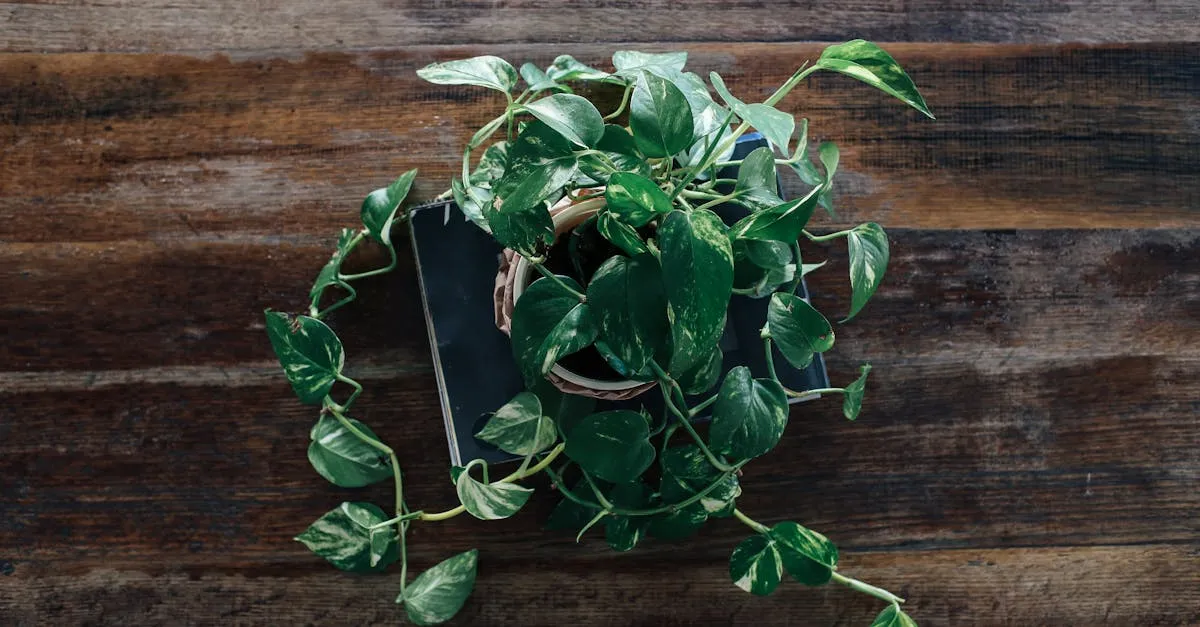
Pothos earns its reputation honestly: it is one of the most forgiving houseplants you can own, and it grows well in conditions that would stall fussier plants. Good pothos plant care is mostly about restraint, because nearly every pothos that dies is overwatered rather than neglected. If you can resist the urge to water on a schedule, the rest of this guide is straightforward.
Quick answer
Pothos is one of the most forgiving houseplants, and good care is mostly about restraint. Give it bright, indirect light for the best growth and variegation, though it also tolerates lower light. Water sparingly and only once the soil has dried out, because nearly every pothos that dies is overwatered rather than neglected.
How much light a pothos needs
A pothos tolerates a wide range of light, which is why it survives in offices and dim corners. But tolerating low light is not the same as thriving in it.
Bright, indirect light produces the fastest growth and the best variegation. An east-facing window, or 3 to 6 feet (1 to 2 m) back from a brighter one, is ideal.
Medium to low light keeps a pothos alive but slows it down. Variegated types like Marble Queen lose much of their pattern and revert towards plain green, because the plant needs more leaf surface to gather light.
Direct midday sun scorches the leaves, leaving pale or crisp patches. A little gentle morning sun is fine.
If your only spot is genuinely dark, see our notes on low-light houseplants and consider a grow light for a variegated variety.
Watering without drowning it
This is where pothos care succeeds or fails. The plant stores water in its stems and leaves, so it copes with being dry far better than with being wet.
Water only when the top 1 to 2 inches (3 to 5 cm) of soil feel dry. Push a finger in to check rather than guessing. When you do water, water thoroughly until it runs from the drainage hole, then empty the saucer so the roots are never sitting in water.
A pothos tells you clearly when it is thirsty: the leaves go limp and slightly soft, then perk up within hours of watering. Overwatering is quieter and more dangerous, showing as yellowing leaves, mushy stems, and eventually root rot. For a fuller breakdown, see how often to water a pothos.
When you are unsure whether to water a pothos, wait a day. Dry is easy to fix; soggy is not.
Temperature and humidity
Pothos is comfortable in the same range most homes sit at: roughly 65 to 85°F (18 to 29°C). It will hold on down to about 60°F (15°C), but growth stops, and below 50°F (10°C) the leaves blacken and the stems turn to mush, which they do not recover from. That makes a few specific spots risky. An air-conditioning vent blowing directly on the plant chills and dries the leaves at once, and a windowsill behind an unsealed door or a single-glazed window in winter can drop into damaging cold at night even if the room feels fine by day. Move it off the cold glass over winter.
Humidity is rarely the problem people expect. Pothos does fine at normal household humidity and does not need a humidifier or a pebble tray. Misting is the common myth here: it lifts the humidity around a leaf for a few minutes at most, then it is gone, so it changes nothing the plant can use. If your tips brown, look to water quality and watering habits below, not the air.
The three pests that actually go for pothos
A pothos is not a pest magnet, but three turn up often enough to know on sight.
Fungus gnats are the most common, and they are really a watering signal: the small black flies breed in wet topsoil, so they tell you the surface is staying damp too long. Let the top of the mix dry out more between waterings and they fade. See fungus gnats for the full fix.
Mealybugs show as small white cottony tufts tucked into leaf axils and along stems. They spread slowly but persistently, so catch them early.
Spider mites appear in dry, warm air, often near a radiator in winter. Look for fine webbing at the leaf joints and a faint pale stippling across the leaf surface.
For all three, isolate the plant from your others first, then wipe the leaves and remove what you can see before treating. A neem oil wipe handles the survivors.
Hard water and brown leaf tips
If your pothos has brown, crisp leaf tips and you are not over-fertilizing, the cause is often the water itself. Hard tap water carries dissolved minerals, and in soft-water tolerant plants like pothos these build up in the soil over time and burn the tip margins. This is a separate cause from the fertilizer salts covered in feeding below, though they look identical on the leaf. Lucy Liu, at her London nursery, points to hard water as the usual culprit locally: tap water here is heavy with calcium and minerals, and over time those deposits scorch the delicate edges.
Two habits fix it. Flush the pot every couple of months: run water through until it pours freely from the base for a minute, which carries the accumulated salts out. And leave tap water standing overnight before you use it, which lets some of it settle and warm to room temperature. If your water is genuinely hard and the tips keep returning, filtered water or collected rainwater is the only real cure. Lucy’s working routine is simple: snip the brown tips off so the leaf looks clean again, move the plant onto rainwater or filtered water, and keep a little gentle air movement going around it.
The first month after you bring one home
A new pothos almost always sulks for the first two to three weeks. The light, humidity, and watering rhythm in your home differ from wherever it was grown, and the plant pauses while it adjusts. You may see a leaf or two yellow and drop. This is normal, and it is the exact moment the trouble usually starts, because a worried owner reads the droop as thirst and waters more, which is how an acclimating plant gets pushed into root rot.
A stalled new plant is the worry Lucy sees most often: customers come back nervous because four weeks have passed without a single new leaf. It is almost always nothing. The plant has come from a pampered, humid greenhouse into an ordinary living room, and it spends those first weeks settling its roots rather than putting on top growth.
Resist that. Put it in its bright, indirect spot, water only by the finger test, and otherwise leave it alone. Do not feed, do not repot, do not move it around looking for a better position. Give it a month. New growth, even one small leaf, is the signal it has settled and you can return to a normal routine.
Soil, pots, and repotting
Pothos is not particular about soil, but it must drain freely. A standard houseplant mix loosened with a handful of perlite or orchid bark works well. Avoid dense, water-retentive mixes meant for outdoor beds. Our guide to choosing a potting mix covers the details.
Always use a pot with a drainage hole. Repot every two to three years, or when roots circle the surface or push through the base, moving up just one pot size. Repotting into too large a pot holds excess wet soil around the roots and invites rot.
Feeding: less than the label suggests
Pothos is a light feeder, and the dosing on most fertilizer bottles is generous. Feed with a balanced liquid fertilizer at half the recommended strength once a month during spring and summer, and not at all in autumn and winter when growth naturally slows. A pothos that is not growing does not need feeding, and excess fertilizer builds up as salts that brown the leaf tips. See how to fertilize houseplants for more.
Support, training, and pruning
Pothos grows as a trailing vine by default, and most people let it cascade from a shelf or hanging pot. Given a moss pole or trellis to climb, it produces noticeably larger leaves, because climbing is its natural habit.
Prune whenever you like. Cut just above a leaf node, and the stem will usually branch into two, giving you a fuller plant. Trim long, bare, leggy vines back hard to encourage new growth near the base. Every cutting you remove can be propagated, so nothing is wasted: see how to propagate pothos.
Climbing versus trailing
The split changes the plant you end up with. Left to trail, leaves stay small, roughly 2 to 4 inches (5 to 10 cm) across. Trained up a support they enlarge gradually, but only on a moss pole kept genuinely moist, because the aerial roots need damp material to grip and feed from. A dry pole gives no benefit. Expect this to be slow: meaningful leaf-size gains take a year or more of climbing, not a season.
Diagnostic quick-reference
- Yellow leaves, soft stems, wet soil: overwatering. Let it dry well, then check for root rot.
- Limp leaves that perk up after watering: thirst. Water sooner next time.
- Brown crisp tips: hard water or salt build-up. Flush the pot; switch to filtered or rainwater if it persists.
- Losing variegation: too little light. Move it brighter.
Common problems and varieties
Most pothos complaints trace back to watering. Yellowing leaves usually mean too much water, while drooping or curling more often means too little. Pothos is also mildly toxic if chewed, so keep it away from pets and curious children.
If you want to expand your collection, the pothos varieties guide compares Golden, Marble Queen, Neon, and others, and there is a separate look at pothos benefits.
What a thriving pothos asks of you
The one habit to build is checking the soil with your finger before every water, because a pothos killed by routine watering is the single most common way this plant dies. Get that right and give a variegated type genuinely bright, indirect light, and you can leave it largely alone for years, pruning back leggy vines each spring to keep new growth coming from the base.
Where to go next
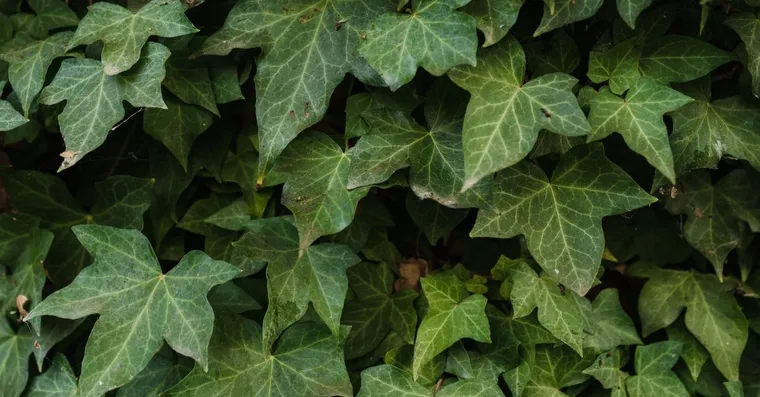
English Ivy Indoor Care: Light, Water, and Keeping It Off the Cat
English ivy grows fast indoors and is toxic to cats and dogs. Here is how to keep it healthy, keep it contained, and decide whether to keep it at all.
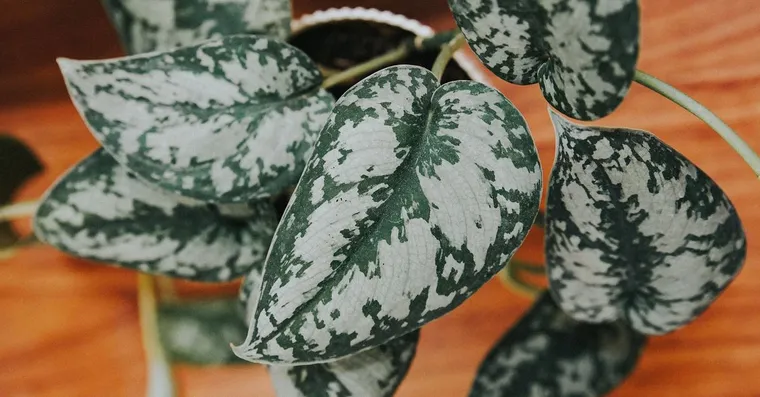
Pothos vs Heartleaf Philodendron: How to Tell Them Apart
The reliable ways to tell a pothos from a heartleaf philodendron: cataphylls, petioles, leaf texture and new growth, plus why shops so often mislabel them.
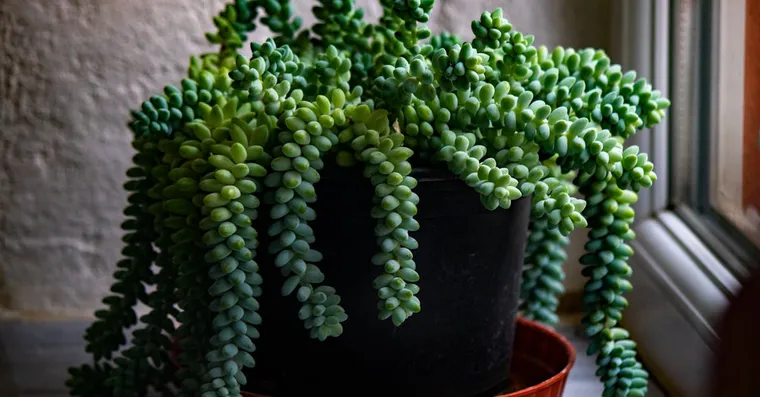
9 Best Trailing and Hanging Houseplants
The best trailing houseplants spill from shelves and hanging pots with long vines. Here are nine, from near-indestructible to the more demanding trailers.
Not sure what plant you have? Identify it from a photo and we will point you at its care guide.
Frequently asked questions
Is pothos poisonous to cats and dogs?
Yes. Pothos contains insoluble calcium oxalate crystals, which cause mouth and throat irritation, drooling, and vomiting if a pet or child chews a leaf. It is rarely fatal, but it is genuinely unpleasant, so keep it out of reach or trailing high.
Can a pothos survive on office light alone?
It can survive on overhead fluorescent or LED light for long stretches, but it will grow slowly and a variegated type will fade towards plain green. If the light is on roughly the length of a working day, that is usually enough to keep it alive but not thriving.
Why is my variegated pothos turning all green?
Too little light. The plant drops its white or yellow sections because plain green leaves capture more light, so it reverts to survive. Move it somewhere brighter and new growth will usually return to pattern.
Do I need to mist my pothos?
No. Misting raises humidity for only a few minutes and does nothing measurable for the plant. It does the worst at room humidity, and steady moisture in the soil matters far more.
What do small new leaves mean?
New leaves much smaller than the older ones usually mean too little light, too little feeding, or a cramped pot. Read it as a signal to check those three things rather than a problem in itself.