How to Grow Pothos in an Aquarium or Fish Tank
How to grow pothos on an aquarium to soak up nitrates, with safe setup steps and honest limits on what it does for fish.
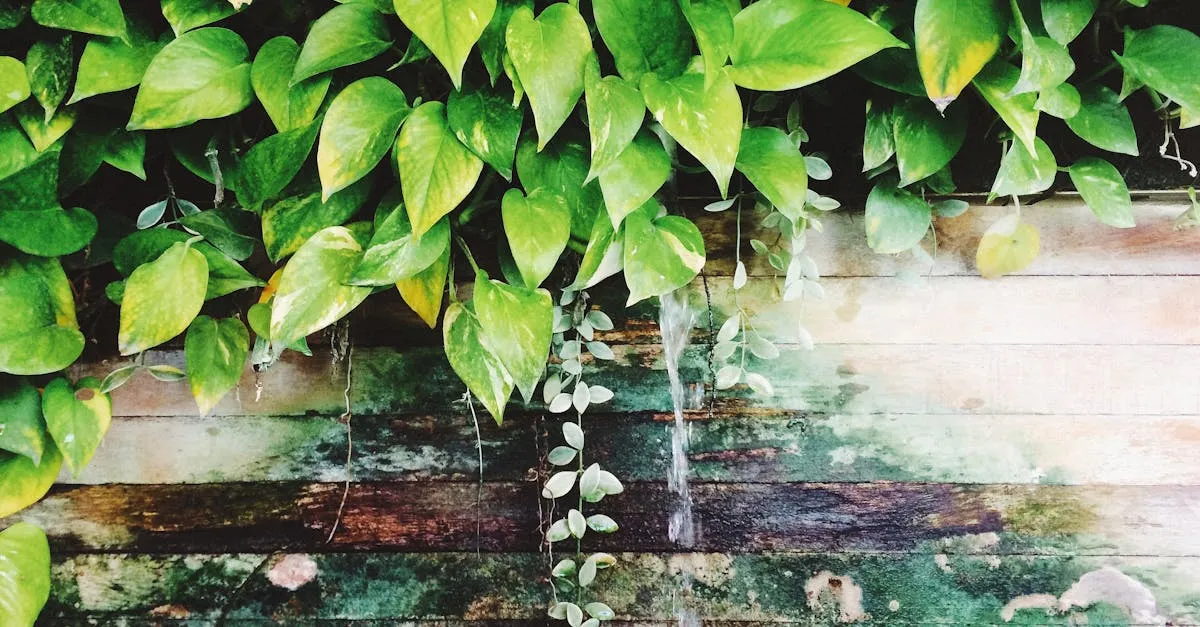
A pothos plant in an aquarium is one of the few houseplant setups where the plant earns its keep twice: it grows well, and it pulls nitrogen compounds out of the water that your fish would otherwise be sitting in. The trick is mounting it so the roots stay submerged while the leaves stay in open air. Done right, it is a quiet, low-effort way to support water quality, though it is a supplement to water changes, not a substitute for them.
Quick answer
Pothos grows well with its roots submerged in an aquarium and its leaves in open air, where the roots feed on the nitrate a cycled tank cannot remove on its own. Rinse all the soil off a rooted cutting, mount it so the crown sits at or just above the waterline, and give the leaves their own light in the room. Treat it as a buffer that slows nitrate build-up, not a substitute for water changes, and never add fertilizer, leaf-shine, or pesticide while the roots sit in the tank.
Why a pothos belongs at the top of the tank
Pothos is an aerophyte: it grows roots underwater readily, but the leaves are not aquatic and will rot if you submerge them. That split is exactly what makes it useful here. The roots feed on dissolved nitrate, the end product of the tank’s nitrogen cycle, and they do it fast because the leaves are photosynthesizing in unlimited air rather than struggling underwater.
Nitrate is the compound a normal cycled tank cannot remove on its own. Beneficial bacteria convert ammonia to nitrite to nitrate, but nitrate just accumulates until you dilute it with a water change. A growing pothos intercepts some of that nitrate and turns it into leaves and roots. It also takes up phosphate, which can mean less algae on the glass.
How to mount a pothos plant in an aquarium
You want roots in the water and the stem, growing point, and leaves above it.
Use an existing cutting. A rooted cutting works best. If you do not have one, take a stem with two or three nodes and root it first. The general method is covered in How to Propagate Pothos from Cuttings in Water or Soil.
Rinse off all soil. Soil clouds the water and can foul it. The roots must be bare. If the plant came from a pot, swirl the roots in clean water until nothing comes off.
Sit it in the back corner or the filter. The simplest mount is to rest the plant in the rear of the tank with the leaves draped over the rim. Many keepers tuck the roots straight into a hang-on-back filter, where there is flow and space and the leaves sit clear of the lid.
Hold the crown above water. Use a suction-cup clip, a mesh pot wedged on the rim, or the filter housing itself. The line where stem meets root should sit at or just above the waterline. Submerged leaves will yellow and decay, so trim any that end up underwater.
Give the leaves light. The aquarium light is for the fish and any aquatic plants; the pothos leaves need their own light in the room. Normal bright indirect light is enough. If the tank sits in a dim corner, see Grow Lights for Houseplants: A Practical Buying Guide.
What it does and does not do for your fish
Be honest with yourself about the scale of the effect. A single small cutting in a heavily stocked tank will barely move the nitrate reading. A vigorous pothos with a large root mass in a lightly stocked tank can make a real, measurable difference.
Treat the pothos as a buffer that slows nitrate build-up, not a filter that erases it.
Keep testing your water and keep your normal water-change schedule. The plant lengthens the comfortable gap between changes; it does not let you skip them. Watch the plant itself, too: pale, slow growth usually means the water is low on nitrate, which is good news for the fish and a sign the system is balanced.
Is pothos safe in a fish tank?
Pothos is toxic to eat because of insoluble calcium oxalate crystals, and this is worth stating plainly. Fish do not graze on the tough roots, and there is no evidence that an intact, healthy root system leaks anything harmful into the water. The setup is widely used without issue.
Two real cautions remain. First, the plant is toxic to cats, dogs and horses, so route trailing vines out of a curious pet’s reach; see Pet-Safe Houseplants: A Guide for Cat and Dog Owners. Second, never add fertilizer, leaf-shine, or pesticide to a pothos whose roots are in the tank, as those go straight into the water your fish breathe. The nitrate in the tank is the plant’s fertilizer.
For the general technique of keeping pothos roots permanently submerged, How to Grow Pothos in Water Permanently covers it in full, and Pothos Care: A Complete Guide to Devil’s Ivy covers everything else the plant needs.
Give the roots a few weeks before you judge it
A freshly mounted cutting does almost nothing for water quality until its root mass thickens, so resist the urge to add a second plant or stretch your water-change schedule in the first month. Test the nitrate weekly and let the readings, not the look of the leaves, tell you when the system has settled. The one habit that quietly undoes the whole setup is reaching for fertilizer or a treatment dose while those roots sit in the tank, so keep every additive well clear of the water.
Where to go next
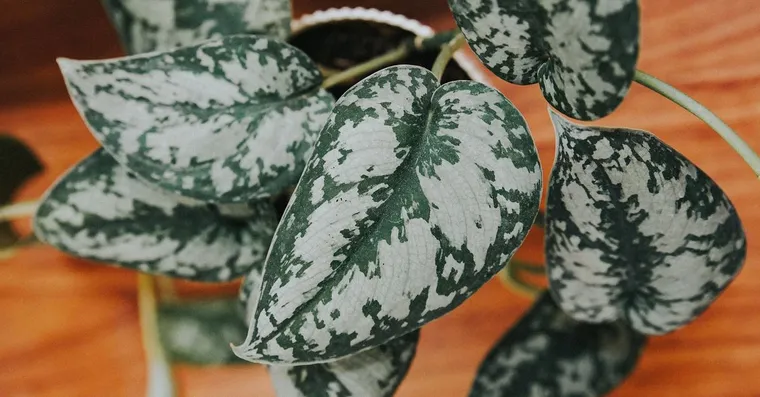
Pothos vs Heartleaf Philodendron: How to Tell Them Apart
The reliable ways to tell a pothos from a heartleaf philodendron: cataphylls, petioles, leaf texture and new growth, plus why shops so often mislabel them.
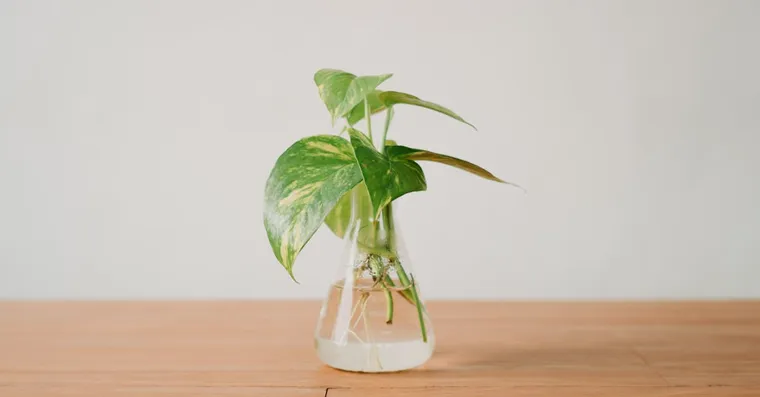
How to Grow Pothos in Water Permanently
Whether pothos can live in water permanently, how to set it up, and the trade-offs in growth and leaf size you should expect.
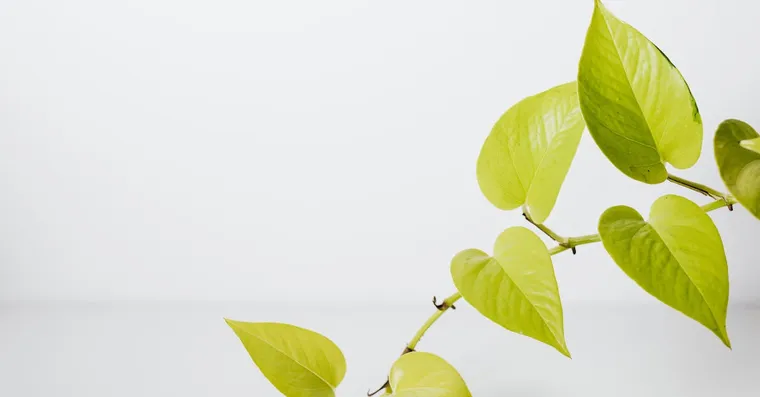
How Often Should You Water a Pothos? A Practical Guide
Pothos does not run on a fixed schedule. Here is the simple check that tells you when to water: push a finger 1 to 2 inches (3 to 5 cm) into the soil, not just the surface.
Not sure what plant you have? Identify it from a photo and we will point you at its care guide.
Frequently asked questions
Does a pothos actually lower nitrate in an aquarium?
Yes, though the size of the effect tracks the size of the root mass. The roots feed on dissolved nitrate, the end product of the tank's nitrogen cycle that a cycled tank cannot remove on its own, and they also take up phosphate, which can mean less algae on the glass. A single small cutting in a heavily stocked tank will barely move the reading, while a vigorous plant with a large root mass in a lightly stocked tank makes a real, measurable difference. A freshly mounted cutting does almost nothing until its root mass thickens, so test weekly and give it a few weeks.
Can I skip water changes if I have a pothos in the tank?
No. Treat the pothos as a buffer that slows nitrate build-up, not a filter that erases it. It lengthens the comfortable gap between changes; it does not let you skip them. Keep testing the water and keep your normal water-change schedule. Pale, slow growth on the plant usually means the water is low on nitrate, which is good news for the fish and a sign the system is balanced.
Do I need to keep pets away from a pothos mounted on a fish tank?
Yes. The ASPCA lists pothos as toxic to dogs, cats and horses, with insoluble calcium oxalates as the toxic principle, and mounting it on a tank does not change that, so route trailing vines out of a curious pet's reach. For the fish, they do not graze the tough roots and there is no evidence that an intact, healthy root system leaks anything harmful into the water. The real hazard is what you add: never put fertilizer, leaf-shine or pesticide on a pothos whose roots sit in the tank, because those go straight into the water your fish breathe.
How do I mount a pothos on a tank without the leaves rotting?
The leaves are not aquatic and will rot if you submerge them, so the line where stem meets root should sit at or just above the waterline. Rinse every trace of soil off a rooted cutting first, because soil clouds the water and can foul it. Then hold the crown in place with a suction-cup clip, a mesh pot wedged on the rim, or the housing of a hang-on-back filter, and trim any leaf that ends up underwater. The leaves also need their own light in the room, since the aquarium light is for the fish, and normal bright indirect light is enough.