Spring Houseplant Care: Waking Plants Up for the Growing Season
What to do for houseplants in spring, from resuming feeding and repotting to handling the stronger light, so plants come out of winter and grow well.
Some links in this guide go to Amazon. As an Amazon Associate we earn from qualifying purchases, at no extra cost to you. How this works.
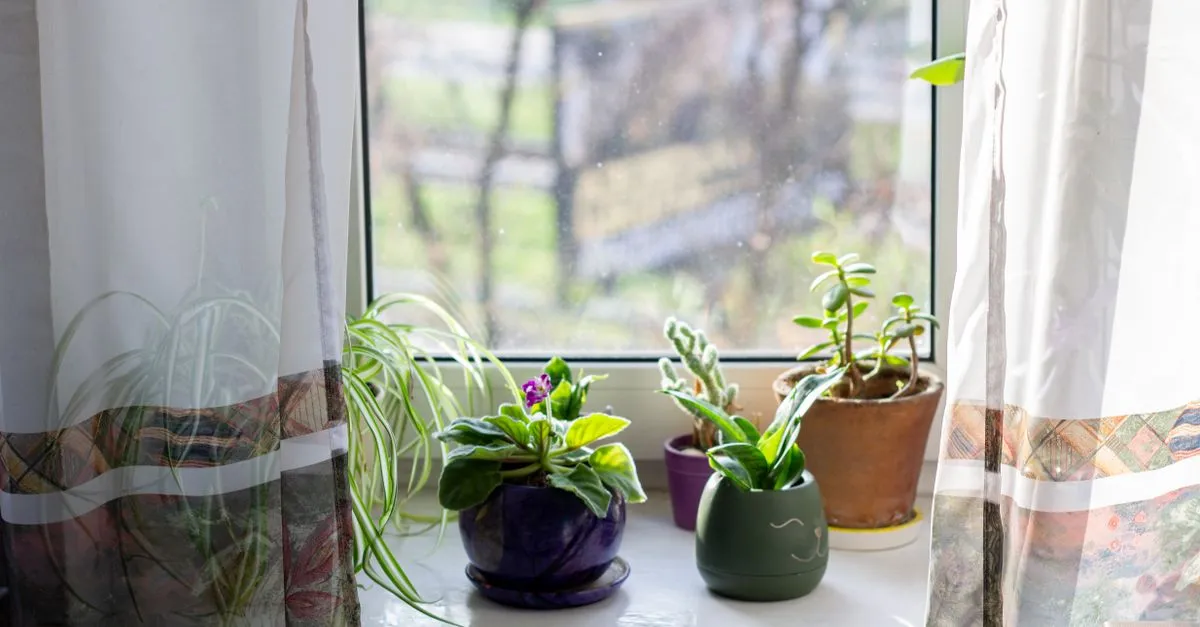
Spring is when most houseplants shift out of their slow winter holding pattern and start growing again, which means your care needs to ramp up to match. The honest version of spring houseplant care is this: follow the plant, not the calendar. New growth is the signal that it is safe to feed, repot, and water more, and that signal arrives weeks earlier on a warm south-facing sill than in a cold north-facing room.
What spring houseplant care really means
As light levels climb and days lengthen, plants photosynthesize more, use more water, and push out fresh leaves and roots. Everything you eased off during the dark months now reverses. The mistake is doing it all at once the moment the clocks change. Wait until you actually see new growth, a tight new leaf, a pale root tip, a slightly fatter stem, then begin. A plant that is still resting will not thank you for a feed and a repot.
Increase watering gradually
Water first, and water more. A growing plant drinks more than a dormant one, so the gaps between waterings will shorten through spring. Do not switch to a fixed schedule. Keep checking the top inch or two (3 to 5 cm) of compost with your finger and water when it has dried to the depth that plant likes. The change should be gradual, tracking the plant’s thirst rather than the date. This is the natural reversal of winter houseplant care, when you held water back.
Resume feeding once new growth appears
Feed only when growth has restarted. Fertilizer does nothing for a plant that is not growing, and the unused salts simply build up in the compost. Once you see fresh leaves, start at half the recommended strength and build up as growth gathers pace through spring and into summer. How often and how much depends on the plant and the product, which is covered in how to fertilize houseplants.
Repot anything root-bound now
Spring is the best repotting window of the year. A plant moved up a pot size now has a full growing season to settle and fill out the fresh compost, so it recovers fast. Look for roots circling the drainage holes or the surface, water running straight through, or a plant that dries out within a day or two. Go up one pot size, not several, and only if it needs it. For the full list of signs and timing, see when to repot a houseplant.
Prune, tidy, and clean
Prune the leggy winter growth. Low winter light often leaves plants stretched and sparse. Spring is the time to cut back that weak growth and any dead or yellowing leaves, which pushes the plant to branch and fill out as it regrows.
Clean the dust off the leaves. A winter’s worth of dust blocks light right when the plant most needs it. Wipe broad leaves with a damp cloth, or rinse smaller plants under a tepid shower, so every leaf can work at full capacity.
Watch for pests waking up too
Warmth and soft new growth wake pests as surely as they wake the plant. Aphids, spider mites, and mealybugs breed fast once it warms up, and fresh shoots are exactly what they target. Check the undersides of new leaves and the growing tips every week or two, and deal with anything small before it turns into an infestation.
Move plants back from hot glass gradually
Here is the trap most people miss. Leaves that adjusted to dim winter light can scorch in the stronger spring sun, even on the same windowsill that was perfectly safe in January.
Stronger spring light can burn the very leaves that survived winter, so reintroduce it slowly.
If you moved plants close to the glass for winter, edge them back over a couple of weeks, or filter the midday sun with a sheer blind, rather than leaving them to bake.
Let the plant set the pace into summer
The single mistake that undoes a good spring is rushing: feeding, repotting, and shoving plants into bright sun the week the clocks change, before any of them have woken. Hold off until you see that first real flush of growth on each plant, then ease everything up together over a few weeks, and by early summer you will have plants that are watering hungrily, filling their pots, and ready for the strongest light of the year. When the season turns again, autumn houseplant care covers how to ease the same plants back into their slow season.
Where to go next
Autumn Houseplant Care: Easing Plants Into Their Slow Season
How to adjust houseplant care in autumn as light and growth fade, from cutting back watering and feeding to bringing summer plants back indoors safely.

Summer Houseplant Care: Heat, Watering, and Scorch Indoors
How to keep houseplants healthy through summer indoors, from watering more often to protecting them from hot window glass, air conditioning, and dry air.
Moving Houseplants Outdoors for Summer Without Shocking Them
How to move houseplants outside for summer safely, how to harden them off to avoid sunburn, and which plants are better left indoors.
Not sure what plant you have? Identify it from a photo and we will point you at its care guide.