Best pruning snips for houseplants
Choosing scissors and snips for indoor plants: bypass versus precision blades, why sharp and clean matters, and what to look for in a pair you will use.
Some links in this guide go to Amazon. As an Amazon Associate we earn from qualifying purchases, at no extra cost to you. How this works.
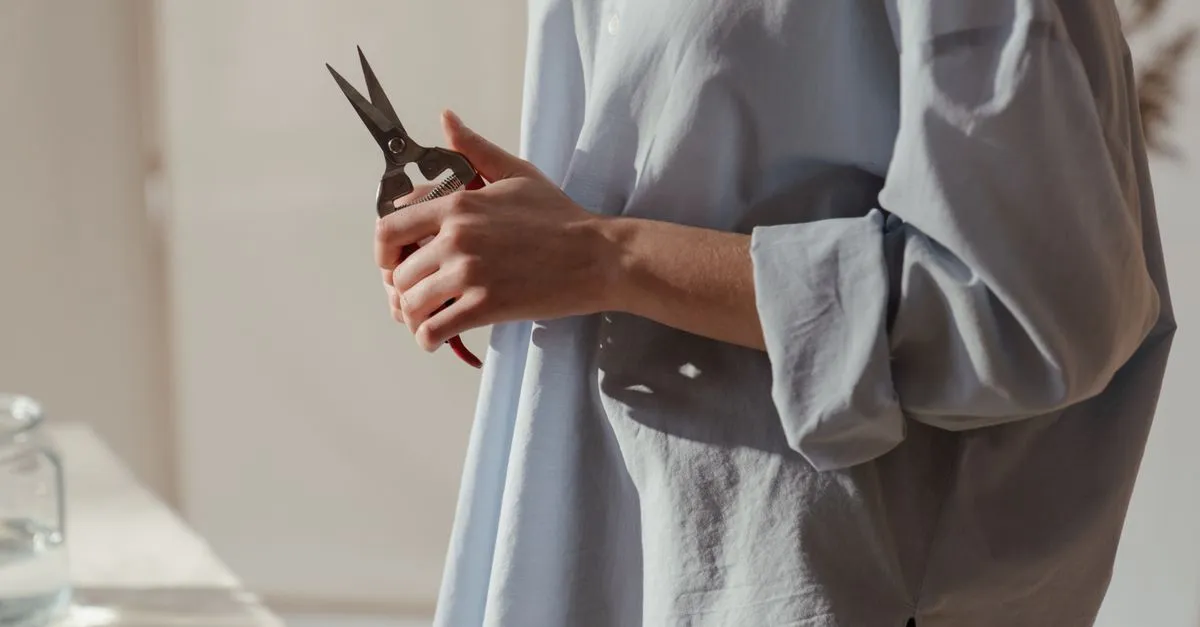
For most houseplant owners, the best pruning snips are a lightweight precision pair or a set of floristry scissors, not a special tool that costs a small fortune. A dedicated pair matters because clean, sharp blades make a flush cut that heals quickly, while blunt kitchen scissors crush and bruise a stem, leaving a ragged wound that invites rot and disease. The rest is about matching the tool to the stem and, far more importantly, keeping the blades clean and sharp.
Why dedicated snips beat the scissors in your drawer
A sharp blade slices through plant tissue in one pass. The cut closes over and the plant moves on. A dull or oversized blade pinches the stem shut, tears the fibers, and leaves a crushed edge that browns, weeps, and can become an entry point for fungal and bacterial problems. If you have ever wondered why a cutting failed or a stem rotted back after a trim, the tool is often the hidden cause. This is also why you should never tear a stem off by hand when a clean cut is one snip away.
Choosing the best pruning snips for houseplants
Rank your options by what you will actually do most often.
Precision snips or floristry scissors. This is the everyday default for the vast majority of indoor plants. They handle soft stems, cuttings, deadheading, and tidying trailing growth with control and very little effort. If you buy one tool, buy this. They are ideal for routine pruning and for taking clean cuttings when you propagate from cuttings.
Small bypass secateurs. A bypass design works like scissors, with one sharp blade passing the other, so it cuts cleanly rather than crushing. Reach for a small pair when a stem is genuinely woody, such as the trunk of a fiddle leaf fig or a mature rubber plant. Avoid anvil secateurs, which press a blade onto a flat plate and squash soft stems.
Micro tip snips. These have a fine, pointed tip for fiddly work in tight spaces, like snipping a single yellowing leaf from deep inside a dense plant without nicking its neighbors. They are a useful third tool, not a first one.
Features worth paying for
Look for these, in roughly this order of usefulness.
Sharpness, and blades that stay sharp. Stainless steel or a coated blade resists rust and sticky sap build-up, which keeps the edge cutting cleanly for longer. A non-stick coating wipes down easily after a sappy job.
A comfortable handle. If you prune more than one or two plants at a sitting, a handle that fits your hand without pinching matters more than you expect. Soft grips and a sensible size reduce hand fatigue.
A spring return. A small spring opens the blades for you after each cut, so your hand only has to do the closing. It makes a long session noticeably less tiring.
A safety lock. A simple catch holds the blades shut in a drawer, which protects both the edge and your fingers.
The habit that matters more than the tool
Clean blades prevent more plant deaths than expensive ones.
Hygiene is the single most important pruning habit. Pests and diseases travel from plant to plant on dirty blades, so wipe or sterilize them with isopropyl alcohol between plants, and especially before and after cutting into anything that looks unwell. This one step does more to protect your collection than any upgrade in steel, and it is essential if you are tackling something contagious like a houseplant disease or working through an infested plant.
Keeping the blades sharp comes a close second. A quick wipe to remove sap and the occasional pass with a sharpening stone or honing tool keeps your snips making clean cuts for years. Dull blades are the most common reason a perfectly good pair stops performing.
The honest take on premium snips
A high-end Japanese pair is genuinely lovely to use, beautifully balanced and sharp out of the box. It is also not necessary. The real value in any pruning tool is keeping it clean and keeping it sharp, and an inexpensive pair that you sterilize and hone will outperform a neglected luxury pair every time. Buy within your budget and put the effort into maintenance instead.
The pair to keep within reach of your watering can
Pick one precision or floristry pair, park a bottle of isopropyl alcohol beside it, and wipe the blades between plants every time, even when nothing looks ill. The mistake that costs people plants is not buying the wrong snips but reaching for the same sappy, unwiped pair month after month until the edge goes dull and a pest rides it from one pot to the next. If your current pair drags or browns the cut, hone it before you replace it; nine times out of ten the steel is fine and it is the habit that has slipped. If you want to build out your toolkit, a soil moisture meter is the next most useful addition for avoiding both overwatering and underwatering.
Where to go next
Best soil moisture meters for houseplants
Are moisture meters worth it? A buying guide to soil moisture meters for indoor plants, what the cheap ones get wrong, and how to use one without being misled.
Houseplant tools every beginner needs
A no nonsense starter kit for new plant owners: the few tools genuinely worth buying first, the ones you can skip, and roughly what to spend.
Best fertilizer for houseplants
A buying guide to houseplant fertilizer: liquid versus slow release versus organic, what the NPK numbers mean for indoor plants, and how often to feed.
Not sure what plant you have? Identify it from a photo and we will point you at its care guide.