Rubber Plant Care: Growing Ficus Elastica Indoors
How to grow a healthy rubber plant indoors, covering light, watering, humidity, and the pruning that keeps ficus elastica from getting leggy.
Some links in this guide go to Amazon. As an Amazon Associate we earn from qualifying purchases, at no extra cost to you. How this works.
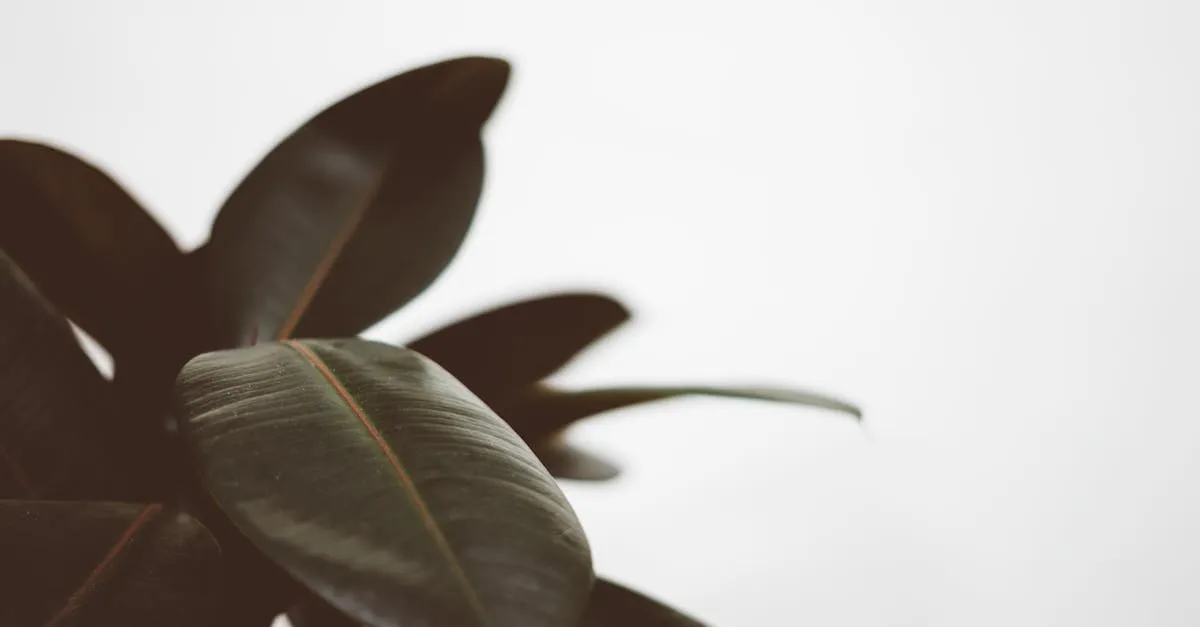
Ficus elastica is a dependable houseplant once you match it to a suitable spot and water on a consistent rhythm. Most difficulties come from moving it repeatedly or guessing at the watering schedule. Settle it into the right position and it grows steadily with very little effort.
Which variety do you have?
Four cultivars cover most of what you will find in shops, and they behave differently in lower light.
‘Robusta’ has plain dark-green leaves and is the most tolerant of shade, sitting comfortably 2 to 3 feet (60 to 90 cm) from an east or west window. ‘Burgundy’ has very dark, near-black leaves and holds its color sitting around 1 m back from a bright window. ‘Tineke’ (cream, green, and pink patches) and ‘Ruby’ (pink and red flush) are variegated and need the most light; position them close enough to the glass that they could almost touch it.
Give variegated cultivars lower light and they fade to plain green within a season, because the plant cannot afford the pigment without enough light to fuel it. If you are unsure which you have, check the new leaves: dark burgundy-tinged growth points to ‘Burgundy’; pink-edged variegation means ‘Tineke’ or ‘Ruby’.
Why bright indirect light matters
Rubber plants survive in moderate light but grow slowly and drop lower leaves when conditions are too dim. A position near an east or west window suits most cultivars. A south-facing window is fine with the plant pulled back roughly 3 feet (1 m) to avoid harsh midday sun directly on the leaves.
If your brightest window is still dim, a grow light will hold the color and keep growth compact. For a broader guide on matching plants to window positions, see how much light houseplants need.
Watering without rotting the roots
Rubber plants want their soil to dry partway down between waterings. Push a finger in: when the top 1 to 1 1/2 inches (3 to 4 cm) are dry, water thoroughly until it runs from the drainage holes, then empty the saucer. In a bright spot this usually means every week or two in summer and every two to three weeks in winter.
Overwatering causes most fatalities. Soggy soil suffocates roots and leads to root rot. If lower leaves yellow and drop while the soil stays wet, you are watering too often. If leaves go limp and edges crisp, you have let it get too dry. For help distinguishing the two, see overwatering vs underwatering houseplants.
The latex sap
Every cut stem and snapped leaf bleeds a white milky latex. Before it dries, this sap marks floors and stains fabric in a way that is difficult to remove. Wear gloves whenever you prune or take a cutting, lay newspaper or a cloth on the floor beneath, and dab the cut end with a tissue to slow the bleed. Lucy Liu, at her London nursery, presses a damp paper towel or a pinch of dry soil directly onto the wound the moment she makes the cut, which clots the sap before it can run; she notes the flow can travel a couple of inches (several cm) down the stem before you realize it is dripping. Keep the sap away from eyes. The plant is also generally reported as toxic to cats and dogs; if you share your home with pets, see pet-safe houseplants for alternatives.
Pruning: exact cut and result
To encourage branching, cut the main stem 3/8 to 3/4 inch (1 to 2 cm) above a leaf node, angling the blade slightly away from the nearest bud. The plant pushes out 2 to 3 new shoots from buds near the cut within 4 to 6 weeks. Prune in spring only; cuts made in winter often stall and the wound stays open for weeks without callusing.
You can root the tip you removed as a cutting. For step-by-step method, see how to propagate a rubber plant. For general technique on timing and tool hygiene across species, how to prune houseplants covers the detail.
Why leaves wrinkle or curl
Puckered or wrinkled leaves on an otherwise healthy green plant: the root zone dried out, probably more than once. Water more consistently and make sure you are wetting the whole root ball each time.
Inward curl along the midrib without yellowing: cold or draft exposure. Move the plant away from windows that drop below 60°F (15°C) at night, or away from ventilation sources.
Curl with yellowing and soft stems: overwatering. Check the roots for rot and let the soil dry further between waterings. Closely related symptoms are covered at brown leaf tips: causes and fixes.
Why it hates being moved
Rubber plants acclimatize to a light level and resent change. Moving to a new room, or going from a shop to your home, often triggers a flush of leaf drops. This is the plant adjusting its leaf load to new conditions, not the plant dying. Choose its position before you buy it and leave it there. Keep it away from drafts, radiators, and air-conditioning vents, all of which cause sudden leaf loss. For a full breakdown of why this happens, see why rubber plants drop leaves.
Humidity, feeding, and clean leaves
Humidity. Normal room humidity is fine. Misting does nothing useful and a humidifier is not needed. Leaf edges may brown slightly in a very dry heated room in winter, but this is rarely serious.
Feeding. Fertilize with a balanced houseplant feed at half strength every four to six weeks through spring and summer. Stop in autumn and winter when growth slows. Overfeeding does more damage than too little. See how to fertilize houseplants for timing guidance.
Clean leaves. The large glossy leaves collect dust that reduces the light reaching the surface. Wiping them with a damp cloth every few weeks is functional maintenance, not cosmetic. Cleaning the leaves also lets you catch pests early.
Soil and pot
A standard potting compost mixed with 20 to 30% perlite gives the drainage rubber plants need. Terracotta pots dry faster than plastic, which suits heavy waterers but increases how often you need to water in a dry or centrally heated apartment. Weigh up which risk is greater for your conditions. When potting up, go no more than one pot size (2 inches / 5 cm wider maximum); a pot too large holds surplus wet compost around the roots long after watering. Repot every two to three years, or when roots circle the drainage holes. Use a well-draining mix.
Pests
Dry indoor air encourages spider mites (look for fine webbing and stippling on leaf surfaces) and scale insects (brown waxy lumps on stems). The leaf-wiping routine catches both early, before populations establish. Treat an active infestation with diluted neem oil or insecticidal soap, applied weekly until clear.
Settle it once and let it find its rhythm
The single mistake that undoes a rubber plant is shuffling it from spot to spot while it is still adjusting; pick a bright position before you buy and resist relocating it even if a few lower leaves drop in the first month. Get the watering rhythm steady so the top 1 to 1 1/2 inches (3 to 4 cm) dry between drinks, and once it has settled you can leave it largely alone, stepping in each spring only to wipe the leaves and make any branching cuts. A plant that holds its lower leaves and pushes fresh growth from the top through summer is one you have placed correctly.
Where to go next
Why Is My Rubber Plant Dropping Leaves?
Why a rubber plant drops leaves after a move, cold draft, or watering mistake, and how to stop the loss. Most plants stabilize within three to four weeks.
Aeonium Care: Growing Black Rose and Other Varieties
How to care for aeonium succulents including the dark Zwartkop, with advice on their summer dormancy, watering, and light needs.
Bird's Nest Fern Care: A Forgiving Fern for Lower Light
How to care for a bird's nest fern indoors, a forgiving fern that tolerates lower light and needs less fuss than most ferns.
Not sure what plant you have? Identify it from a photo and we will point you at its care guide.
Frequently asked questions
Why are my rubber plant leaves wrinkling?
Puckered or wrinkled leaves on an otherwise green plant usually mean the root zone dried out repeatedly. Water more consistently and make sure you wet the whole root ball each time before letting the top inch or two (3 to 5 cm) dry out again.
Does rubber plant sap stain?
Yes. The white latex that bleeds from cuts and snapped leaves dries to a tacky residue that marks fabric and floors and is hard to remove once dry. Wear gloves when pruning and protect surfaces beneath the plant.
How do I make my rubber plant bushy?
Cut the main stem 3/8 to 3/4 inch (1 to 2 cm) above a leaf node in spring, angling the cut slightly away from the nearest bud. The plant pushes out 2 to 3 new shoots from buds near the cut within 4 to 6 weeks. Repeat on those new stems the following spring to build a multi-branched shape.
Sources
- ASPCA Animal Poison Control Center, Toxic and Non-Toxic Plants database. Ficus species including rubber plants are generally reported as toxic to cats and dogs; consult the ASPCA database at aspca.org for species-specific guidance.
- Royal Horticultural Society (RHS), Houseplant growing guides: Ficus elastica.