Bromeliad Care: How to Keep Your Bromeliad Alive and Blooming
How to care for a bromeliad indoors, from filling the central cup to what happens after it flowers, and how to grow the pup offsets into new plants.
Some links in this guide go to Amazon. As an Amazon Associate we earn from qualifying purchases, at no extra cost to you. How this works.
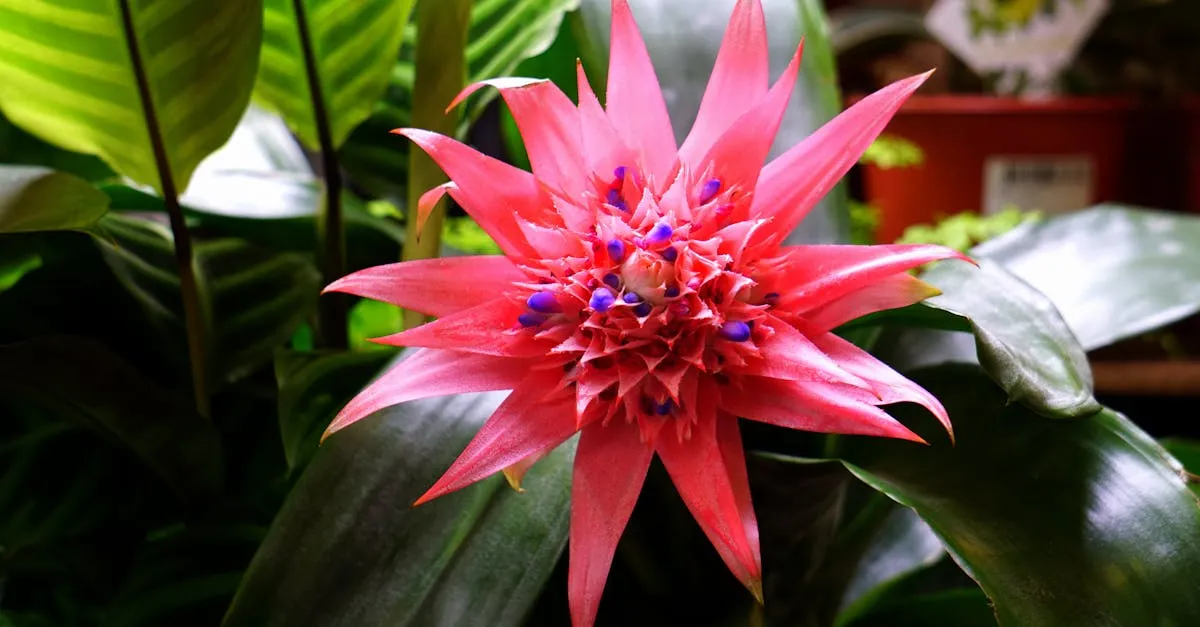
A bromeliad bought in flower is one of the easier houseplants you can own, even though its colorful display gives the opposite impression. The most useful thing to understand about bromeliad care is that the plant you bought is at the end of its life as an individual, but the start of its life as a colony. Once you know that, almost everything else makes sense.
How a tank bromeliad actually drinks
Most common indoor bromeliads (Guzmania, Vriesea and Aechmea) are tank bromeliads. The overlapping leaves form a central cup, sometimes called a vase or tank, and in the wild this cup catches rainwater. Your watering routine follows the same idea.
Fill the central cup. Keep water sitting in the cup at all times. Use rainwater or filtered water if your tap water is hard, since mineral buildup can mark the leaves.
Refresh the cup every one to two weeks. Tip out the old water and refill it. Standing water left for months turns stagnant and can rot the base of the leaves, so this small habit matters more than the amount.
Keep the potting mix barely moist, not wet. The roots of a tank bromeliad are mainly for anchorage, not heavy drinking. Let the surface dry between waterings and never leave the pot standing in a saucer of water.
This split routine, wet cup and barely damp soil, is the single biggest difference from most other houseplants. If you treat a bromeliad like a fern and keep the soil soaked, you will rot it.
Light and position
Bright, indirect light is ideal. An east or west-facing spot, or a few feet back from a brighter window, keeps the color strong and the plant healthy.
Lower light is tolerated, but growth slows. A bromeliad will survive in a dim corner, it simply grows and produces pups more slowly. Harsh direct midday sun is the one thing to avoid, as it scorches the leaves.
The flower is not the flower
The colorful part most people buy the plant for is a bract, a modified set of leaves, not the actual flower. The true flowers are small and emerge from inside the bract over time. The bract holds its color for months, which is why bromeliads look like such good value.
Here is the honest reality: a bromeliad only flowers once in its life. Once that bract appears, the mother plant has done its job and will slowly decline. This is not something you did wrong.
After flowering: the mother dies, the pups arrive
The decline is gradual and can take the best part of a year, so there is no rush to do anything. While the mother fades, she produces pups, also called offsets, at her base.
A bromeliad does not really die after flowering, it just stops being one plant and becomes several.
Wait until a pup is about one-third the size of the parent. Smaller pups have too few roots of their own and struggle once separated.
Let the mother feed them as long as she looks decent. There is no benefit to removing pups early. Keep watering the cup as normal while everything is still attached.
How to propagate the pups
This is the part that keeps a bromeliad going for years.
- Choose a pup that is at least one-third the parent’s size, ideally with a few small roots of its own.
- Cut it cleanly from the mother with a sharp, clean knife, slicing close to the parent stem. A little of the parent tissue attached is fine.
- Pot it in a free-draining mix. Orchid bark mixed with a little potting compost works well, since these plants hate sitting wet. See choosing the right potting mix if you want to blend your own.
- Treat it as a new plant. Keep the cup filled, the soil barely moist, and give it bright indirect light.
Be patient: a pup may take one to three years to reach flowering size, and many growers use a banana near the plant, whose ethylene gas can nudge a mature bromeliad into bloom.
If you would rather not cut, you can also lift the whole clump and separate it, much like you would when you divide other houseplants by splitting the root ball.
How bromeliads compare to similar plants
Bromeliads sit between two other plant types you may already grow. They are relatives of air plants, which take the no-soil idea further, and they share the once-and-done flowering drama of some orchids, though their care is far less fussy than phalaenopsis orchids. A syngonium is another compact tropical that handles lower light and makes a good companion plant in a similar position.
Keep the colony going, not just the plant
The mistake that ends most bromeliads early is binning the mother the moment her bract fades, before the pups are large enough to carry on. Leave the offsets attached and keep filling that central cup until each one reaches a third of the parent’s size, and you will have a fresh plant ready to pot just as the old one finishes. Treat the flower as a handover rather than an ending and a single supermarket bromeliad can keep you in plants for years.
Where to go next
Ctenanthe Care: How to Grow the Never-Never Plant Indoors
How to care for a ctenanthe (never-never plant) indoors, from humidity and watering to why the leaves roll and what to do about browning leaf edges.
Syngonium Care: How to Grow Arrowhead Plant Indoors
How to care for a syngonium (arrowhead plant) indoors: light, watering, and humidity, plus what to do when leaves lose variegation or the plant gets leggy.
Tall Houseplants Safe for Cats: Beyond the Usual Palm List
Seven tall houseplants that are genuinely safe for cats per the ASPCA list, including several that are not palms, with honest notes on size and difficulty.
Not sure what plant you have? Identify it from a photo and we will point you at its care guide.