How to Divide Houseplants: Propagation by Splitting the Root Ball
How to propagate clumping houseplants by division, which plants suit it, and how to split the root ball at repotting time without setting the plant back.
Some links in this guide go to Amazon. As an Amazon Associate we earn from qualifying purchases, at no extra cost to you. How this works.
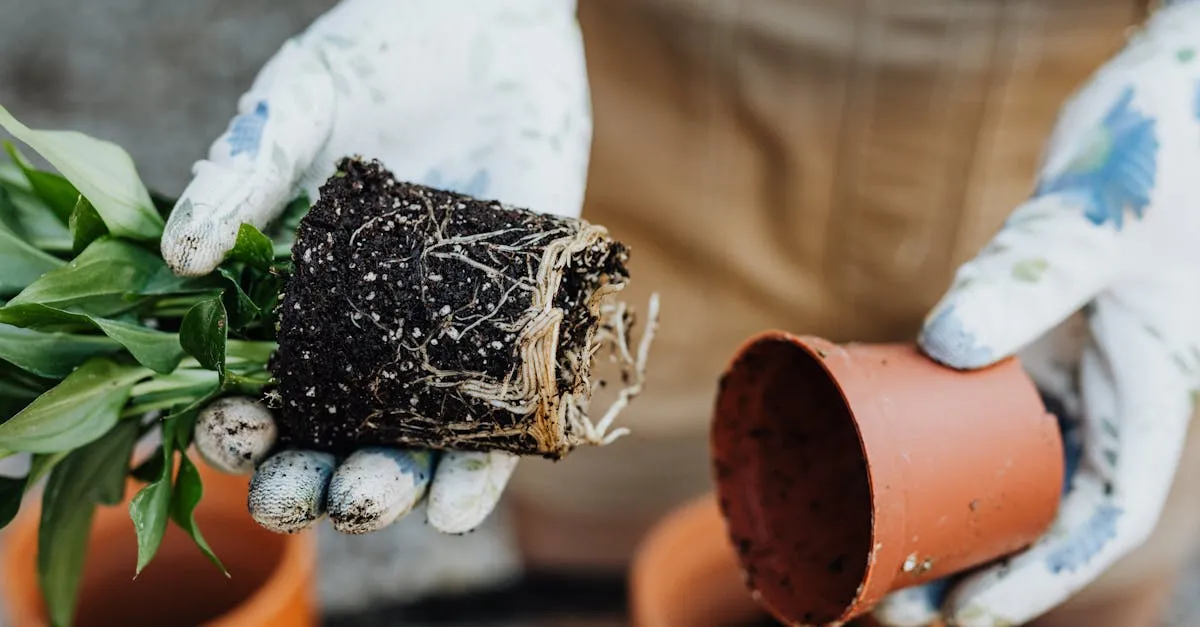
Division is the fastest and most reliable way to propagate clumping houseplants, and it is the method most people overlook in favor of cuttings. If you want to know how to divide houseplants, the short version is this: you separate one congested plant into two or more smaller plants, each with its own roots and shoots, and each becomes a fully grown plant straight away. There is no waiting weeks for a cutting to root, because the roots are already there.
Which plants you can divide, and which you cannot
Division only works on plants that grow as a clump of separate growing points rather than a single stem. Good candidates, roughly from easiest to fussiest:
- Snake plant. Spreads by underground rhizomes; pups can be sliced off with roots attached.
- Spider plant. Forms a dense crown of multiple fans that pull apart cleanly.
- Peace lily. Grows as a clump of crowns, each with its own leaves and roots.
- ZZ plant. Stores energy in fat rhizomes; separate them where they naturally divide.
- Calathea and prayer plant. Send up new shoots around the parent that lift away with roots.
- Ferns. Boston, bird’s nest, and most others form a spreading rootstock you can cut.
What you cannot divide is a single-stemmed plant. A monstera, a rubber plant, a fiddle leaf fig, or any plant growing from one main stem has only one set of roots and one growing point. Cutting through it gives you a top with no roots and a base with no leaves, and usually kills both. For those, take a stem cutting or air layer instead.
The test is simple: if you can see more than one separate clump pushing up from the soil, it can be divided.
Divide at repotting, not as a separate ordeal
The easiest time to divide is when you are already repotting, because the plant is out of its pot and you can see what you are working with. Spring and early summer are best, when active growth helps each division recover quickly. Water the plant a day or two beforehand so the roots are hydrated and the rootball slides out more easily.
How to split the root ball
Work somewhere you can make a mess, and take your time.
- Ease the plant out of its pot and lay it on its side. Loosen the soil from the roots with your fingers so you can see the natural divisions.
- Find the separate clumps. Many plants, like spider plants and peace lilies, come apart in your hands once the soil is loose. Tease them gently rather than yanking.
- Cut where teasing fails. For tougher rootballs and rhizomes, use a clean, sharp knife and slice straight down through the middle. Wipe the blade with alcohol first to avoid spreading disease.
- Check each division. This is the part that decides survival: every piece must keep a fair share of roots and at least one healthy shoot or growing point. A clump of leaves with no roots will not grow, and a lump of root with no shoots usually will not either.
- Aim for two or three divisions from an average plant, not six. Larger divisions establish far faster than tiny scraps.
Aftercare in the first few weeks
Pot each division into fresh potting mix in a container only slightly larger than its roots. An oversized pot holds too much wet soil around a reduced root system and invites root rot.
Water lightly after potting to settle the soil, then let the surface dry before watering again. Divisions have fewer roots, so they drink less than the parent did. Light. Keep them out of direct sun for two or three weeks while they recover; bright indirect light is ideal. Hold off on feeding. Wait four to six weeks before you fertilize, so roots can settle without being pushed.
Expect some drooping or a yellow leaf or two at first. That is normal transplant stress, and it passes as the roots take hold. Treat the first few weeks like settling in any new plant.
Fewer, bigger divisions win
The mistake that sets people back is getting greedy at the cutting board and turning one healthy plant into five weak scraps that each limp along for months. Keep every piece large enough to fend for itself, and time the job for spring so the lengthening days drive a fast recovery. Two strong halves will look full again by late summer, whereas a plant chopped into six rarely catches up before the season turns.
Where to go next
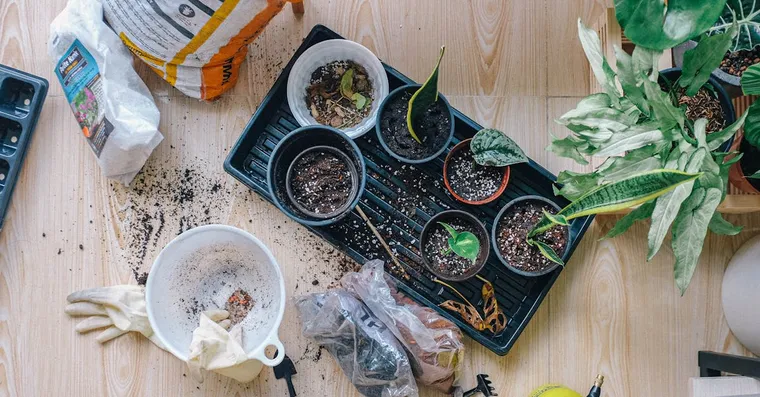
How to Propagate a Snake Plant: Division vs Leaf Cuttings
The two ways to propagate a snake plant, why division is faster and keeps variegation, and how to root leaf cuttings if you do not mind the wait.
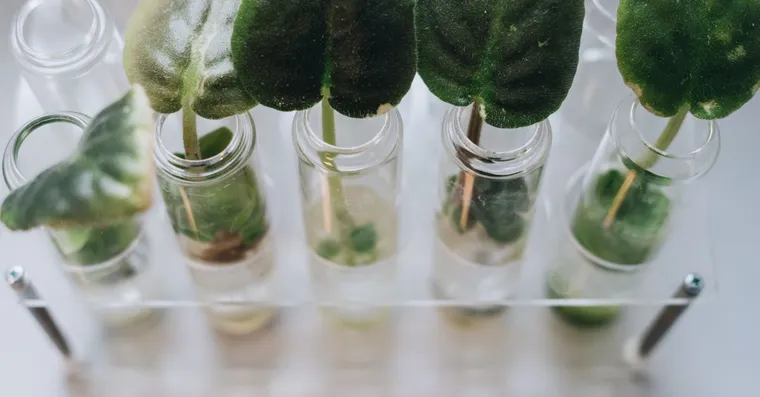
Best propagation stations for houseplants
A buying guide to propagation stations: which vessel suits water rooting, what actually helps roots form, and when a jam jar does the same job for free.
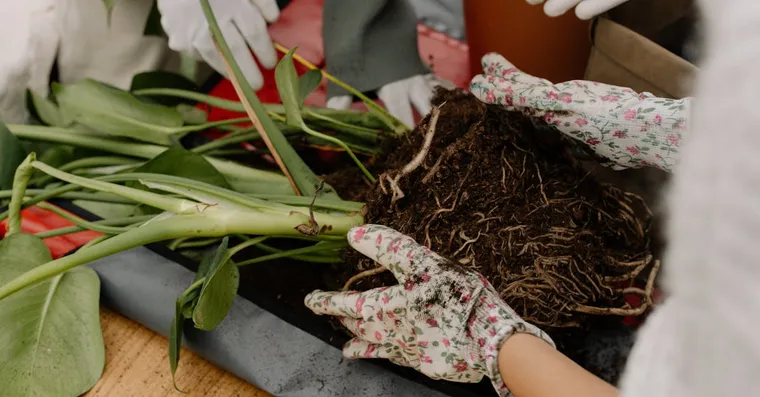
Repotting Shock: Why Your Plant Sulks After Repotting
Why a houseplant droops, yellows, or stalls after repotting, whether it is shock or something worse, and how to help it recover.
Not sure what plant you have? Identify it from a photo and we will point you at its care guide.