Christmas Cactus Care: Getting It to Bloom Each Year
A care guide for the Christmas cactus (schlumbergera), with watering unlike a desert cactus and the cool nights and darkness that trigger flowering.
Some links in this guide go to Amazon. As an Amazon Associate we earn from qualifying purchases, at no extra cost to you. How this works.
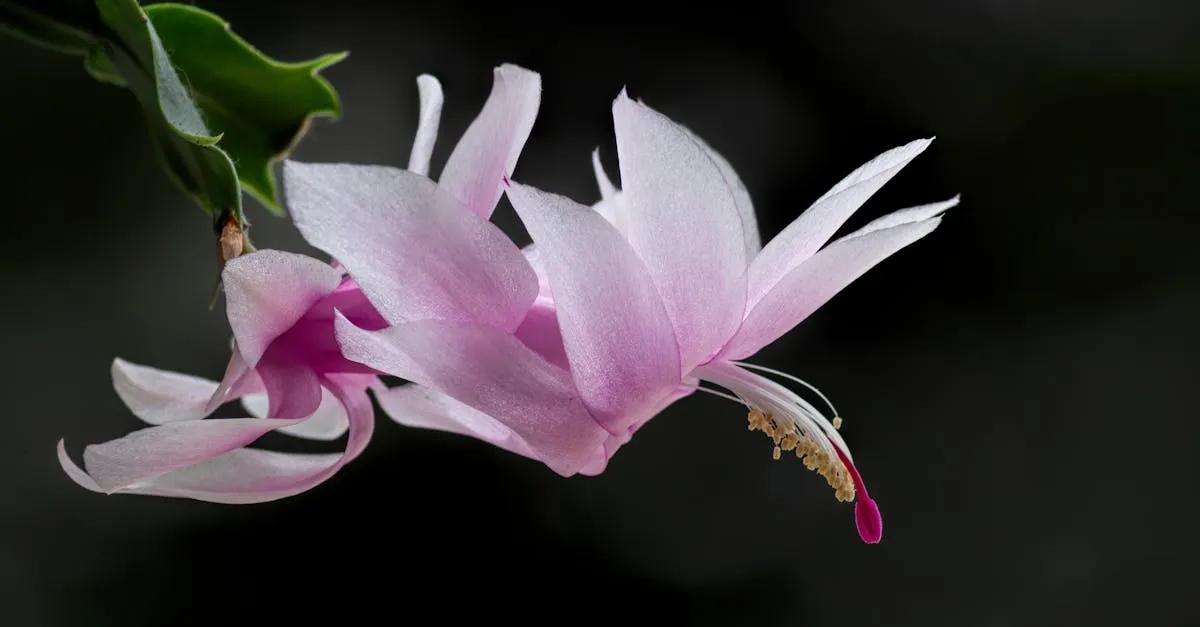
It is a tropical jungle cactus, not a desert one, and that single fact explains most of what good Christmas cactus care comes down to: bright indirect light, regular water, and no baking it dry like a spiky succulent. The plant itself is easy to keep alive for years. The honest question is almost always the rebloom, and that part is more about timing and darkness than anything you do to the soil.
Christmas, Thanksgiving, or Easter?
Most houseplants sold as “Christmas cactus” are actually Thanksgiving cactus (Schlumbergera truncata), and the distinction matters because the two bloom at different times.
The quickest way to tell them apart is to look at the edges of a stem segment. Thanksgiving cactus (S. truncata) has pointed, claw-like teeth along each segment and blooms from October into November. Christmas cactus (S. x buckleyi) has smooth, scalloped edges with rounded notches and blooms in December and January. Easter cactus (now reclassified as Hatiora gaertneri) has tiny, rounded segments with small notches and blooms in March and April.
Rule of thumb: count the teeth. Sharp points mean Thanksgiving cactus. Gently curved edges mean a true Christmas cactus.
This explains a common frustration: owners of Thanksgiving cacti worry their plant “missed Christmas” when it simply flowered on schedule for its species. The care for all three is almost identical; only the bloom window differs.
Why it is not a desert cactus
A Christmas cactus (Schlumbergera) grows in the branches of trees in Brazilian rainforests, not in dry ground. It has flat, segmented stems rather than spines, it dislikes long droughts, and it does not want gritty cactus mix that drains in seconds.
In practice this means it should never go more than 10 to 14 days without water, even in winter, which is quite different from the extended dry spells an aloe or echeveria handles comfortably. If you have mainly grown desert succulents, read the guide to watering succulents and treat this plant as the exception: it genuinely needs more consistent moisture. See overwatering versus underwatering if you are unsure which mistake you are making.
Light and watering that keep it healthy
Light. Give it bright, indirect light: an east-facing window, or a few feet back from a brighter one. Harsh direct summer sun can scorch or redden the segments, while deep shade gives you a floppy plant that never flowers.
Water. Water when the top 3/4 to 1 inch (2 to 3 cm) of soil feel dry, then water thoroughly until it runs from the drainage holes. In the growing months this often means roughly once a week; in winter, less often but not never. The plant stores some moisture in its segments, so when in doubt, wait a day rather than watering twice.
Soil and pot. Use a pot with drainage and a mix that holds a little moisture but never stays soggy. A standard houseplant mix with some added perlite or bark works. Constant wet soil is the one reliable way to kill it through root rot.
Feeding. Feed monthly with a diluted balanced fertilizer through spring and summer. Ease off in autumn when you start the bloom trigger, and stop entirely once buds appear.
Year-round rhythm
Spring. Resume normal watering as the plant comes out of its post-bloom rest. Start monthly feeding once new growth appears.
Summer. Keep watering steadily; the top 3/4 to 1 inch (2 to 3 cm) is your cue. If you move it outdoors, choose bright shade rather than direct sun. Intense summer heat and harsh light will redden and stress the segments.
Mid-autumn. Start the six-week bloom trigger: ease back on water slightly, let the nights cool to 50 to 60°F (10 to 15°C), and move the plant somewhere it gets 12 to 14 hours of unbroken darkness each night. This is the most important step all year.
Winter. Once buds form, return the plant to its display spot. Keep watering consistent, maintain a stable temperature, and do not move it again until after the flowers have dropped.
How to get a Christmas cactus to bloom each year
Flower buds are triggered by two things working together in mid-autumn: cool nights and long, uninterrupted darkness. Get both right for around six weeks and buds will form on their own.
Give the plant 12 to 14 hours of complete darkness every night, alongside cooler nights of 50 to 60°F (10 to 15°C). A spare room, a cupboard, or a covered corner that no lamp reaches will do.
The darkness has to be unbroken: even a hallway light switching on at night can stall the whole process.
Lucy Liu, at her London nursery, identifies light pollution as the most overlooked reason a Christmas cactus fails to rebloom in a home: a reading lamp left on in the evening, a television glowing from across the hall, or streetlight diffusing through a thin curtain each count as a light break and can reset the plant’s internal clock. For a plant that has gone years without flowering, her prescription is to move it in October to a room that gives it genuine, uninterrupted pitch blackness for 14 hours every night alongside a cooler room temperature, and she finds it reliably produces buds by December under those conditions.
If keeping it pitch dark is impractical, cool temperatures alone will often do most of the work. Plants kept near a cool window where nights drop naturally frequently set buds without any blackout routine at all. Once buds appear, return the plant to its normal spot.
Why the buds keep dropping
If your plant sets buds and then sheds them before they open, the cause is almost always a change it did not like:
- It got moved. Christmas cactus resents relocation while budding, especially a change in light direction. Pick a final spot and leave it there.
- Watering changed. Letting it dry out too far, or suddenly overwatering, both make buds drop. Keep it evenly and lightly moist while in bud.
- A draft or heat source. Cold blasts from a door, or dry heat from a radiator, stress the buds off. Central heating also drops indoor humidity sharply, which compounds the problem.
- Ethylene from nearby fruit. Ripening bananas, apples, or other fruit release ethylene gas, which can trigger premature bud drop. Move the plant away from a fruit bowl.
- Too little light. Buds need decent light to mature; deep shade leads to losses.
The fix is consistency. Decide where it will flower, water on a steady rhythm, and resist the urge to fuss with it.
I bought it in bloom, now what?
Enjoy it, and keep conditions steady. Do not repot the plant while it is flowering; root disturbance almost always causes bud drop, and a slightly root-bound plant actually blooms more freely anyway. Once the last flower drops, let the plant rest for about a month with slightly reduced watering, then resume normal spring care.
The part many owners miss: the plant still needs the six-week autumn trigger next year. A Christmas cactus will not rebloom automatically just because it bloomed once. Many people assume the first rebloom just happens and are surprised when it does not. Schedule the trigger for mid-autumn regardless of how the plant looks in summer.
Propagation: the callus step explained
Twist off a piece two to three segments long. Do not plant it straight away. Lay the cut end on a dry surface for 24 to 48 hours until a pale, papery skin forms over the wound; this is the callus, and it is what prevents the cutting from rotting once it is in soil.
Once the callus has formed, push the base just far enough into barely moist, gritty or perlite-heavy compost to hold it upright. Keep the mix barely damp rather than wet, and roots should appear within three to four weeks. Skipping the callus step is the most common reason propagations fail. See the guide to propagating from cuttings for the broader technique.
Pet safety
Christmas cactus is widely listed as non-toxic to cats and dogs. Eating a large amount in one sitting can still cause mild stomach upset in some animals, so it is worth keeping out of reach of persistent chewers. For a broader list of safe options, see the pet-safe houseplants guide.
Put the autumn trigger in your calendar now
The plant will keep its leaves happily for years on bright indirect light and steady watering, so the only thing standing between you and December flowers is remembering to start the cool, dark six-week routine in mid-autumn. Set a reminder for early October and scout a genuinely dark room before you need it, because the single failure that catches most people out is a stray lamp or streetlight breaking the night. Get that one stretch right and the buds will look after themselves.
Where to go next
African Violet Care: Getting It to Flower Year-Round
How to care for an African violet, with the light, bottom watering, and warmth that keep this compact plant flowering almost continuously indoors.
Kalanchoe Care: Watering, Light, and Getting It to Rebloom
Learn how to water and light a kalanchoe like the succulent it is, plus the darkness trick that forces it to flower again.
Anthurium Care: How to Keep It Flowering Indoors
A guide to anthurium care that explains light, watering, and feeding so the plant keeps producing its glossy red flowers indoors.
Not sure what plant you have? Identify it from a photo and we will point you at its care guide.
Frequently asked questions
Is a Christmas cactus toxic to cats?
Christmas cactus is widely listed as non-toxic to cats and dogs. That said, eating a large amount of the plant can still cause mild stomach upset. See our pet-safe houseplants guide for a fuller list of safe choices.
How do I get my Christmas cactus to bloom again?
Start in mid-autumn: give the plant 12 to 14 hours of complete, unbroken darkness each night and keep night temperatures between 50 and 60°F (10 and 15°C). Continue this for around six weeks. Once buds appear, move it to its display spot and keep watering and temperature steady.
What is the difference between a Christmas and Thanksgiving cactus?
Look at the segment edges. Thanksgiving cactus (Schlumbergera truncata) has pointed, claw-like teeth along each segment and blooms from October into November. Christmas cactus (Schlumbergera x buckleyi) has smooth, scalloped edges and blooms in December and January. If your plant bloomed in November, it is almost certainly a Thanksgiving cactus.
Why are my Christmas cactus buds falling off?
The most common causes are moving the plant while it is in bud, letting it dry out too far, a sudden change in temperature from a draft or radiator, and low humidity from central heating. Ethylene gas from ripening fruit placed nearby can also trigger bud drop. Pick a stable spot and leave the plant there until the flowers open.