Houseplants and Mental Health: What Caring for Plants Does
An honest look at houseplants and mental health, what the research says about mood, stress, and routine, and why the act of caring for a plant matters most.
What “caring for plants” actually changes
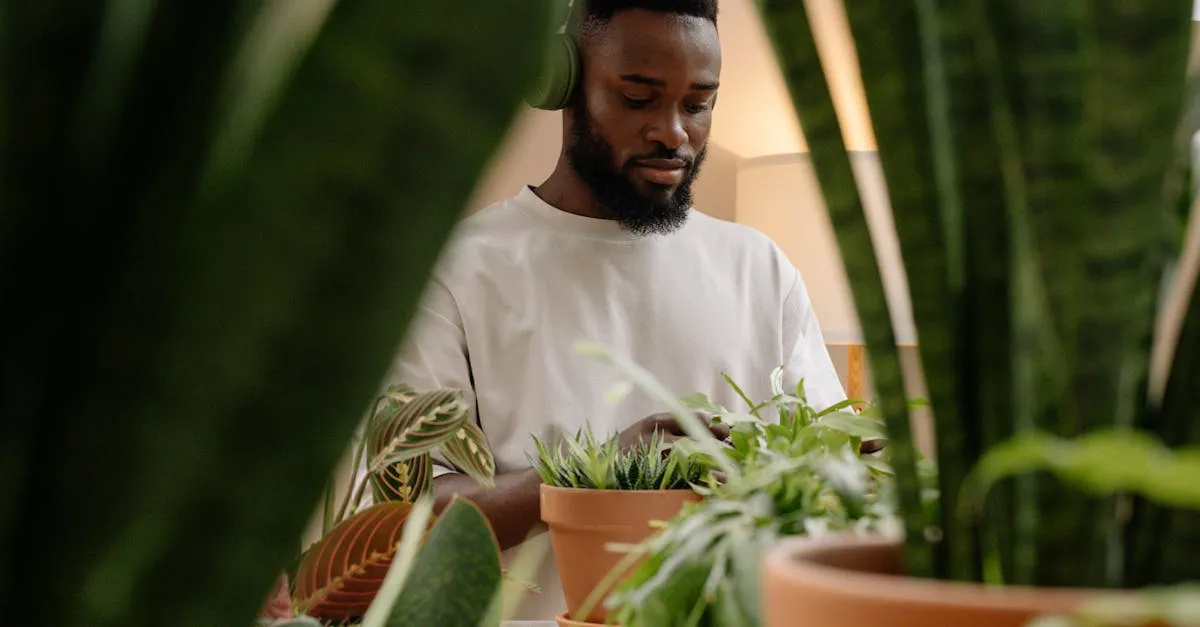
When people ask about houseplants and mental health, they usually picture a room full of greenery making them calmer just by being there. The more honest answer is narrower and more useful: the part most linked to better mood and lower stress is the act of caring for the plant, not simply owning it. A small daily routine, a gentle sense of responsibility, and visible progress are the ingredients that seem to do the work.
That distinction matters because it tells you what to do. You do not need a jungle. You need one or two plants you actually tend.
What the studies measured, and what they did not
Most of the research here is small, short, and measures specific things rather than “happiness”. Keep that in mind when you read confident claims online.
Stress markers during a task. A frequently cited Japanese study had young adults repot a plant or do a computer task, then measured blood pressure and nervous-system activity. The plant task left them feeling more comfortable and soothed. It measured a brief physiological response, not a cure for anything.
Mood and attention restoration. Studies on indoor plants in offices and hospital rooms report modest improvements in self-reported mood, perceived stress, and attention. These rely heavily on questionnaires, which are honest but soft data.
Active care versus passive viewing. Where researchers compare doing something with the plant against just looking at it, the active version tends to show the stronger effect. This is the thread that runs through the more reliable findings: engagement beats decoration.
So the evidence points one way without being dramatic. Plant care is associated with small, real benefits in stress and mood. It is not a clinically proven treatment, and the studies are not large enough to promise it will work for you.
Why the routine does the heavy lifting
A few features of plant care line up well with what helps people feel steadier day to day.
A small, repeatable routine. Checking a plant each morning is a low-stakes anchor. It gives a shapeless day a tiny fixed point, which is part of why people find it grounding.
Responsibility you can meet. A houseplant needs enough care to feel like it depends on you, but not so much that you will fail. That gap is where a quiet sense of competence grows. A forgiving beginner plant keeps that gap manageable.
Visible, slow progress. A new leaf or a cutting that roots is concrete proof that your attention produced something. Tending a cutting you propagated yourself sharpens that feeling, because the result is clearly yours. Research into specific plants for anxiety relief suggests that certain species may offer a stronger calming effect than others, which is worth considering when choosing your first plant.
A reason to pause and notice. Watering and wiping leaves pulls your focus onto something physical and present, which is the same mechanism behind most simple grounding exercises.
The benefit is in the tending, not the trophy: a plant you check on most days does more for you than a perfect one you ignore.
When plant care adds pressure instead of calm
This is the part marketing skips. For some people, a plant becomes one more thing to keep alive and feel guilty about. If you already feel stretched, a fussy plant that yellows and drops leaves can read as another personal failure rather than a soothing hobby.
That is a normal response, not a flaw in you. If it happens, the fix is usually the plant, not your willpower. Switch to something genuinely hard to kill, such as a snake plant or a ZZ plant, both of which prefer to be left alone. Keep one plant rather than ten. And if caring for living things feels like a burden right now, it is completely fine to skip plants and find calm somewhere else.
How to set it up so it helps
If you want the mood and stress upside without the downside, stack the deck.
Start with one easy plant. Choose for resilience over looks at first. Early success builds the habit; early death kills it.
Put it where you already pass. A plant you see during your normal routine gets tended. One in a spare room gets forgotten. Placement around your daily paths matters more than placement for show.
Keep the routine tiny. A ten-second daily glance and a weekly water is plenty. The point is consistency you can sustain, not effort.
Let it be imperfect. Brown tips and the odd lost leaf are normal. Treat them as information, not judgement.
Pick one plant and keep checking on it
The mistake to avoid is buying a shelf of plants at once and treating the room as decoration, because the calm comes from the small daily tending and a crowd of needy pots just becomes another chore. Choose a single forgiving plant, set it where you already walk past each day, and judge it by one thing: whether you are still glancing at it a month from now. If you are, add a second; if you are not, the plant was wrong, not you.
Where to go next
Houseplants for Anxiety: Which Plants Help and Why
Whether houseplants genuinely help with anxiety, what the evidence shows, which plants people find most calming, and how to use plants to create a calmer space.
Can Houseplants Reduce Stress?
This is the one wellbeing claim with reasonable evidence behind it. Here is what the research shows and how to get the benefit.
Houseplants and Vastu: Where to Place Plants for Good Energy
A plain guide to placing houseplants by Vastu Shastra, which directions and rooms it favours, with an honest note on what the tradition actually promises.
Not sure what plant you have? Identify it from a photo and we will point you at its care guide.
Sources
- Lee, M. S., Lee, J., Park, B. J. & Miyazaki, Y. (2015). Interaction with indoor plants may reduce psychological and physiological stress by suppressing autonomic nervous system activity in young adults: a randomized crossover study. Journal of Physiological Anthropology, 34, 21.
- Raanaas, R. K., Evensen, K. H., Rich, D., Sjostrom, G. & Patil, G. (2011). Benefits of indoor plants on attention capacity in an office setting. Journal of Environmental Psychology, 31(1), 99-105.
- Kaplan, S. (1995). The restorative benefits of nature: Toward an integrative framework. Journal of Environmental Psychology, 15(3), 169-182.