How to Propagate Hoya from Cuttings in Water or Soil
A step-by-step guide to propagating hoya from stem cuttings in water or soil, including where to cut and how long roots take.
Some links in this guide go to Amazon. As an Amazon Associate we earn from qualifying purchases, at no extra cost to you. How this works.
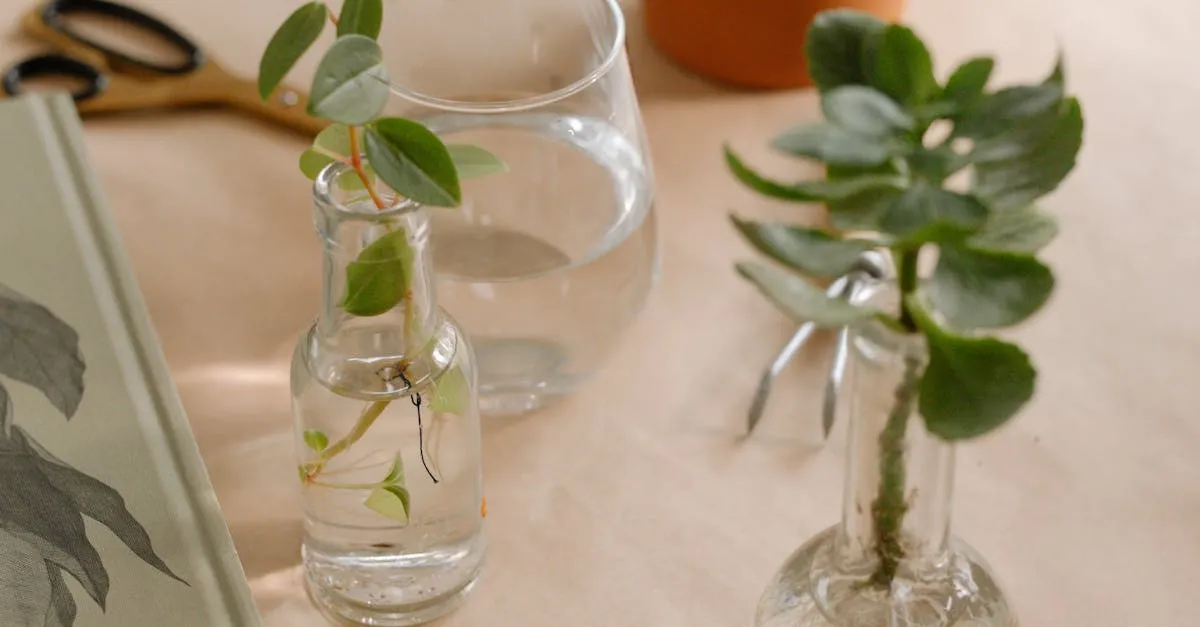
Hoyas propagate well from stem cuttings, and the method is not complicated. The thing that trips most people up is patience: the answer to how to propagate hoya is mostly to take a good cutting, give it warmth and light, and then leave it alone while it roots on its own slow schedule. Disturbing the cutting to check progress does more harm than waiting ever does.
Quick answer
Take a stem section, never a single leaf. Every cutting must include at least one node, the small bump where a leaf, root, or new vine emerges, because it is the only part that can grow roots. A lone hoya leaf can sit for months and even push out a few roots, but with no node it will never produce a vine, which is the trap with heart-shaped Hoya kerrii leaves sold on their own. Cut about half an inch (1 cm) below the lowest node with clean, sharp scissors and strip the leaf off that node. Water, a light airy mix, and damp sphagnum moss all work. Hoyas root fastest at around 70 to 80°F (22 to 26°C) and usually take four to eight weeks, sometimes longer in cooler months. Pot up once there are two or three roots 3/4 to 1 1/2 inches (2 to 4 cm) long, and resist lifting the cutting to check, since every tug breaks the new root tips and resets the clock.
What makes a cutting work: the node
A node is the small bump on the stem where a leaf, root, or new vine emerges. It is the only part of the cutting that can grow roots, so every cutting you take must include at least one.
This is where honesty matters. A single hoya leaf, even a perfect one, will not become a plant. Hoya leaves can sit in water or soil for months and look fine, sometimes even pushing out a few roots, but with no node they have no growth point and will never produce a vine. This is the famous trap with the heart-shaped Hoya kerrii leaf sold on its own: it stays alive as a curiosity but does not develop. Always take a stem section, not a leaf.
Choose a healthy vine and cut a section with one or two nodes and a couple of leaves. Cut about half an inch (1 cm) below the lowest node with clean, sharp scissors. If the lower node has a leaf, remove that leaf so the node sits bare against water or soil. Older, slightly woody stems root more reliably than very soft new growth.
Rooting in water versus soil
Both methods work for hoyas. The choice is about what you can watch and what you can leave alone.
Water. Place the cutting in a small jar so the bare node is submerged and any remaining leaves stay dry. Keep it in bright, indirect light and top up the water as it evaporates. Change the water every week or so to keep it fresh. Water rooting lets you see progress, which is reassuring with a slow plant, but water roots are slightly different from soil roots and the cutting will need a short adjustment period after potting.
Soil. Push the node into a light, airy mix and keep it lightly moist, never wet. A hoya wants a chunky blend with bark or perlite, much like the potting mix you would choose for an established plant. Soil rooting skips the transplant shock but hides what is happening, so resist the urge to tug the cutting.
Sphagnum moss. Damp moss in a small pot or a covered container is a good middle path. It holds steady moisture and air, and the roots it produces transfer to soil easily.
Whichever you choose, warmth speeds everything up. Hoyas root fastest at around 70 to 80°F (22 to 26°C), and a humid spot helps the cutting hold on while it has no roots.
Why patience beats checking
Hoyas root slowly. Pothos or philodendron cuttings can root in two weeks, but a hoya often takes four to eight weeks, sometimes longer in cooler months. This is normal and not a sign of failure.
The most common mistake is repeatedly lifting the cutting to inspect the node. Every tug breaks the fragile new root tips and resets the clock. A cutting that is left undisturbed will almost always outpace one that is checked weekly.
A hoya cutting that looks like it is doing nothing is usually doing exactly what it should.
As long as the leaves stay firm and the stem stays green, the cutting is fine. Shriveled leaves or a mushy, blackening stem mean it has failed, and no amount of waiting will reverse that.
Timing the move to a pot
Move the cutting only when it has a small cluster of roots, not a single thread. Aim for two or three roots that are 3/4 to 1 1/2 inches (2 to 4 cm) long. That root mass is enough to support the plant in soil.
Pot into a small container with a chunky mix and water it in. Keep the freshly potted cutting slightly more humid and out of direct sun for the first two weeks while it settles. Do not feed it yet: wait until you see new leaf growth before you start fertilizing, and even then keep it gentle.
A common worry at this stage is whether the new plant will ever bloom. It will, but not soon. Hoyas flower only on mature growth, so a young propagation needs a year or more before flowering is realistic.
Start cuttings when the warmth is on your side
If you can choose your moment, take hoya cuttings in late spring or summer, when steady warmth pushes roots out in weeks rather than months. A cutting started in the cold half of the year is not doomed, but it will sit far longer with no roots, which is exactly when impatient hands and cold windowsills do the most damage. Set one or two cuttings going, label the date, and treat the wait as the normal part of the process rather than a problem to solve.
Where to go next
How to Propagate Pothos from Cuttings in Water or Soil
Step by step instructions for propagating pothos from cuttings in water or straight into soil, plus when to pot rooted cuttings up.
Best propagation stations for houseplants
A buying guide to propagation stations: which vessel suits water rooting, what actually helps roots form, and when a jam jar does the same job for free.
Do You Need Rooting Hormone to Propagate Houseplants?
What rooting hormone does, which cuttings actually benefit from it, and an honest take on whether most houseplant propagation needs it at all.
Not sure what plant you have? Identify it from a photo and we will point you at its care guide.