Why Do My Houseplant Leaves Drip Water? Guttation Explained
Those water droplets on your plant's leaf tips are usually guttation, a normal process, but they can also signal overwatering; here is how to tell.
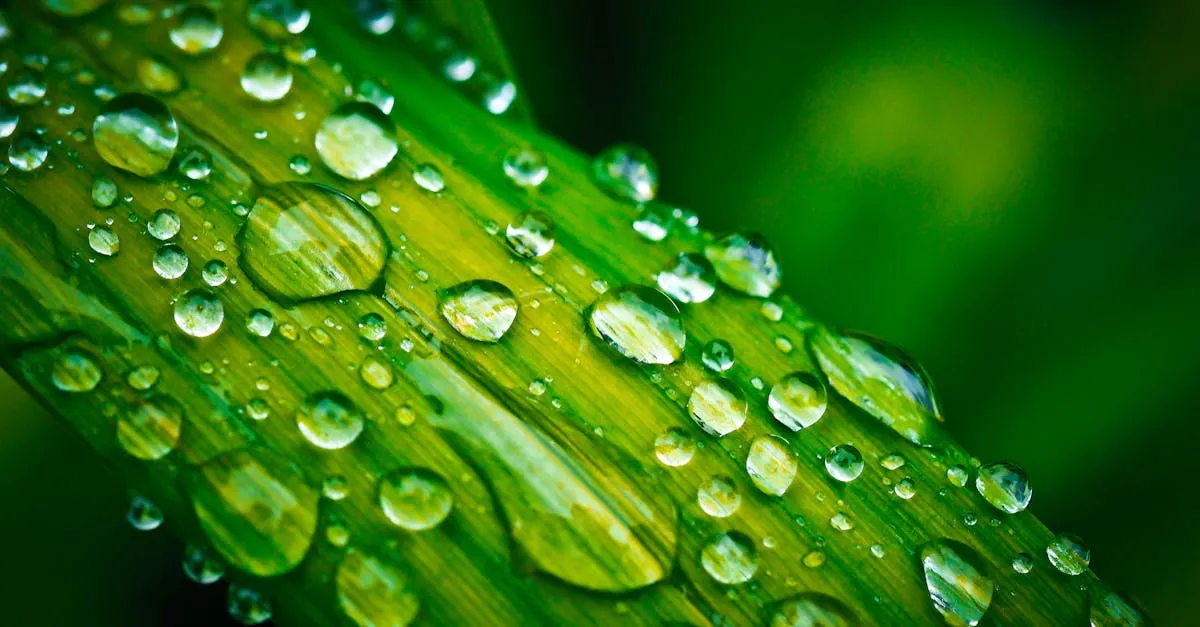
You wake up, glance at your monstera, and find tiny droplets clinging to the leaf edges, sometimes a small puddle on the floor below. If you have ever wondered why houseplant leaves drip water, the honest answer is reassuring: in almost every case the plant is doing something completely normal called guttation, and it is not a sign of disease.
Why houseplant leaves drip water in the first place
Guttation is the plant pushing out excess water through tiny pores at the leaf margins or tips, called hydathodes. It happens mostly overnight. When the soil is moist and the air is still, the roots keep absorbing water by root pressure even though the leaves have closed their stomata and stopped transpiring. That water has to go somewhere, so it is forced out as droplets.
You will see it most on plants that move a lot of water and have soft, lush leaves:
- Aroids. Monstera, pothos, philodendron, and peace lilies are classic droppers, often beading along the leaf edge or at the pointed tip.
- Strawberry, taro, and many tropical foliage plants. Anything with broad, thin leaves and a vigorous root system.
- Grasses and seedlings. Less relevant indoors, but the same mechanism.
Succulents, snake plants, and other slow, water-thrifty plants rarely guttate, because they simply do not push that much water.
Guttation versus condensation
These two are easy to confuse, and the difference tells you whether the water came from inside the plant or from the air.
Guttation appears as distinct droplets at specific points: the leaf tips and edges, where the hydathodes sit. The drops are often slightly sticky or leave a faint white or pale crust when they dry, because they carry traces of minerals and sugars from the plant’s sap.
Condensation forms a fine, even mist or scattered beads across the whole leaf surface, including the center. It comes from the air, not the plant, and shows up when a cool leaf meets warm, humid air, for example near a window on a cold morning or under a propagation cover. Condensation is pure water and dries clean.
If the droplets sit only at the edges and tips, it is guttation. If the whole leaf is damp, it is condensation.
When dripping is telling you something
Occasional guttation needs no action at all. But if your plant drips heavily, night after night, treat it as a hint about your watering and feeding, ranked here from most to least likely.
You are watering too much. Persistent, generous guttation usually means the soil stays wet enough to keep root pressure high around the clock. This is the same overwatering pattern that leads to yellowing leaves and, eventually, root rot. Let the top inch or two (3 to 5 cm) of mix dry out between waterings and check that the pot drains freely. Our guide on how to water houseplants covers the timing.
You are over-fertilizing. If the dried droplets leave a noticeable crusty or sticky residue, the sap is carrying surplus salts. That points to too much feed building up in the soil. Scale back, and flush the pot with plain water to leach out the excess. See how to fertilize houseplants for sensible amounts.
The droplets are leaving marks. The mineral residue can occasionally dry into small pale or brown spots where droplets pool on lower leaves. This is cosmetic, not an infection. Wiping the leaves and easing off on water and feed clears it up.
Guttation is the plant venting pressure, not bleeding: the fix is almost always less water, not medicine.
One genuine caution: that sap residue can be mildly toxic to curious pets that lick it, and it is sticky underfoot. Wipe up puddles and keep an eye on chewers. If you are choosing plants with animals around, our pet-safe houseplants guide helps.
What it is not
It is not a fungal or bacterial disease, and it is not sap loss harming the plant. Despite what some forums suggest, healthy guttation does not need a fungicide or any treatment. Disease shows up as spreading discolored patches, soft rot, mold, or a foul smell, none of which look like clean droplets lined up along a leaf edge.
What to watch for next time the droplets appear
Treat the droplets as a reading on your watering rather than a problem to cure: a few drops now and then mean nothing, but the same plant weeping every single night is asking you to let the soil dry further before the next drink. The one move to resist is reaching for a fungicide, which does nothing for a pressure problem and only adds chemicals your plant never needed. Keep a cloth handy through the warm, humid months, when vigorous root growth makes guttation most common, and wipe up any puddles before pets or bare feet find them.
Where to go next
Guttation: Why Your Houseplant Drips Water at Night
Those water drops on leaf tips in the morning are guttation, not sweat or dew. What causes it, when it is harmless, and when it hints at overwatering.
Overwatering vs Underwatering Houseplants: How to Tell
How to tell whether a drooping, yellowing, or crispy houseplant is overwatered or underwatered, the key differences to look for, and what to do next.
How Often Should You Water Succulents?
How to water succulents by season, soil, and pot rather than a fixed schedule, plus how to read the leaves for signs of thirst.
Not sure what plant you have? Identify it from a photo and we will point you at its care guide.