String of Pearls Care: Keeping the Beads Plump, Not Shriveled
How to grow a string of pearls indoors, with the bright light and careful watering that keep the beads round instead of shriveled or mushy.
Some links in this guide go to Amazon. As an Amazon Associate we earn from qualifying purchases, at no extra cost to you. How this works.
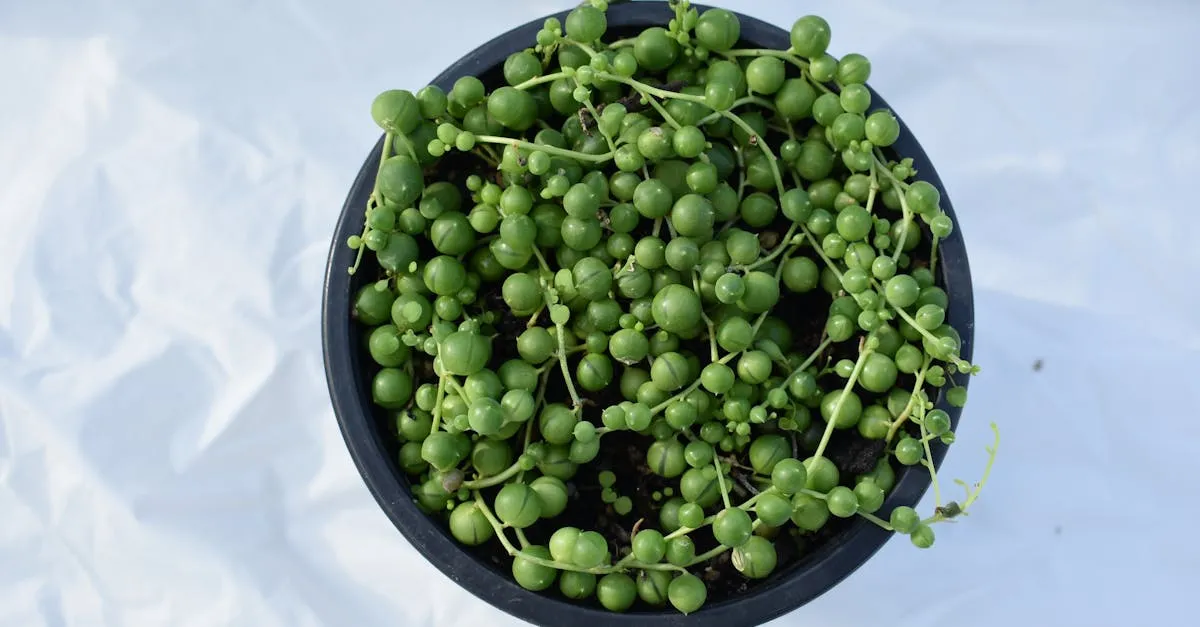
String of pearls (Senecio rowleyanus, sometimes sold as Curio rowleyanus) is a trailing succulent grown for its strands of round, pea-sized leaves. The honest truth about string of pearls care is that it is fussier than most hanging plants: it wants the brightest light in your home and water only when the beads start to lose their roundness. Get those two things right and it largely looks after itself.
Why the pearls are shaped that way
Each bead is a water-storing leaf with a thin translucent stripe down one side, a tiny window that lets light reach the inside while keeping the surface area small in dry conditions. That design tells you what the plant expects: strong light and infrequent water. When you read the beads, you are reading the plant’s water reserves directly. Plump and firm means hydrated. Slightly flattened or dimpled means thirsty. Shriveled and wrinkled means overdue. Translucent and mushy means you have gone too far the other way.
Give it the brightest light you have
This is the part people underestimate. String of pearls needs several hours of direct or very bright indirect light a day, far more than a pothos or a peace lily. An east or south-facing windowsill is ideal; a few hours of gentle morning sun is welcome, though harsh midday summer sun through glass can scorch the beads.
The classic failure is a plant in a pretty macramé hanger across the room from a window. In low light the strands grow with wide gaps between the beads, the new growth is small and pale, and the plant slowly thins out. This is the same stretching you see in other succulents, explained in why is my succulent stretching. If your brightest window is not bright enough, especially through winter, a grow light closes the gap reliably.
Water only when the beads start to flatten
Water thoroughly, let the excess drain, then wait until the top inch or two (3 to 5 cm) are dry and the beads look slightly less round before watering again. In a bright spot through summer that often means every couple of weeks; in winter it can stretch to once a month or less. There is no fixed schedule, which is why reading the beads matters more than the calendar. The same logic applies to most succulents, covered in how often to water succulents.
When in doubt, leave it: a thirsty string of pearls recovers in a day, but a waterlogged one rarely does.
Overwatering is the most common way these plants die. The shallow, fine roots sit wet, suffocate, and rot, and by the time the beads turn to mush at soil level the damage is done. If yours is already soft and translucent, why is my succulent soft and mushy walks through what to check.
Soil and pot that drain fast
Use a gritty, free-draining mix: a standard succulent or cactus compost, or regular potting mix cut with perlite or coarse sand. The pot must have a drainage hole. Terracotta helps because it dries the rootball faster than plastic or glazed ceramic, which buys you margin against overwatering. Because the roots are shallow, a wide, shallow pot suits the plant better than a deep one, and it does not need repotting often.
Keeping the strands full, not stringy
A plant that thins out can be made fuller. Trim any leggy or bare strands, and lay the cuttings on top of the soil in the same pot: each bead can root where it touches the compost, filling gaps from within. Pinching the growing tips encourages branching too. Cuttings root easily, the same way as other succulents in how to propagate succulents. One marketing claim worth ignoring: string of pearls is not a low-light or beginner plant, whatever the shop tag says. It is straightforward, but only once it has enough light.
A note on pets
The whole Senecio genus is toxic if eaten, and trailing strands are exactly the sort of dangling thing a cat will bat at. Hang it well out of reach, or choose something from the pet-safe houseplants list if curious animals share the room.
Make a habit of pinching a bead
Once a week, give a single bead a gentle squeeze: firm means leave it, soft and yielding means water. Plants enjoying brighter light through spring and summer drink faster than you expect, so check more often as the days lengthen and ease right back as autumn light fades. Stay in that weekly rhythm and you will rarely reach either the shriveled or the mushy extreme that catches most owners out.
Where to go next
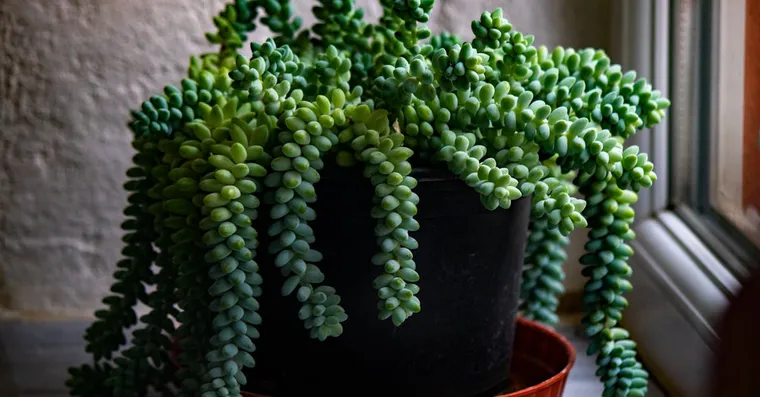
9 Best Trailing and Hanging Houseplants
The best trailing houseplants spill from shelves and hanging pots with long vines. Here are nine, from near-indestructible to the more demanding trailers.
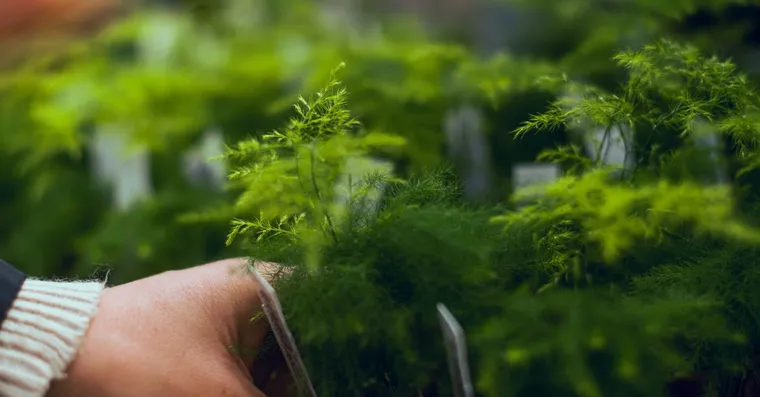
Asparagus Fern Care: Not a Fern, and It Has Thorns
Asparagus fern is not a fern, it is toxic to cats and dogs, and mature stems carry spines. Here is how to grow it and what to know first.
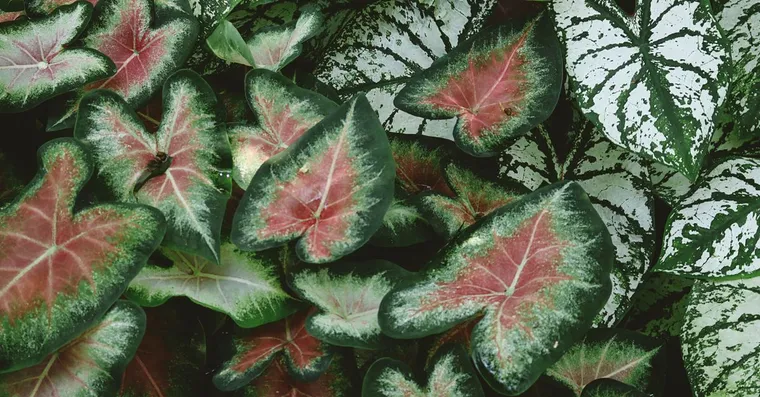
Caladium Care: Bright Leaves, Winter Dormancy, and Toxic Sap
Caladiums die back every winter and that is normal, not failure. Here is how to grow the tubers indoors and why they need care around pets.
Not sure what plant you have? Identify it from a photo and we will point you at its care guide.