7 Best Plants for a Kitchen Windowsill and Countertop
The best kitchen plants handle warmth, humidity from cooking, and the odd splash, and stay compact on a windowsill. Here are seven that suit a kitchen.
Some links in this guide go to Amazon. As an Amazon Associate we earn from qualifying purchases, at no extra cost to you. How this works.
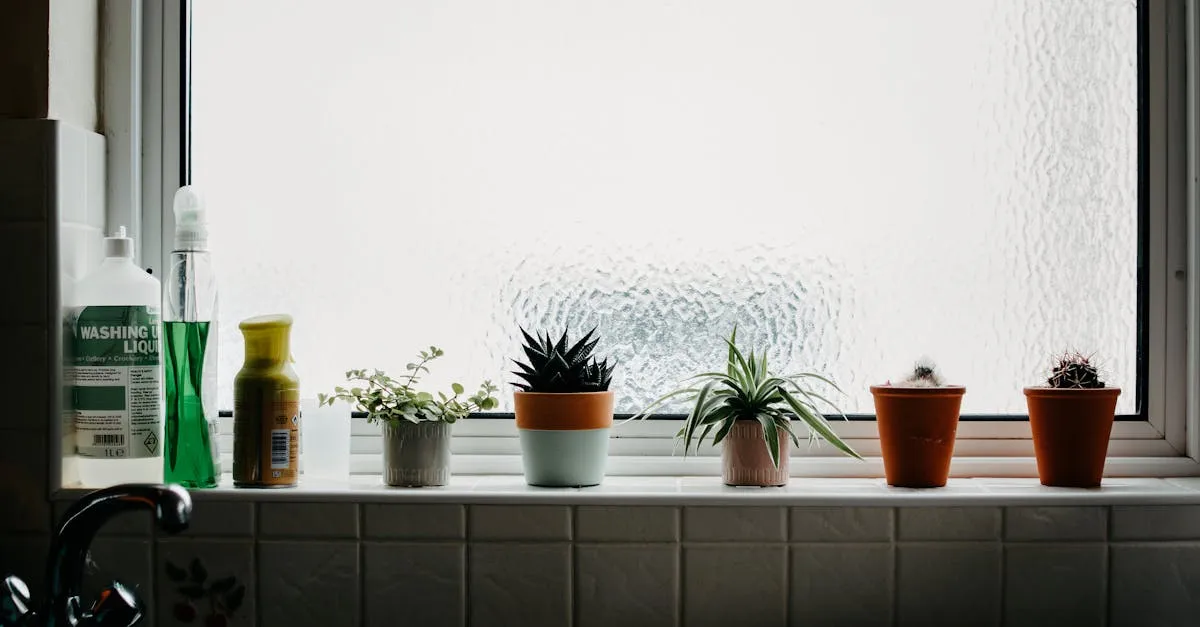
A kitchen asks more of a plant than most rooms: warmth that swings when the oven is on, humidity that spikes at the sink and drops elsewhere, a film of cooking grease on every surface, and very little spare countertop. The plants below all handle that, and they are ordered roughly easiest first, ending with a couple that ask slightly more attention. If you want the best kitchen plants for a bright sill or a crowded countertop, this is a short, honest list rather than a long one. If your kitchen is on the small side, the guide to houseplants for small spaces has compact picks that suit tight countertops and narrow sills.
How these plants were chosen
Every plant here tolerates temperature swings and the occasional draft from an opening door or window. Each one copes with variable humidity rather than needing a steady tropical level, because a kitchen is wet at the sink and dry by the stove. They stay compact, trail neatly, or grow upright, so they fit a windowsill or sit on a shelf without taking the countertop you need for chopping. Most are forgiving of missed waterings, since a kitchen plant is easy to forget while you cook. Where a plant is toxic to cats or dogs, that is flagged, because kitchens are where pets gather.
The seven plants, easiest first
Aloe vera
Aloe barbadensis miller. Aloe earns its place by the stove for a practical reason: snap a leaf and the gel inside soothes a minor burn or scald, which is the kind of small injury a kitchen produces. It wants the brightest spot you have, ideally a south or west sill, and a gritty mix that drains fast. Water only when the soil is dry right through, roughly every two to three weeks, and less in winter, because the commonest way to kill aloe is overwatering. It is mildly toxic to cats and dogs if eaten, so keep it off a countertop a curious pet can reach. See the full aloe vera care guide for potting and light detail.
Pothos
Epipremnum aureum. Pothos trails happily from a high shelf or the top of a cupboard, which keeps your countertop clear while still adding greenery at eye level. It grows in low light or bright indirect light, tolerates you forgetting it, and tells you plainly when it is thirsty by drooping, then recovers within hours of a drink. Wipe the leaves now and then, because a greasy film blocks light and the plant grows slower for it. Pothos is toxic to cats and dogs, so hang it where trailing stems stay out of reach. The pothos care guide covers watering rhythm and propagation.
Spider plant
Chlorophytum comosum. A spider plant suits a kitchen because it shrugs off temperature swings and dry air, and its arching leaves and dangling plantlets look good spilling from a shelf. Give it bright indirect light and water when the top inch or two (3 to 5 cm) of soil dry out. Brown leaf tips are common and usually point to fluoride or chlorine in tap water, so leaving water to stand overnight before using it helps. Best of all, it is non-toxic to cats and dogs, a genuine plus in a room they frequent. The spider plant care guide explains how to pot up the babies.
Snake plant
Dracaena trifasciata. The snake plant grows straight up, so it fits a narrow sill or a corner of the countertop without spreading into your workspace. It handles low light, bright light, irregular watering, and the warmth near appliances without complaint, which makes it one of the toughest plants you can own. Water sparingly, letting the soil dry fully between drinks, as soggy roots are its only real weakness. It is mildly toxic to pets if chewed. The snake plant care guide has the full watering schedule.
Heartleaf philodendron
Philodendron hederaceum. This is a softer, faster-trailing cousin of pothos, ideal draped from a high shelf where its heart-shaped leaves can hang clear of the countertop. It prefers bright indirect light but copes with less, and it wants watering when the top of the soil dries. Pinch back leggy stems to keep it full rather than straggly. It is toxic to cats and dogs, so site it out of reach. The heartleaf philodendron care guide covers pruning and support.
Peace lily
Spathiphyllum wallisii. A peace lily brings white flowers and broad green leaves, and it actually appreciates the higher humidity near a kitchen sink. It flags dramatically when thirsty and perks up soon after watering, so it is easy to read, though letting it wilt repeatedly stresses it. Keep it out of direct sun, which scorches the leaves, and wipe dust and grease off the broad foliage so it can breathe.
A drooping peace lily is asking for water, not dying, but make a habit of it and you will weaken the plant.
It is toxic to cats and dogs. See the peace lily care guide for watering and flowering.
ZZ plant
Zamioculcas zamiifolia. The ZZ plant is here last only because its glossy leaves collect kitchen grease readily, not because it is hard: it tolerates low light, neglect, and heat better than almost anything. Its thick rhizomes store water, so it wants watering only when the soil is fully dry, every two to three weeks at most. Wipe the leaves regularly to keep that shine and let light through. It is widely reported as toxic to pets due to its calcium oxalate crystals. The ZZ plant care guide has the detail.
What a kitchen still demands
Light is the thing a kitchen most often lacks, because countertops sit below windows and wall units cast shade. Put the brightest-loving plants, aloe especially, on the sill itself and keep the tougher low-light plants on the countertop or a shelf. The other recurring problem is grease: cooking throws a fine oily film onto nearby leaves, and it builds up faster than ordinary dust. Wipe foliage with a damp cloth every couple of weeks so the plant can photosynthesize properly, as covered in how to clean houseplant leaves. Keep plants a little back from a hot stove and away from the direct path of an open window in winter.
Match the plant to the spot, not the other way round
Before you buy, look at where the plant will actually live: a bright sill suits aloe, while a shaded countertop is better served by pothos, a snake plant, or a ZZ. Buy for the spot you have rather than the plant you fancy, wipe cooking grease off the leaves every couple of weeks, and resist watering on a fixed schedule, because soggy roots in a warm kitchen are the quickest way to lose any of these.
Where to go next
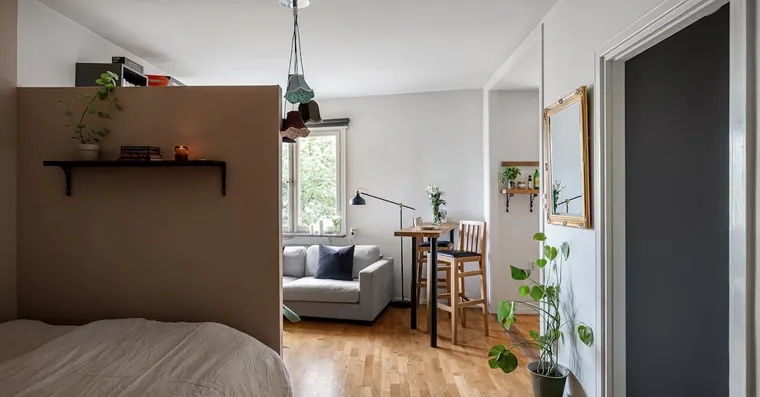
8 Best Houseplants for Small Spaces
The best houseplants for small spaces are compact, adaptable, and do not take over a room. Here are eight that suit flats, shelves, and tight corners.
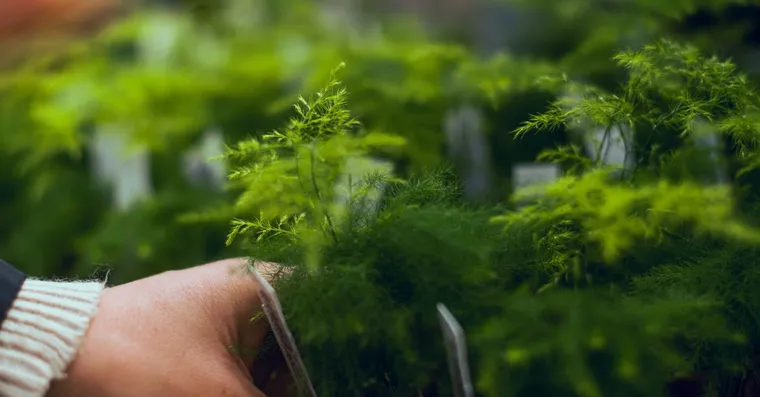
Asparagus Fern Care: Not a Fern, and It Has Thorns
Asparagus fern is not a fern, it is toxic to cats and dogs, and mature stems carry spines. Here is how to grow it and what to know first.
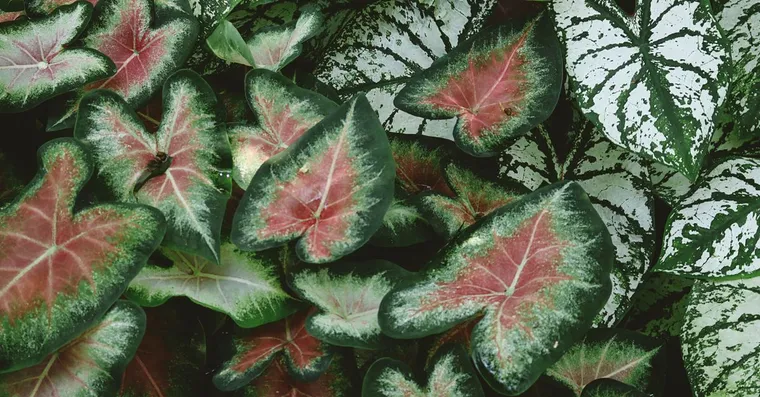
Caladium Care: Bright Leaves, Winter Dormancy, and Toxic Sap
Caladiums die back every winter and that is normal, not failure. Here is how to grow the tubers indoors and why they need care around pets.
Not sure what plant you have? Identify it from a photo and we will point you at its care guide.
Frequently asked questions
What are the best plants for a kitchen?
Seven reliable picks, easiest first: aloe vera, pothos, spider plant, snake plant, heartleaf philodendron, peace lily, and ZZ plant. All of them handle a kitchen's temperature swings, variable humidity, and occasional missed waterings, and they stay compact, trail from a shelf, or grow upright so they do not take over the countertop.
Which kitchen plants are safe for cats and dogs?
Of these seven, only the spider plant is non-toxic to cats and dogs. The others are toxic to pets if chewed, so put them on a high shelf or somewhere a curious animal cannot reach, which matters in a room where pets tend to gather.
Why do kitchen plant leaves need wiping?
Cooking throws a fine oily film onto nearby leaves, and it builds up faster than ordinary dust. That greasy layer blocks light and slows growth, so wipe the foliage with a damp cloth every couple of weeks so the plant can photosynthesize properly.
Where should plants go in a kitchen?
Match the plant to the spot. A bright south or west sill suits aloe, while a shaded countertop or high shelf is better served by pothos, a snake plant, or a ZZ. Keep plants a little back from a hot stove and out of the direct path of an open window in winter.