Peperomia Care: A Guide to the Easy Radiator Plants
A care guide for peperomia, the compact semi-succulent houseplants, covering light, the watering habits that prevent rot, and why they stay small.
Some links in this guide go to Amazon. As an Amazon Associate we earn from qualifying purchases, at no extra cost to you. How this works.
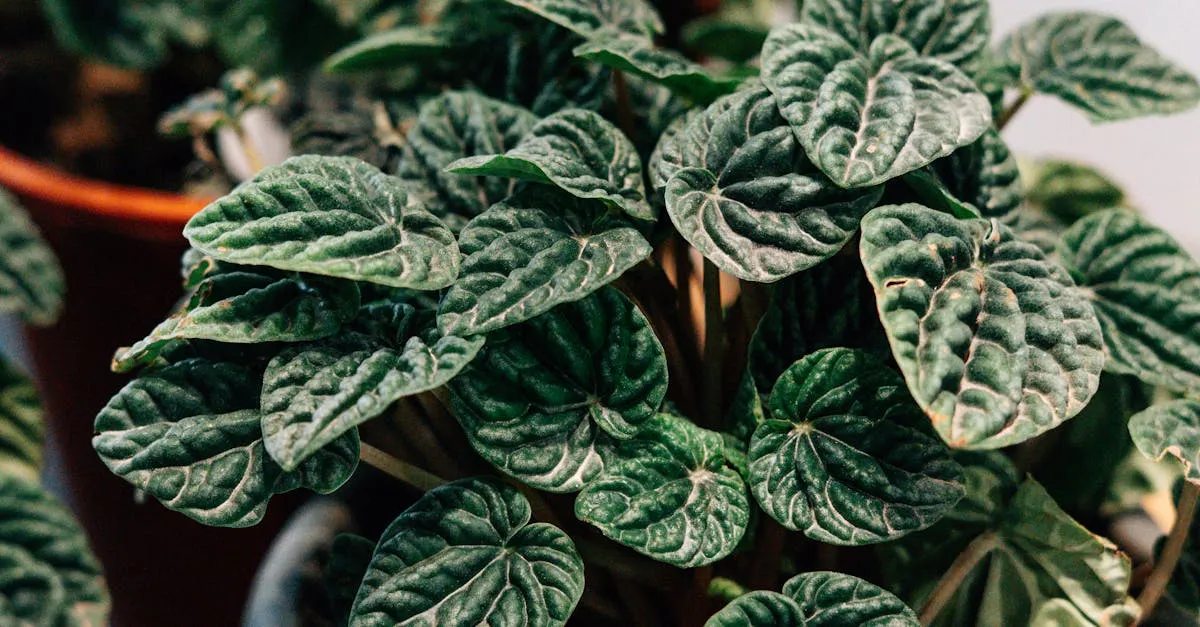
Peperomias are some of the most forgiving houseplants you can grow, and the secret is to stop treating them like typical foliage plants. Good peperomia care starts with one mental shift: think of them as semi-succulents. Their thick, slightly fleshy leaves store water, so they want medium to bright light and a soil that dries out between drinks, not constant moisture.
Why peperomia behaves like a succulent
Peperomias come from the understory of tropical forests, often growing on rotting logs or rocky pockets rather than deep soil. That history explains almost everything about how to look after them. They have small root systems, so they hate sitting in a large, soggy pot. Their leaves hold a reserve of water, so they tolerate the odd missed watering far better than they tolerate too much.
This is good news for you. A peperomia rarely demands the fussing that a calathea or a fern asks for. Get the light and water roughly right and it will quietly carry on for years. It also tolerates the low humidity found in most homes without complaint, which makes it genuinely low-maintenance rather than just low-maintenance in good conditions.
The five types you will actually find
Most shops sell four or five species under the peperomia label. Their care is nearly identical, but each has one genuine quirk worth knowing.
| Type | Leaf character | One gotcha |
|---|---|---|
| Obtusifolia (baby rubber plant) | Thick, glossy, upright; often cream-edged variegated forms | Most tolerant of the lot; variegated forms fade in low light |
| Argyreia (watermelon peperomia) | Teardrop leaves with silver-green stripes on red stems | Needs brighter indirect light than the others to hold stripe contrast |
| Caperata (ripple peperomia) | Heart-shaped with deep crinkles | Must be bottom-watered; water poured from above pools in crevices and rots the crown |
| Polybotrya (raindrop peperomia) | Large, coin-shaped, glossy | Slow grower; do not overwater chasing faster growth |
| Prostrata (string of turtles) | Small, tortoiseshell-patterned, trailing | Needs a hanging pot; stems snap at a hard rim |
If you want to multiply any of these, leaf-cutting propagation works well for most peperomia types, with a few species-specific tweaks covered below.
Light: medium to bright, no direct midday sun
Bright, indirect light is the sweet spot. A spot near an east or north-facing window, or 3 to 6 feet (1 to 2 m) back from a brighter one, keeps growth compact and leaf markings strong.
Medium light is fine, but expect slower growth. Peperomias survive in lower light better than most variegated plants, though a cream-edged obtusifolia or a watermelon peperomia will fade and stretch if it is too dim. If your room is genuinely dark, see our low-light houseplant list for tougher options.
Avoid harsh, direct sun. A few hours of soft morning sun is tolerated, but hot midday light through glass scorches the leaves.
Watering: the one thing that actually matters
Overwatering is the only common way to kill a peperomia. Everything else it shrugs off.
Water a peperomia like a succulent, not like a fern: let the soil dry out, then soak it thoroughly.
Wait until the top half of the pot has dried before watering again. The practical test: push your finger 2 inches (5 cm) into the soil. If it feels dry and gritty at that depth, water now. If it still feels cool and damp, wait another three or four days and test again. When you do water, soak until it runs freely from the drainage holes, then tip away anything left in the saucer. In a bright spot in summer that might mean every seven to ten days; in winter it can stretch to every two or three weeks. Always go by the soil, not the calendar.
Drooping: thirst or overwatering?
A drooping peperomia is not always thirsty. Run two checks before reaching for the watering can.
Check 1: finger test at 2 inches (5 cm). Dry and gritty at that depth points to thirst. Cool and damp means there is still water in the root zone and more will make things worse.
Check 2: lift the pot. A waterlogged peperomia feels heavy for its size because the soil is saturated. A thirsty plant in a small pot feels almost weightless.
Check 3: the taco test. Lucy Liu, at her London nursery, gently folds a lower leaf in half as her first physical check: a firm leaf that resists bending signals root suffocation from excess water, while a leaf that folds easily like a soft tortilla signals genuine thirst. Lucy finds customers make things worse by assuming a droopy peperomia is thirsty and watering one that is already drowning, turning the stems to jelly within days.
The translucent leaf edge tell. If leaf edges look pale, watery, or slightly see-through, the cells have burst from excess water, not drought. This is an overwatering symptom. See our guide to overwatering vs underwatering houseplants for the full comparison. If the stems at the base have also gone soft or mushy, move directly to root rot treatment; drying the soil alone will not be enough.
Leaf-cutting propagation that works
Peperomia propagates easily from a single leaf, but the method matters.
Take a healthy, mature leaf and leave about 3/8 inch (1 cm) of petiole (the short stalk connecting leaf to stem) attached. Cut cleanly with a sterile blade, a blunt or torn cut introduces bacteria. Bury the petiole 3/8 inch (1 cm) deep in moist perlite, not standard potting compost. Compost compacts around the tiny developing roots and holds too much moisture; perlite stays airy and gives the cutting room to establish. Place a loose plastic bag over the pot to hold humidity and set it in bright indirect light at about 70°F (20 to 22°C).
Do not water again until you see a new small leaf emerging at the base of the petiole, typically after 6 to 8 weeks. Watering before that point before roots have formed almost always causes the cutting to rot. Once growth appears, remove the bag, pot up into a small pot with a gritty mix, and treat it as a mature plant.
One species note: watermelon peperomia cuttings often produce plain green leaves at first. The striped pattern returns as the plant matures, so do not discard them early. The full method is covered in our leaf-cutting propagation guide; the steps above are the peperomia-specific deviations worth keeping in mind.
The flower spikes: ignore or remove?
Thin, green, rat-tail spikes appearing from among the leaves are peperomia flowers. They are odorless, harmless, and not a sign of stress or a plant pushing itself into survival mode. Caperata produces them most reliably; other species do occasionally. Remove them if you dislike the look by snipping cleanly at the base. Leaving them does no horticultural harm. They will not weaken the plant or prompt it to stop growing.
When to repot and the pot-size rule
Repot only when the roots give you a clear signal. That means roots circling visibly inside the pot when you unpot it, or roots pushing through the drainage holes. For most peperomias that is every two to three years. Repotting on an annual schedule, because “it seems about time”, usually means moving a plant into a pot too large for it.
Go up exactly one size. If the current pot is 4 inches (10 cm) in diameter, move to a 4 1/2 inches (12 cm) pot. A 6 inches (15 cm) pot around a small peperomia root ball holds roughly three times the soil volume that can dry out properly. The outer third of that soil stays damp long after the center has been used, creating a permanently wet zone around the roots. That zone is where rot starts.
Pot, soil, and feeding
Use a free-draining mix. A standard houseplant compost cut with a third perlite or orchid bark stops the roots staying wet. Our guide to choosing a potting mix covers good ready-made options.
Feed lightly. A balanced liquid feed at half strength once a month through spring and summer is plenty. These are slow, modest growers and do not need heavy feeding.
Watch the crevices on caperata. Mealybugs like to hide in the crinkled leaves; dab with a cotton bud dipped in diluted isopropyl alcohol if you spot white fluff.
If you enjoy the compact, easy-care habit of peperomia, the related pilea peperomioides is worth a look, though it is a different genus with a slightly different watering rhythm.
Restraint is the whole skill with peperomia
The single thing that separates a peperomia that lives for years from one that turns to jelly is your willingness to leave it alone between waterings, so when in doubt, wait another few days and test the soil again rather than reaching for the can. As the light drops in autumn and winter the soil dries far more slowly, so stretch the gap to every two or three weeks instead of holding to a summer rhythm. Get that one habit right and everything else about these plants looks after itself.
Where to go next
How to Grow Houseplants in Water, No Soil Needed
Which houseplants happily live in just water, how to keep them healthy long term, and the feeding and water changes that prevent rot.
Ponytail Palm Care: The Drought-Tolerant Not-a-Palm
A care guide for the ponytail palm, covering the bright light and very infrequent watering this succulent-like plant needs, despite the palm name.
Yucca Plant Care: Growing the Indoor Yucca Without Root Rot
A care guide for indoor yucca covering light, infrequent watering, and the overwatering mistakes that kill an otherwise nearly indestructible plant.
Not sure what plant you have? Identify it from a photo and we will point you at its care guide.
Frequently asked questions
Why is my peperomia drooping?
Press your finger 2 inches (5 cm) into the soil. Dry and gritty means it is thirsty; cool and damp means it has had too much water. A translucent leaf edge is a sign of overwatering, not drought. Lift the pot: a waterlogged plant feels surprisingly heavy. Mushy stems at the base point to root rot and need immediate action.
Can you propagate peperomia from a leaf?
Yes. Take a healthy leaf with about 3/8 inch (1 cm) of petiole, make a clean cut with a sterile blade, and push it 3/8 inch (1 cm) into moist perlite. Cover loosely with a plastic bag and keep it at about 70°F (20 to 22°C) in bright indirect light. Do not water again until new growth appears at the base, which usually takes 6 to 8 weeks.
Do peperomia flower?
They do. The flower spikes are thin, green, rat-tail-like stems with no scent. They are harmless and not a sign of stress. Remove them if you dislike the look; leaving them does no harm. Caperata produces them most often.
Is peperomia safe for pets?
Peperomia is widely listed as non-toxic to cats and dogs. For a fuller list of safe options, see our pet-safe houseplants guide.