Begonia Care: Light, Watering, and Avoiding Mildew Indoors
How to care for indoor begonias, from rex to cane types, with the light and careful watering that bring out their leaf color without inviting mildew.
Some links in this guide go to Amazon. As an Amazon Associate we earn from qualifying purchases, at no extra cost to you. How this works.
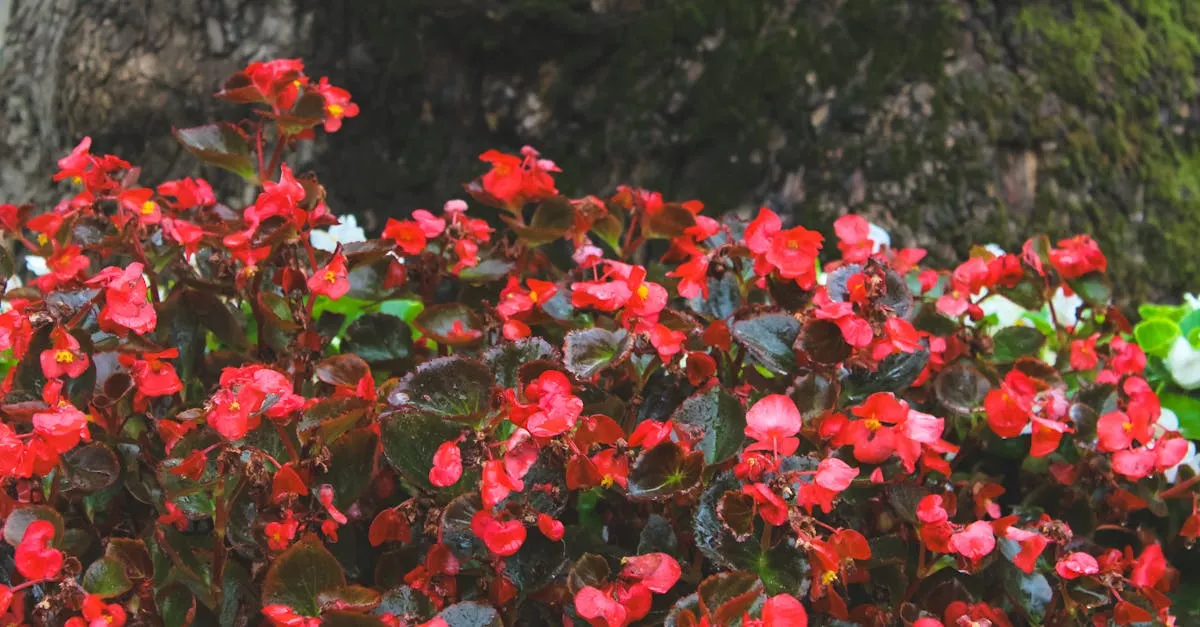
Begonias divide into three distinct groups, and most care problems trace back to treating them as one plant. Get the group right and the care makes sense: bright indirect light, water timed to the soil rather than the calendar, and air that actually moves. Get the watering and airflow wrong and you meet the plant’s one famous weakness, powdery mildew, which is far easier to prevent than to cure.
Which type of begonia do you have?
The three groups each have a clear visual tell at the base.
Cane and angel wing begonias have tall, jointed bamboo-like stems and wing-shaped leaves that are often spotted silver on the upper surface. They are the most sun-tolerant of the three and will produce clusters of flowers when light is good. Watering and airflow slip-ups affect them least.
Rhizomatous types, including all Rex begonias, grow from a fleshy stem that creeps along the soil surface, sending up flat, patterned foliage. They rarely flower indoors. The surface rhizome makes them the most vulnerable to crown rot and the most unforgiving about wet leaves.
Tuberous begonias have a rounded corm underground rather than visible surface roots. Their stems are upright and often large-flowered. When stems begin to yellow at the end of the season, stop watering, let the compost dry fully, store the corm somewhere cool and dry, and restart in spring.
| Group | Stem and base tell | One care rule |
|---|---|---|
| Cane / angel wing | Jointed bamboo-like stems | Most sun-tolerant; will flower |
| Rhizomatous / Rex | Fleshy stem creeping along soil surface | Never wet the leaves or crown |
| Tuberous | Rounded underground corm | Dry winter rest when stems yellow |
Begonia care starts with bright indirect light
Light brings out the color you bought the plant for: the silver banding on a Rex, the polka-dot spotting on a cane type, the deep red undersides. All of it fades in dim corners.
- Bright indirect light is the target. An east-facing window, or 3 to 6 feet (1 to 2 m) back from a brighter one, suits almost all begonias. For a wider guide to reading light levels see how much light houseplants need.
- Avoid midday sun through glass. It scorches thin leaves and bleaches the patterning. A sheer curtain on a south or west window is enough.
- Too little light shows quickly. Stems stretch, new leaves come in smaller and paler, and cane types stop blooming. Move the plant closer to a window before trying anything else.
Rex begonias are grown purely for foliage and rarely flower indoors in any meaningful way, so judge them on leaf color rather than bloom count.
Water at the soil, not the crown
Begonias want steady moisture but rot when left sitting wet. Water when the top 3/4 to 1 inch (2 to 3 cm) of soil feel dry to your finger, then water thoroughly until it drains from the bottom. How often that is depends on your conditions, not a schedule, so check the soil rather than counting days.
The most important habit: pour at the base and keep the foliage and crown completely dry. Two failures look similar but need different fixes:
- Crown rot is a blackened, soft base where the stem meets the soil. It happens when water pools at the crown, most often from overhead watering or a pot with no drainage. Rex and rhizomatous types are at highest risk because the rhizome sits right at the surface. Lucy Liu, at her London nursery, describes a Rex rhizome as a thick, horizontal stem massed with fine hairs, sitting like a large furry caterpillar along the compost. Water poured directly onto that stem gets trapped in the hairs rather than draining away, and the whole crown turns soft and gray within days, which is the clearest practical reason to water around the rim of the pot rather than from above.
- Root rot is mushy dark roots with yellowing top growth, caused by waterlogged compost over days.
See root rot treatment and the overwatering vs underwatering guide to tell the two apart.
Humidity without wet leaves: the Rex problem
Rex and rhizomatous begonias need more humidity than most houseplants, yet they are the most damaged by wet foliage. That combination needs a specific approach.
Misting a begonia raises humidity for minutes and leaves the foliage damp for hours. It treats the symptom you want and feeds the problem you do not.
Raise humidity safely with a pebble tray, by grouping plants together, or with a humidifier. None of these wet the leaves. For a fuller breakdown of safe approaches see the houseplant humidity guide.
Keep the air moving regardless of humidity. A cracked door or a fan running for two hours after you water breaks up the stagnant pockets where mildew spores settle.
Feeding begonias
A balanced liquid fertilizer at half the recommended strength, applied every two weeks from spring through summer, is enough for most begonias. Stop completely from October through to February; feeding during the rest period pushes weak, leggy growth.
Adjust by group: tuberous types stop feeding when stems begin to yellow at season end, even before autumn arrives. Rex and rhizomatous types respond well to a nitrogen-forward formula, which supports the leafy growth they are grown for. For product guidance see best fertilizer for houseplants.
Spotting and stopping powdery mildew
Powdery mildew appears as small round patches of white or gray powder on leaves and stems, usually starting on the upper surface before spreading. It almost always traces back to wet foliage and stagnant air.
Prevent it with three habits:
- Give each plant 12 inches (30 cm) of clear air around it so air can circulate between leaves and neighbors.
- Run a fan for two hours after watering to dry any accidental splash and break up still air.
- Clear fallen leaves from the soil surface as soon as they drop. Leaves sitting on moist compost harbour spores.
If mildew does appear, snip off badly affected leaves and throw them out rather than composting them, so spores do not spread. For step-by-step treatment see powdery mildew on houseplants.
Propagating Rex by leaf section
Rex and rhizomatous begonias root easily from leaf sections without any specialist equipment:
- Cut a healthy, mature leaf into 1 to 1 1/2 inches (3 to 4 cm) squares, making sure each piece includes a section of a main vein.
- Press each square cut-edge-down into moist perlite and compost mix.
- Cover with a clear bag or propagation lid to hold humidity around the cuttings.
- Plantlets emerge in 4 to 8 weeks.
Cane types are simpler: take a stem cutting just below a node and root it in water or moist compost. For the full method on both techniques see how to propagate from leaf cuttings.
Are begonias safe for pets?
Begonias are toxic to cats and dogs. The tubers hold the highest concentration of irritants, though all parts of the plant should be kept out of reach. If you share your home with pets, see pet-safe houseplants for alternatives that carry no risk.
Watering at the rim is the habit that matters most
If you take away a single rule, water around the edge of the pot and keep every drop off the crown and leaves, because that one habit prevents both crown rot and powdery mildew at once. A begonia doing well shows steady, well colored new leaves and firm stems with no white film, so if you spot powder forming, treat it as an airflow problem first and move the plant somewhere the air actually moves. Going into autumn, ease back the water and stop feeding, letting the plant rest rather than push out the soft growth that mildew settles on most readily.
Where to go next

Asparagus Fern Care: Not a Fern, and It Has Thorns
Asparagus fern is not a fern, it is toxic to cats and dogs, and mature stems carry spines. Here is how to grow it and what to know first.
Caladium Care: Bright Leaves, Winter Dormancy, and Toxic Sap
Caladiums die back every winter and that is normal, not failure. Here is how to grow the tubers indoors and why they need care around pets.
English Ivy Indoor Care: Light, Water, and Keeping It Off the Cat
English ivy grows fast indoors and is toxic to cats and dogs. Here is how to keep it healthy, keep it contained, and decide whether to keep it at all.
Not sure what plant you have? Identify it from a photo and we will point you at its care guide.
Frequently asked questions
What type of begonia do I have?
Check the base of the plant. Cane begonias have tall jointed stems with wing-shaped, often spotted leaves. Rhizomatous types, including Rex, have a fleshy stem creeping sideways along the soil surface with colorful patterned foliage growing upright from it. Tuberous begonias have a rounded underground corm rather than visible surface stems, and their growth dies back in winter.
Are begonias toxic to cats or dogs?
Yes. Begonias are toxic to cats and dogs, with the tubers containing the highest concentration of irritants. Keep begonias out of reach of pets, or see the pet-safe houseplant guide for alternatives that carry no risk.
Why does my begonia have white powder on its leaves?
That is powdery mildew, a fungal disease that thrives on still air and damp foliage. The most common causes are overhead watering or misting, crowded plants with no airflow, and low light. Remove badly affected leaves, improve airflow, and stop wetting the leaves. Treat spreading infection with a diluted potassium bicarbonate spray or a horticultural fungicide.