Bird of Paradise Care: Growing Strelitzia as a Houseplant
A care guide for the indoor bird of paradise, covering the bright light it demands, watering, and why it rarely flowers as a houseplant.
Some links in this guide go to Amazon. As an Amazon Associate we earn from qualifying purchases, at no extra cost to you. How this works.
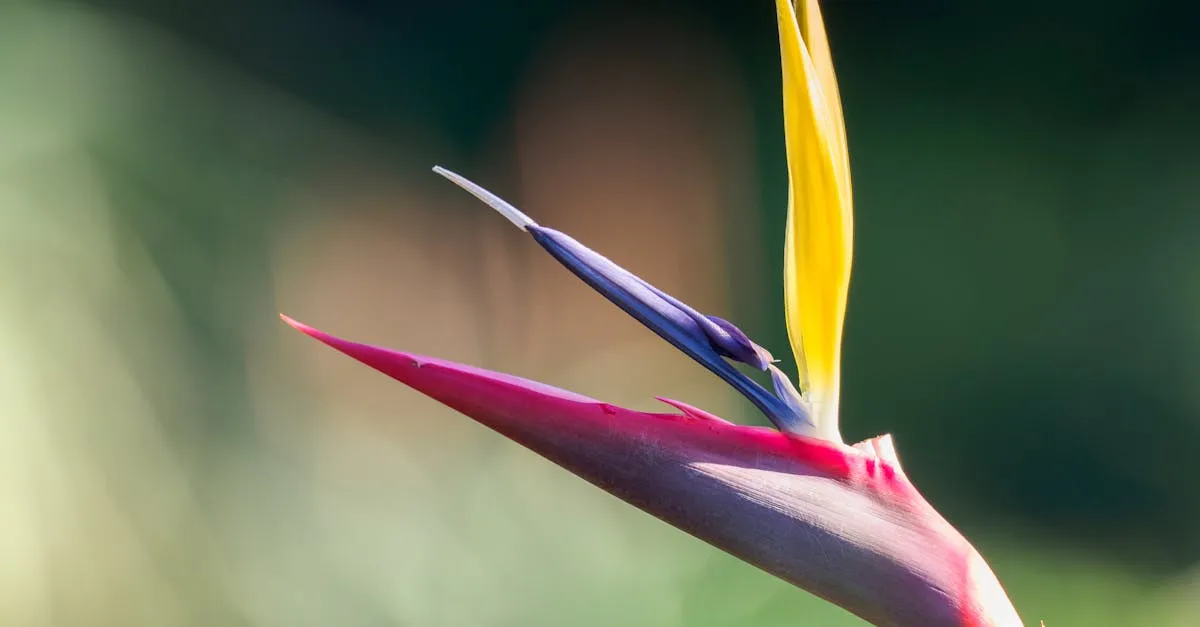
Bird of paradise care comes down to three things: giving Strelitzia the brightest spot in your home, watering deeply but only when the top inch or two (3 to 5 cm) of soil have dried, and keeping it warm. Get those right and it will produce paddle-shaped leaves on tall stems for years. Go in knowing that indoor plants rarely flower, and that the famous orange-and-blue bloom is the exception, not the rule.
Nicolai or reginae: which you have and why it matters
Many growers discover years in that they bought the wrong species for the space. Strelitzia nicolai (giant white bird of paradise) routinely reaches 2.5 to 3 m indoors with a spread of 1.2 to 1.5 m. Strelitzia reginae stays under 1.2 m and is the one with the orange-and-blue flower most people picture. If you have a 2.4 m ceiling and bought the plant labeled only “bird of paradise”, there is a real chance it is nicolai and will eventually press against the plaster.
The foliage differs too: nicolai leaves have a distinct cleft at the base of the blade; reginae leaves are more oval. Nicolai can bloom indoors but does so rarely, and its flower is white-and-blue rather than orange. If your label says only “bird of paradise”, check stem thickness and whether the leaf base is cleft. Both species want identical care, so nothing below changes based on which you have.
Light: this plant genuinely needs direct sun
Bird of paradise is one of few houseplants that not only tolerates several hours of direct sun but actively needs it to stay healthy. Give it your sunniest window, ideally south or west facing, where it gets direct sun for part of the day. Lucy Liu, at her London nursery, finds that new center leaves unfurl fastest when plants sit directly in front of the highest-light south-facing glass, where ambient humidity tends to stay higher too. In a dim corner it will survive for a while, then slowly stop producing new leaves, and eventually decline.
See how much light houseplants actually need if you are unsure what your window delivers. A grow light is a practical option when your brightest spot still falls short; our grow lights buying guide explains what to look for.
Watering: deep, then let it dry
Water thoroughly until it drains from the bottom, then wait until the top 1 to 2 inches (3 to 5 cm) of soil feel dry before watering again. In a bright, warm spot through spring and summer that typically means roughly once a week. In winter, much less.
- In doubt, check, do not guess. Push a finger into the soil. Damp at depth means wait.
- Use a pot with drainage. No exceptions.
- Ease off in winter. Cooler temperatures and lower light mean the plant drinks far less.
Constantly wet soil leads to root rot, the fastest way to lose this plant. For a clear-eyed look at the signs of each mistake, see overwatering vs underwatering houseplants.
Why edges and tips go brown
Brown on bird of paradise leaves is common, and the location tells you what is wrong.
Brown crispy tips that progress inward almost always mean underwatering or a root-bound plant. A congested root ball dries out faster than you expect, so watering on a schedule leaves the roots running short between sessions. Check whether roots are visibly escaping the drainage holes; if they are, repotting is the fix.
Brown crispy margins along otherwise firm, green leaves point to low humidity, typically below around 40%. The rest of the leaf stays solid and normal; only the very edge is papery. Moving the plant away from heating vents usually helps more than misting does.
For a fuller diagnosis of both patterns, see brown leaf tips: causes and fixes.
Pet toxicity
Strelitzia is toxic to cats and dogs. If you share your home with pets, this plant is not a safe choice. See pet-safe houseplants for alternatives that are fine around animals.
Watch for spider mites
Large horizontal leaves that collect dust and sit in still indoor air are prime conditions for spider mites. The earliest sign is pale stippling across the leaf surface and fine webbing along the midrib. To check, wipe a white tissue along the underside of a leaf; a red or orange smear confirms mites are present.
Wiping leaves down with a damp cloth every few weeks removes dust and disrupts mite colonies before they take hold. Once confirmed, treat promptly as they spread quickly on a plant this size. See spider mites on houseplants for step-by-step treatment.
The splits in the leaves are normal
New owners often worry when leaves tear into ribbons along the edges. This is not damage or disease. In the wild, those splits let wind pass through large leaves without shredding the whole plant. Lucy notes that plant photographs online often show leaves that have not yet split, making the eventual splits look alarming; in practice the splits are what stop large leaves from acting like sails and snapping the petiole in wind. Indoor plants growing in still air frequently develop fewer or shallower splits than outdoor specimens, which some owners actually prefer since the leaves look cleaner and more intact. Either way, it is a normal variation, not a sign of stress.
Splits along the leaf margins are a wind adaptation working as designed, not a problem to fix.
Why your indoor plant probably will not flower
Flowering realistically takes 4 to 7 years from a cutting, or 3 to 5 years from a mature division. Beyond age, the plant needs to be root-bound (roots visibly escaping the drainage holes for a full growing season) and receiving sustained direct sun, the kind a south-facing conservatory provides. Most homes cannot deliver that light consistently year-round.
The practical levers if flowering matters to you are maximum direct sun, patience over several years, not over-potting, and steady feeding in the growing season. Even then, treat any bloom as a bonus. Most indoor owners never see one, and the plant is worth growing for the foliage alone.
Warmth and humidity
Bird of paradise likes 65 to 80°F (18 to 27°C) and dislikes cold drafts. Keep it away from drafty doors, single-glazed windows in winter, and the cold air from air conditioning. Average household humidity is fine for healthy growth. If leaf margins brown while the rest of the leaf remains firm, check humidity and watering rather than assuming temperature is the issue.
Feeding, repotting, and routine care
Feeding. Through spring and summer, feed every few weeks with a balanced liquid fertilizer at half strength. Stop in autumn and winter. Our guide to fertilizing houseplants covers timing and dosage in detail.
Repotting. Repot every two or three years, or when roots fill the pot and growth stalls. Go up one pot size only; a giant pot holds too much wet soil. Use a well-draining mix. For full method, see how to repot a houseplant.
Cleaning. Those big leaves collect dust, which blocks light and creates conditions that invite mites. Wipe them with a damp cloth every few weeks.
If growth stalls, look at the light first
The single mistake that quietly kills a bird of paradise is parking it somewhere too dim and waiting for it to adjust; it will hold steady for a few months, then stop pushing new center leaves and slowly thin out. When you next see a leaf emerge and fully unfurl without browning at the tip, you have the spot and the watering rhythm right. Through the darker months, expect growth to pause and water far less, then look for the new leaf to appear as the light returns in spring.
Where to go next
9 Best Living Room Plants, From Statement to Easy
The best living room plants range from big floor-standing statement plants to easy shelf fillers. Here are nine to suit a bright, welcoming living room.
Asparagus Fern Care: Not a Fern, and It Has Thorns
Asparagus fern is not a fern, it is toxic to cats and dogs, and mature stems carry spines. Here is how to grow it and what to know first.
Caladium Care: Bright Leaves, Winter Dormancy, and Toxic Sap
Caladiums die back every winter and that is normal, not failure. Here is how to grow the tubers indoors and why they need care around pets.
Not sure what plant you have? Identify it from a photo and we will point you at its care guide.
Frequently asked questions
Will my bird of paradise flower indoors?
Rarely. Flowering typically takes 4 to 7 years from a cutting or 3 to 5 from a mature division. The plant also needs to be root-bound for a full growing season and receiving sustained direct sun, the kind you get in a south-facing conservatory. Most indoor birds of paradise never bloom, and that is normal rather than a sign of failure.
Are the splits in the leaves normal?
Yes. Leaf splits are a wind adaptation that evolved to let air pass through large leaves without shredding them. Indoor plants growing in still air often develop fewer or shallower splits than outdoor specimens, which some owners prefer. Splits are not damage.
Is bird of paradise toxic to cats and dogs?
Yes, Strelitzia is considered toxic to cats and dogs. If you have pets, look for alternatives that are safe around animals rather than keeping this plant in a home with cats or dogs.